Select entries spanning 30 years — reflections on touring, tributes to mentors and colleagues, and dispatches from a life in jazz:
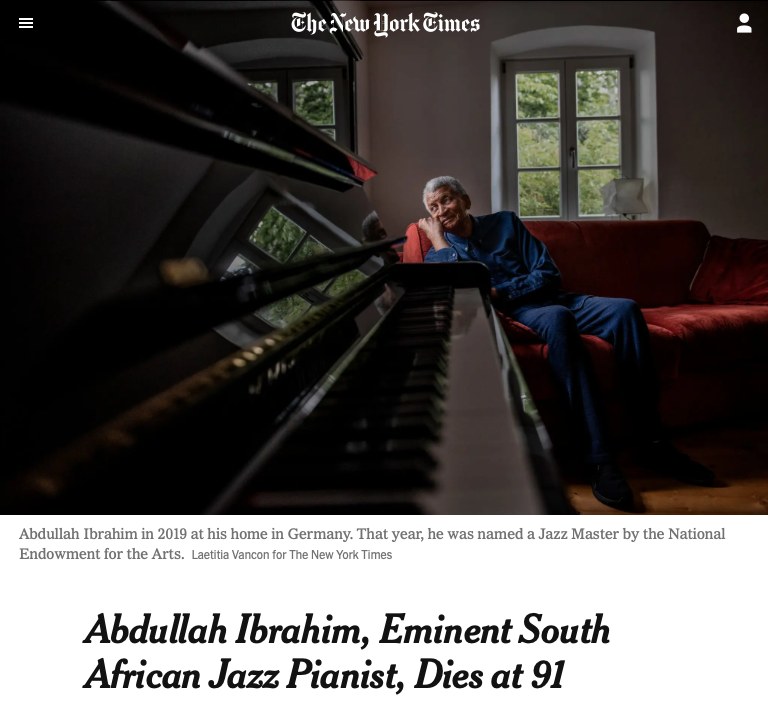
Sorry to hear about the great Abdullah Ibrahim’s passing. Deeply influential on my playing — his album “Banyana” is still one of my all-time favorites. Never had a chance to meet him but saw him perform live on at least one occasion when on tour (and spoke about him with others — like Carlos Ward — who were in his bands). South African and Duke Ellington-inspired, meditative music with often…
Sorry to hear about the great Abdullah Ibrahim’s passing. Deeply influential on my playing — his album “Banyana” is still one of my all-time favorites. Never had a chance to meet him but saw him perform live on at least one occasion when on tour (and spoke about him with others — like Carlos Ward — who were in his bands). South African and Duke Ellington-inspired, meditative music with often deceptively spiritual, affecting melodies as the basis for improvisations that could border on pure freedom. Always elegant and never in a hurry — a (to me) underappreciated master. R.I.P., Abdullah Ibrahim (a.k.a. Dollar Brand).
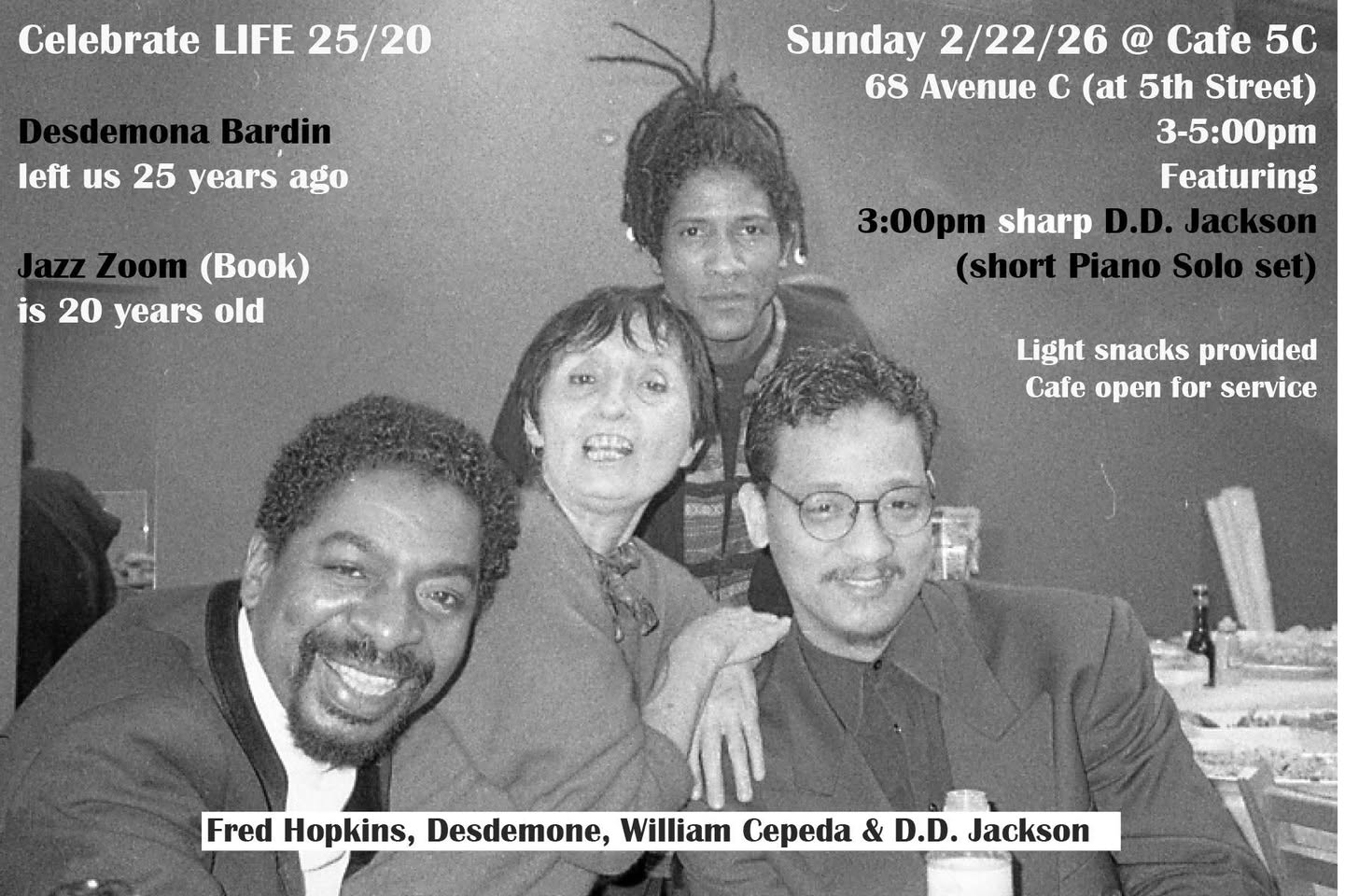
Looking forward to opening this special tribute concert at 5C in Manhattan to the late Desdemona Bardin, a fascinating person and incredible photographer who among other achievements created a remarkable book called Jazz Zoom I was honored to be part of. I wrote a special tribute piece to her after she passed away called “For Desdemona” which I plan to play solo piano. [Earlier, April 9, 2020] A…
Looking forward to opening this special tribute concert at 5C in Manhattan to the late Desdemona Bardin, a fascinating person and incredible photographer who among other achievements created a remarkable book called Jazz Zoom I was honored to be part of. I wrote a special tribute piece to her after she passed away called “For Desdemona” which I plan to play solo piano.
[Earlier, April 9, 2020] A piece of mine, originally recorded years ago in memory of Desdemona Bardin on my CD “Sigame”, dedicated here to the victims of COVID-19 — was feeling cooped up at home and thought recording something might help: watch on YouTube
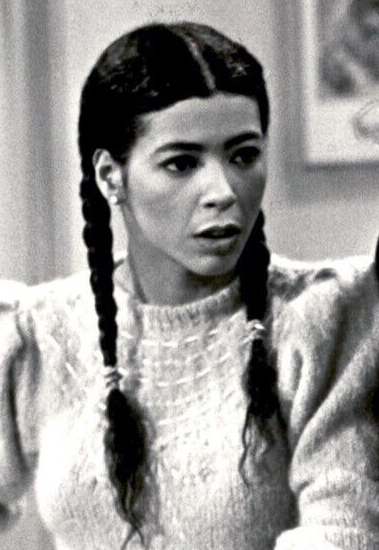
R.I.P. Irene Cara. The movie "Fame" I credit with making me want to come to NY as a teen, and I even (much later) wrote a piece "Here I Am" (with lyricist Alexander Baack) for our 2015 film "Hollywood Musical" that was inspired by her memorable performance of the Fame song "Out Here On My Own." As an aside, the scene in our movie bears a striking resemblance to a similar audition scene in the…
R.I.P. Irene Cara. The movie "Fame" I credit with making me want to come to NY as a teen, and I even (much later) wrote a piece "Here I Am" (with lyricist Alexander Baack) for our 2015 film "Hollywood Musical" that was inspired by her memorable performance of the Fame song "Out Here On My Own." As an aside, the scene in our movie bears a striking resemblance to a similar audition scene in the film La La Land, but our film came first! Here's our song, today in tribute to Irene: watch on YouTube
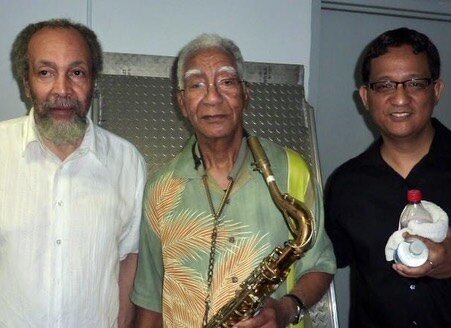
This came as a shock and my first thought was "I should have called him" so my regret is deep. I actually first met Milford when he came to the hospital to visit Don Pullen when he was sick. It often feels like jazz musicians have a fear of sickness since we live so much "at the moment", but there Milford was, warmly connecting with Don and sending his always-positive vibes. Years later Milford…
This came as a shock and my first thought was "I should have called him" so my regret is deep. I actually first met Milford when he came to the hospital to visit Don Pullen when he was sick. It often feels like jazz musicians have a fear of sickness since we live so much "at the moment", but there Milford was, warmly connecting with Don and sending his always-positive vibes. Years later Milford hired me to play with him - including at the Sans D'Hiver Festival in Paris, and on stage at the Vision Festival with Kidd Jordan - and his playing was always such a force of nature, capable of both perfect sonic control and an at times almost otherworldly intensity that I've never encountered with any other percussionist. I will also always fondly remember visiting his home in Jamaica, Queens, heading down to his basement "lair" with his fascinating investigations of the human heart (we spoke of him recording my own heartbeat but never got around to it). I will miss his warmth, curiosity, and unique genius. R.I.P.. Milford Graves.
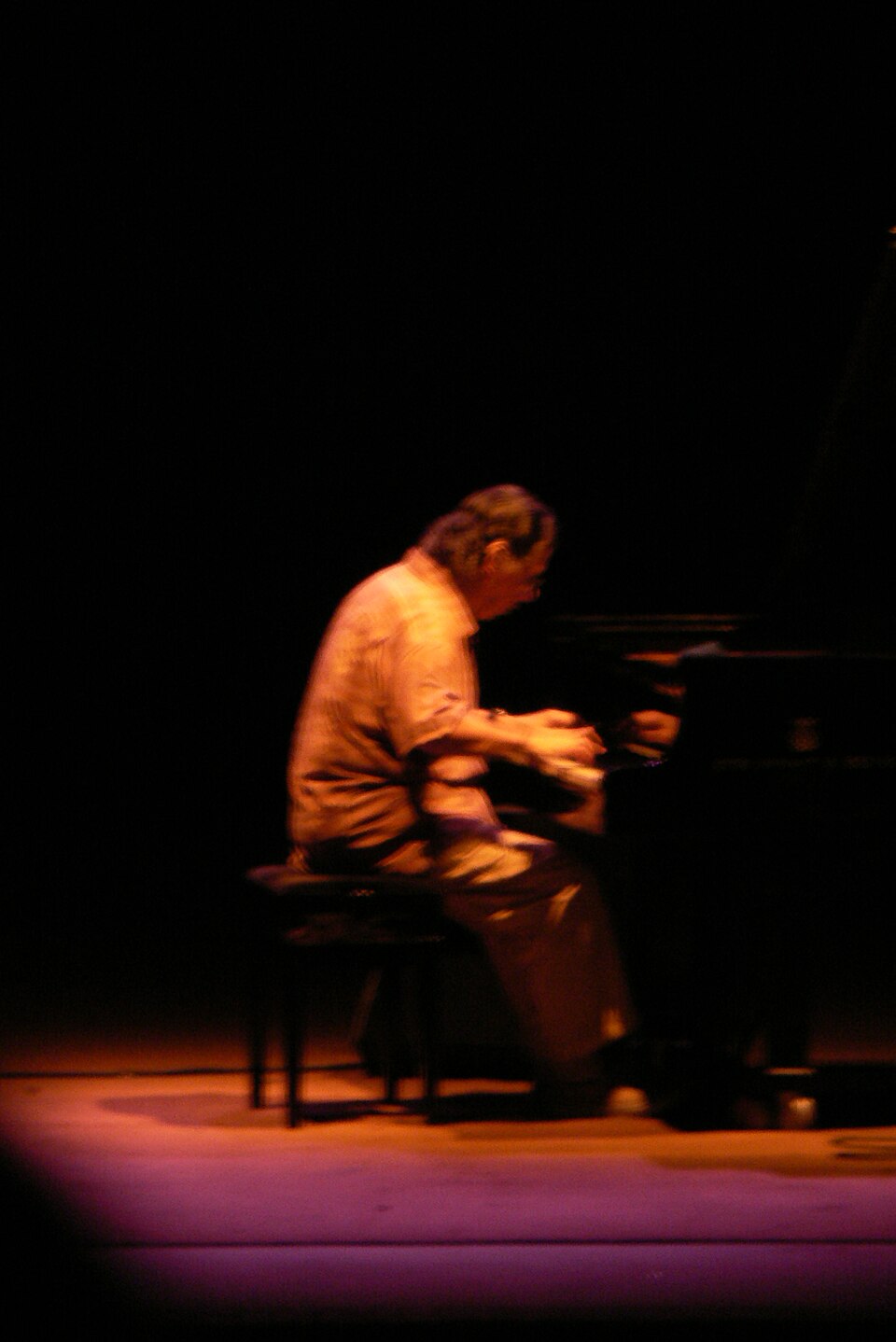
R.I.P. to Chick Corea — one of my favorite pianists, and a huge influence and example, from Return to Forever, Now He Sings Now He Sobs, his Electrik Band, duets with Herbie and Bobby McFerrin, and on and on. Here’s my own tribute from years ago: watch on YouTube
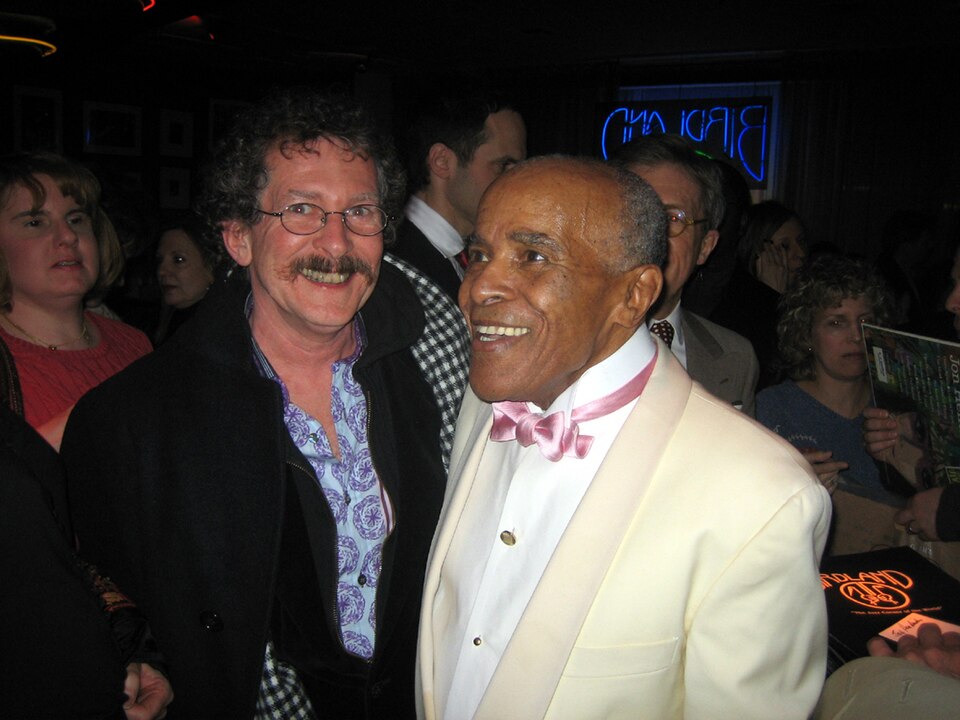
Sad to hear this and honored to have been at the premiere of his stunning Miles Ahead vocalese work with the London Vocal Project at St. Peter’s Church just this past February. R.I.P., Jon Hendricks.
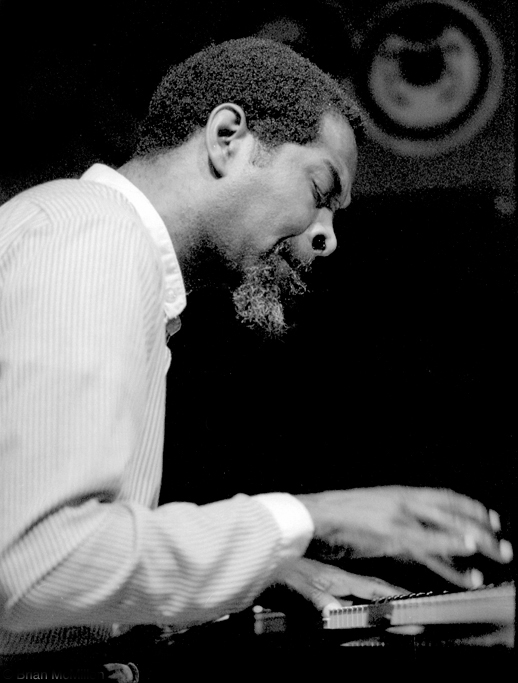
This was very, very sad to hear. It’s strange, since I barely interacted with Muhal directly over the years, but always considered him a “mentor from afar” since he was so deeply influential to me and so many others. It was just barely over a year ago, in fact, that I participated in an AACM concert led by Hamiet Bluiett that took place right after a breathtaking performance by Muhal on piano,…
This was very, very sad to hear. It’s strange, since I barely interacted with Muhal directly over the years, but always considered him a “mentor from afar” since he was so deeply influential to me and so many others.
It was just barely over a year ago, in fact, that I participated in an AACM concert led by Hamiet Bluiett that took place right after a breathtaking performance by Muhal on piano, with violinist Tom Chiu and cellist Meaghan Burke, at the Community Church in NYC. At the time I wrote that he truly blew my mind with the performance’s perfect encapsulation of Muhal’s beautiful concept, including a masterful demonstration of playing into and out of silences and the perfect intermingling of intricately written string lines, combined with piano (and also some string) improvisations.
Such a deeply influential, conceptual musical thinker and teacher, and someone truly irreplaceable. My heart goes out to his family, friends, longtime colleagues, students and fans. R.I.P., Muhal Richard Abrams.
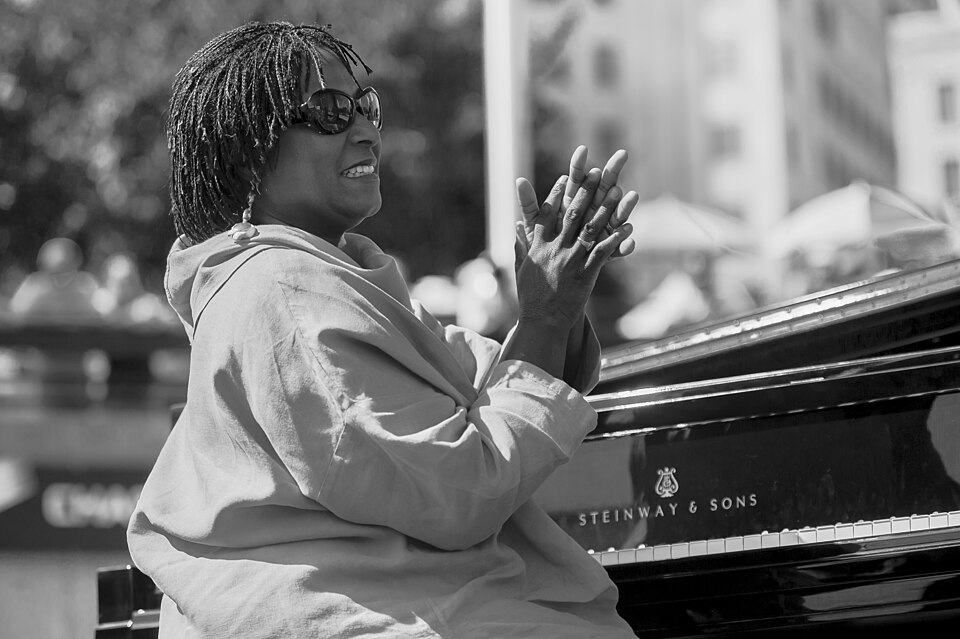
This is shocking news. I was just listening to her great trio album with David Murray and Terri Lyne Carrington. R.I.P. to a brilliant artist — Geri Allen, brilliantly expressive pianist, composer and educator, dead at 60.
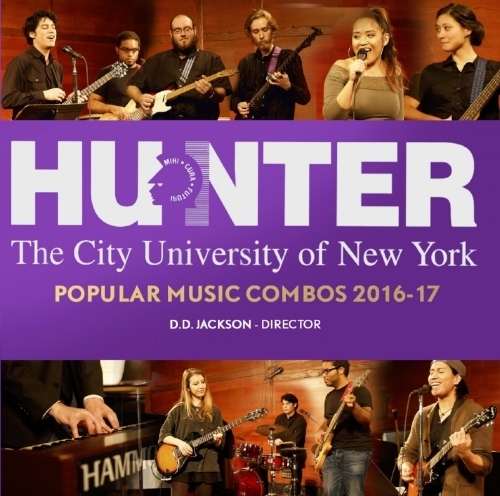
Excited that the 8th annual Hunter Pop Combos is now up - you can listen to it here on Soundcloud. It features the Pop Combos class I coached from this past December, and includes 2 originals developed by the students in class.
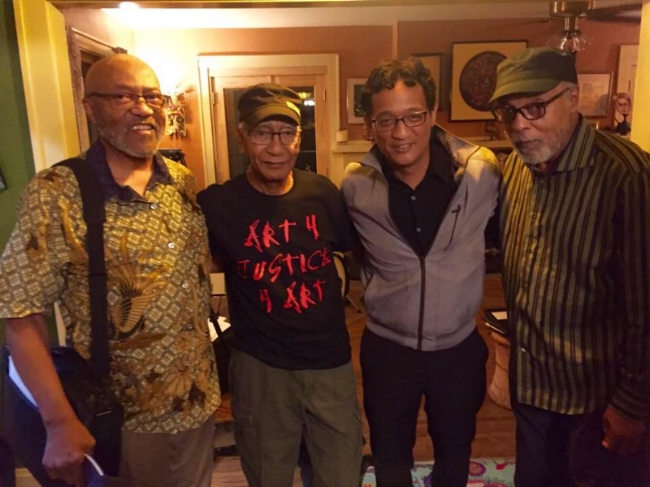
I had the pleasure today of performing in the first of a series of concerts organized by Michael Vander Does featuring an all-star lineup of Kidd Jordan, Hamiet Bluiett, Marlon Jordan, Oliver Lake, plus some accomplished Columbus musicians. We began the process of doing a really free form collective improv to Michael and Oliver's poetry. There was tremendous, cacophonous energy in the room,…
I had the pleasure today of performing in the first of a series of concerts organized by Michael Vander Does featuring an all-star lineup of Kidd Jordan, Hamiet Bluiett, Marlon Jordan, Oliver Lake, plus some accomplished Columbus musicians. We began the process of doing a really free form collective improv to Michael and Oliver's poetry. There was tremendous, cacophonous energy in the room, but also a tendency a bit more towards the tried and true than might usually be the case with this particular combination of musicians. Bluiett definitely sensed something was going on – at one point he even came and sat right beside me on my piano stool, and practically tried to " will me" to play more "out" and and with more energy. After the break, he then proceeded to conduct which can only be considered a true master class in embracing the moment, and playing "truly" free. After graciously been given permission by Michael, he essentially took over and proceeded in the second set to really break down and then build back up the entire group, piece by piece . First, he began with having me play a solo, instructing me to segue into Don Pullen's beautiful tune "Ode to Life", and then asked me, as I played, to "take it out" – deconstruct it, and push boundaries, which I proceeded to attempt to do, ending in a climactic coming back to tonality towards the end. After my "feature", he similarly had just Oliver Lake, and then the bassist, guitarist, drummer, and Kidd Jordan all take turns playing, with the focus again very much on embracing the moment, and on the individuality of each of the player's voices. Collectively towards the end, the degree of heightened awareness and interaction among the band members was palpable - a true master class in deconstructing and building back up, always embracing the moment, listening, and generally going with the flow, by the master himself, Hamiet Bluiett. The lesson continued at Michael's place until 2:30 in the morning afterwards as we jammed in Michael's living room, with Bluiett leading/cajoling/conducting. Good times.
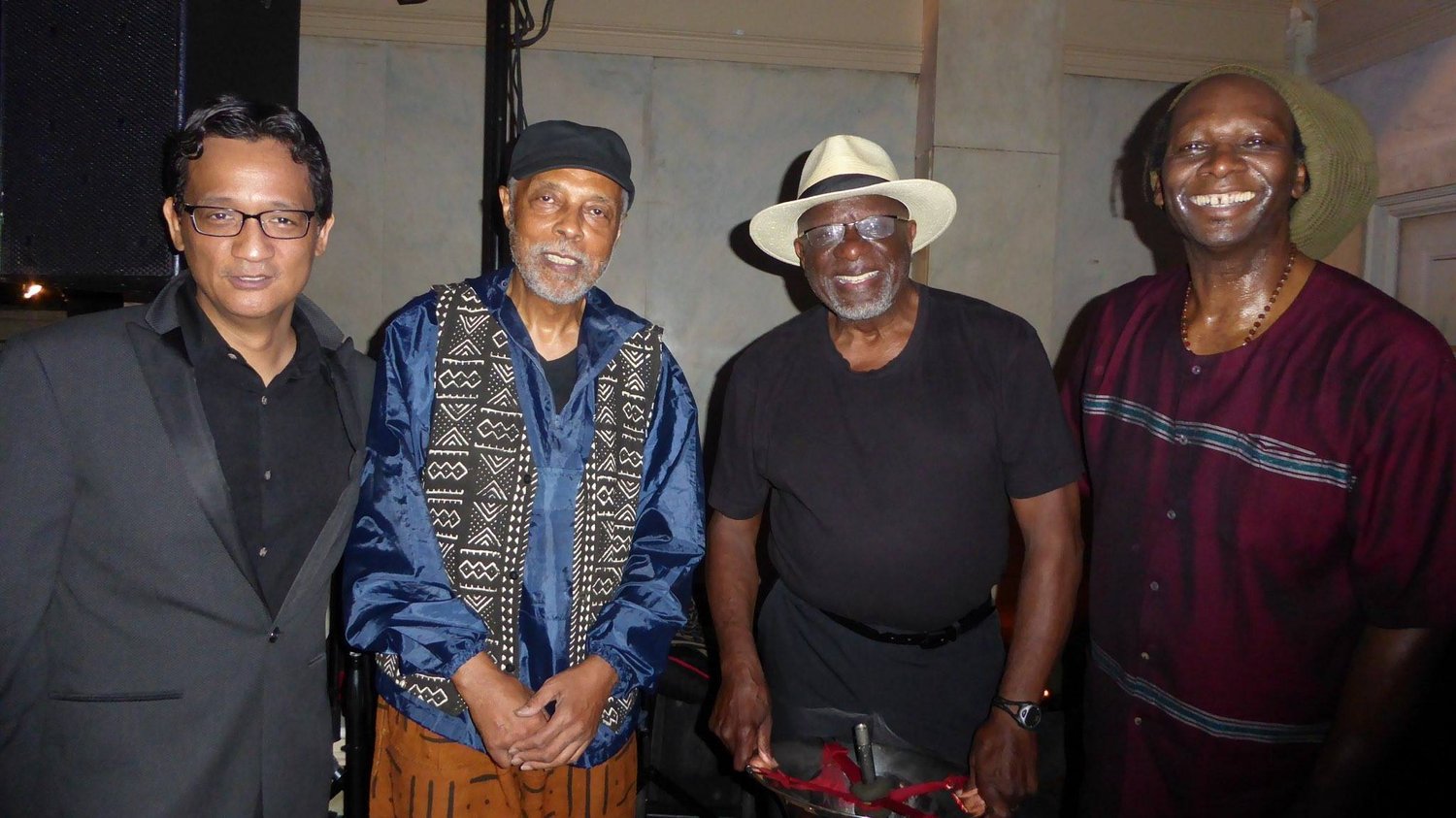
What an honor and privilege to play with the great Hamiet Bluiett again this past Saturday at the Vision Festival, as well as with Hamid Drake on drums/percussion and Bob Stewart on tuba. Bluiett is truly one of the most fearless jazz musician I know, a living breathing monument to embracing the moment and to breaking down all musical barriers (beyond all this, it was also just hugely playful,…
What an honor and privilege to play with the great Hamiet Bluiett again this past Saturday at the Vision Festival, as well as with Hamid Drake on drums/percussion and Bob Stewart on tuba. Bluiett is truly one of the most fearless jazz musician I know, a living breathing monument to embracing the moment and to breaking down all musical barriers (beyond all this, it was also just hugely playful, subversive fun :-))...(thanks also to Joyce Jones for the photo forward!)
I'm admittedly enjoying my "walk down memory lane" as I update my new website. The latest page addition features some excerpts from my jazz opera "Quebecite", which originally premiered several years ago at the Guelph Jazz Festival, and was subsequently broadcast across Canada on CBC Radio. Included is an early demo; a version of one of my pieces by the great Dean Bowman, a couple of tracks from…
I'm admittedly enjoying my "walk down memory lane" as I update my new website. The latest page addition features some excerpts from my jazz opera "Quebecite", which originally premiered several years ago at the Guelph Jazz Festival, and was subsequently broadcast across Canada on CBC Radio. Included is an early demo; a version of one of my pieces by the great Dean Bowman, a couple of tracks from my CD "Serenity Song", and an excerpt from the opera's premiere.
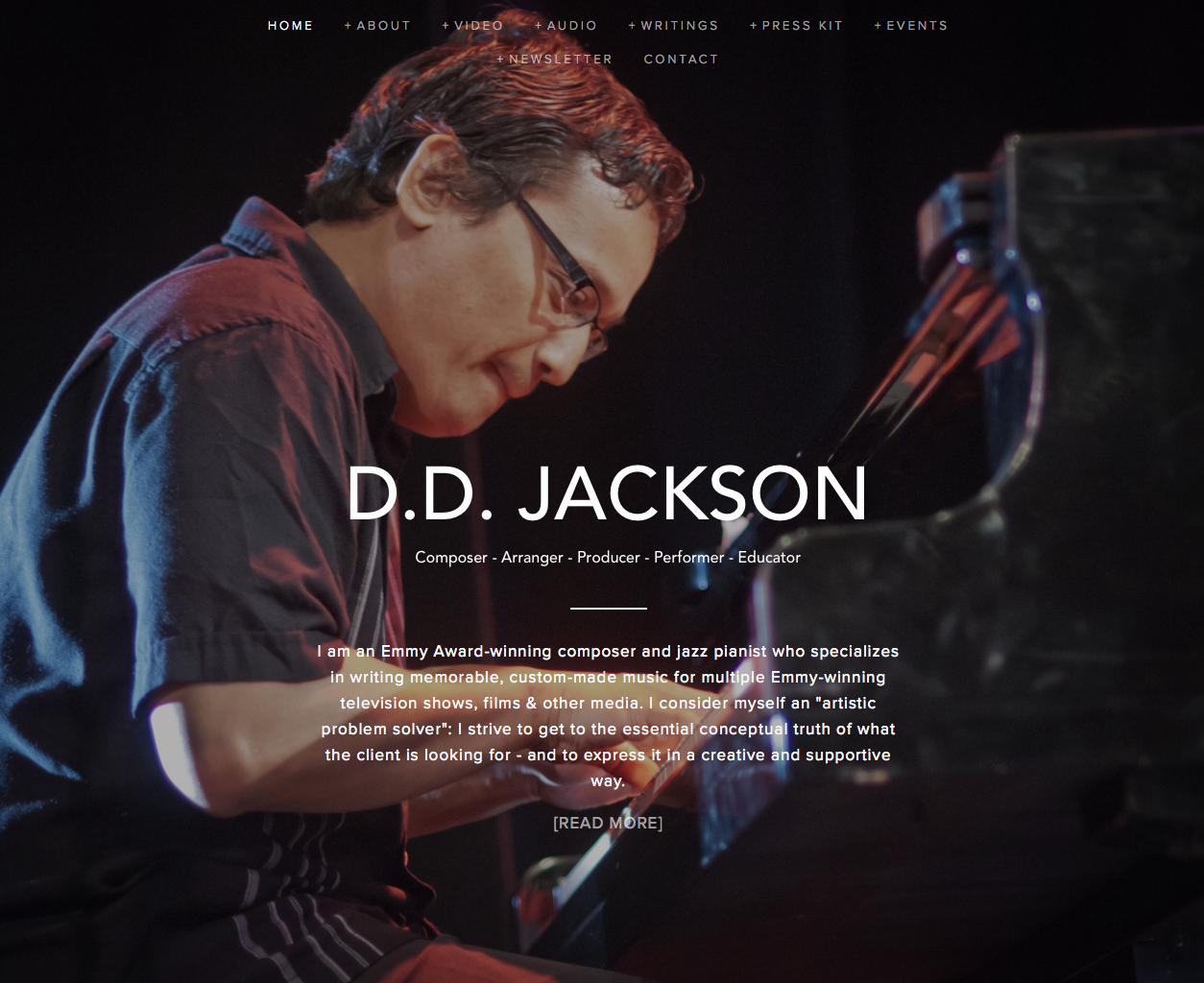
I'm admittedly enjoying my "walk down memory lane" as I update my new website. The latest page addition features some excerpts from my jazz opera "Quebecite", which originally premiered several years ago at the Guelph Jazz Festival, and was subsequently broadcast across Canada on CBC Radio. Included is an early demo; a version of one of my pieces by the great Dean Bowman, a couple of tracks from…
I'm admittedly enjoying my "walk down memory lane" as I update my new website. The latest page addition features some excerpts from my jazz opera "Quebecite", which originally premiered several years ago at the Guelph Jazz Festival, and was subsequently broadcast across Canada on CBC Radio. Included is an early demo; a version of one of my pieces by the great Dean Bowman, a couple of tracks from my CD "Serenity Song", and an excerpt from the opera's premiere.
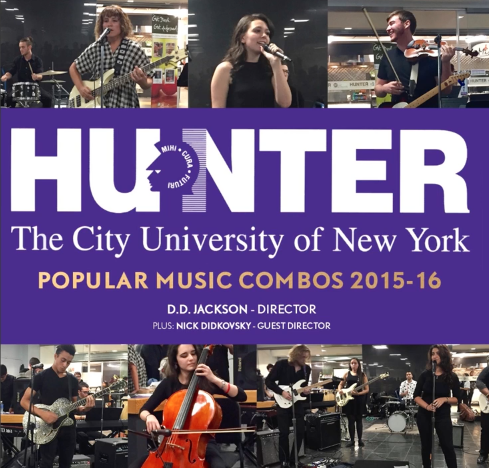
Here's the Hunter College Popular Music Combos 2015-16 CD (directed/produced/mixed by myself, with guest director Nick Didkovsky doing the same for 2 of the tunes). The CD features 3 student originals out of the 8 total tunes, plus arrangements of pop music ranging from Seal, Amy Winehouse, to Lissie and Fetty Wap. It was done "guerrilla style" with each group allowed 1 hour in the studio (with…
Here's the Hunter College Popular Music Combos 2015-16 CD (directed/produced/mixed by myself, with guest director Nick Didkovsky doing the same for 2 of the tunes). The CD features 3 student originals out of the 8 total tunes, plus arrangements of pop music ranging from Seal, Amy Winehouse, to Lissie and Fetty Wap. It was done "guerrilla style" with each group allowed 1 hour in the studio (with "guerrilla mixing" done later in my and Nick's home studios :-)):
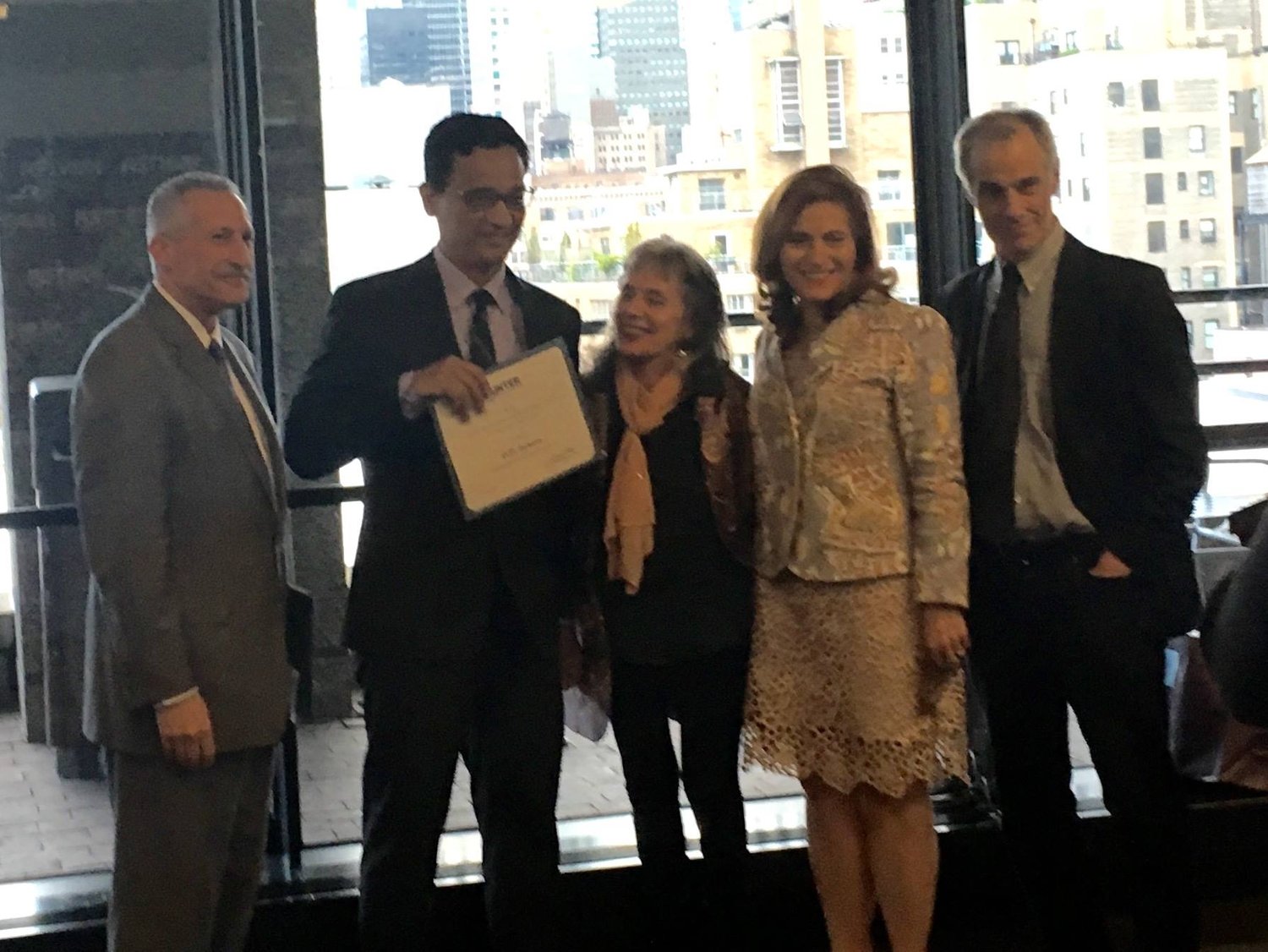
Excited and honored to have just won the Hunter College 2016 Presidential Award for Excellence in Teaching (part-time). Among those pictured in this photo from tonight's reception: to my left is Annette Insdorf (whose family generously sponsors the award in memory of her mother, Cecile Insdorf), plus Hunter's President Jennifer Raab. There but not pictured: my beautiful wife Elizabeth Jackson,…
Excited and honored to have just won the Hunter College 2016 Presidential Award for Excellence in Teaching (part-time). Among those pictured in this photo from tonight's reception: to my left is Annette Insdorf (whose family generously sponsors the award in memory of her mother, Cecile Insdorf), plus Hunter's President Jennifer Raab. There but not pictured: my beautiful wife Elizabeth Jackson, who attended with me :-)).
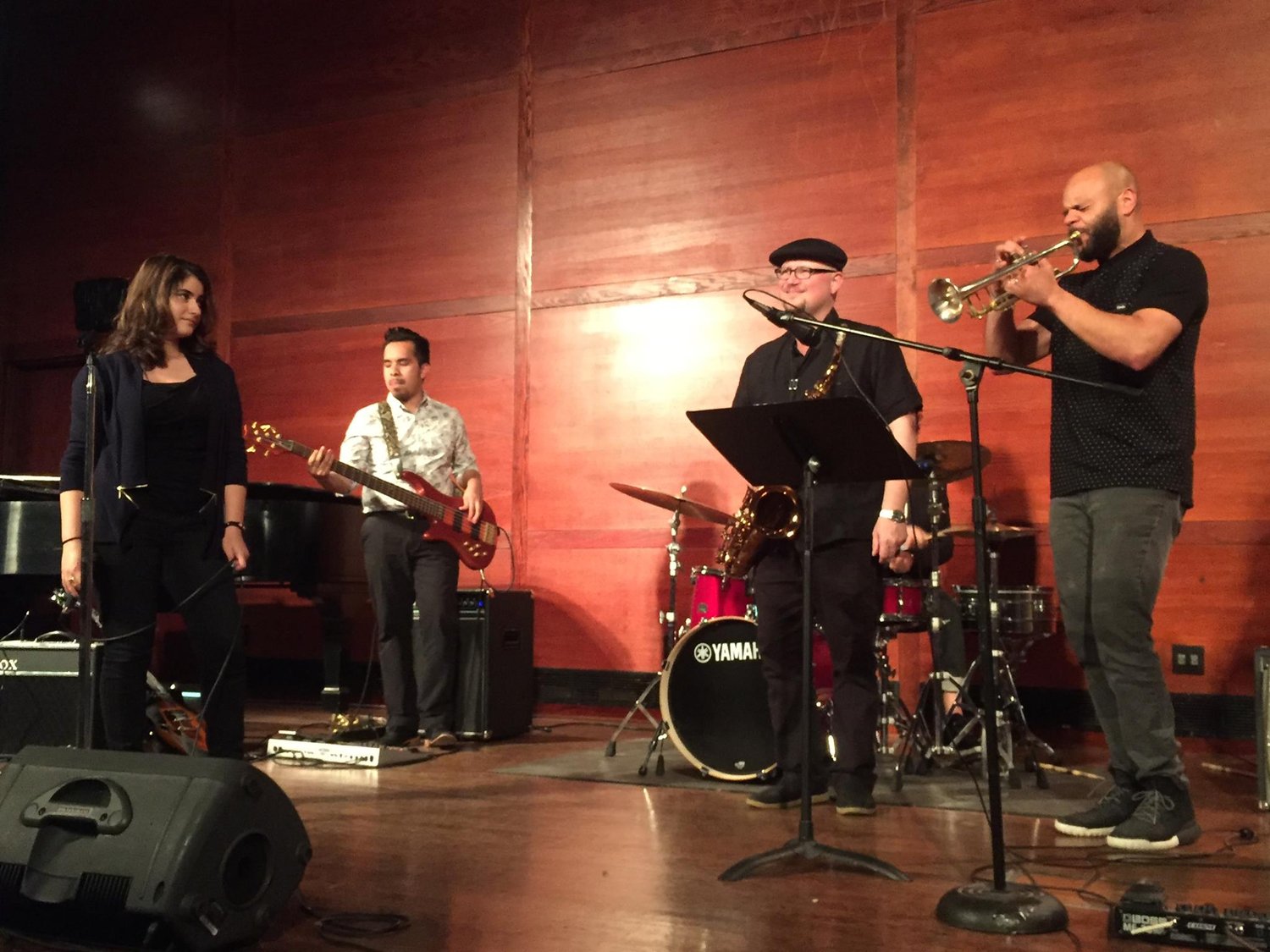
Saxist Ian Hendrickson-Smith and trumpeter Dave Guy (horn section from The Roots) jamming and playing killer horns with my students (pictured: vocalist Sarina Mordukhayeva and Alfredo Hernandez on bass) during the Final Concert (Spring semester) of the Hunter Pop Combos class I direct, this past Tuesday :-):
“I can’t think of anything much more honorable than teaching young people to be decent, to be successful. Teaching is such a sacred act. To show somebody about life . . . I teach under jazz, but what I teach is living.” — David Baker Legendary teacher from Indiana University who sadly passed away recently. I took an early improv class with him while there as a student and it was his letter of…
“I can’t think of anything much more honorable than teaching young people to be decent, to be successful. Teaching is such a sacred act. To show somebody about life . . . I teach under jazz, but what I teach is living.” — David Baker
Legendary teacher from Indiana University who sadly passed away recently. I took an early improv class with him while there as a student and it was his letter of recommendation he gave me to get into the Manhattan School of Music for my Masters that helped launch my formal jazz studies. R.I.P., David, and thanks for the inspiration.
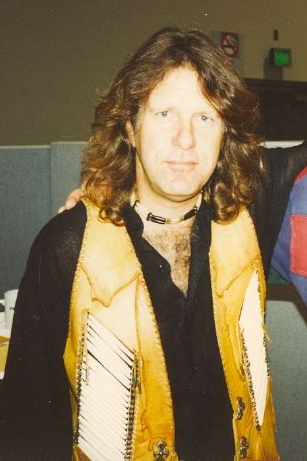
Sad to hear — he was one of the reasons I first wanted to be a keyboardist as a kid. I used to dream of having stacks of keyboards around me in emulation of him, and Emerson Lake and Palmer’s version of “Pictures at an Exhibition” is I’m sure what compelled me to learn Mussorgsky’s classic piano solo version as a kid. R.I.P., Keith Emerson.
RIP fellow Canadian pianist Paul Bley, whom I'll have the pleasure of again exposing to my Hunter College History of Jazz students next week in the intensive Winter Session class I'm currently teaching (for the 7th consecutive year). Paul was a great inspiration (we both also recorded for Justin Time Records out of Montreal) and I will always remember introducing myself to him in the early 90s…
RIP fellow Canadian pianist Paul Bley, whom I'll have the pleasure of again exposing to my Hunter College History of Jazz students next week in the intensive Winter Session class I'm currently teaching (for the 7th consecutive year). Paul was a great inspiration (we both also recorded for Justin Time Records out of Montreal) and I will always remember introducing myself to him in the early 90s when his trio (with Swallow and Guiffre) were about to perform for a week at Sweet Basil, down from my old studio apartment on Leroy and 7th Ave in the Village. When he found out I lived so close and that I was about to leave town on tour for a week -and especially when I inquired about lessons with him - he offered to give me them in exchange for my letting him stay in my place while I was away. When I returned, my tiny apartment had been transformed beyond the point of possible recognition - incredibly cleaned, organized - he had even bought a nice rice jar that I still use and have to this day (!) And while I never got the promised lessons, I consider it a fair trade and will always remember my unusual encounter with this truly original (and wonderfully subversive and quirky) musician (and personality :-))...RIP, Paul.
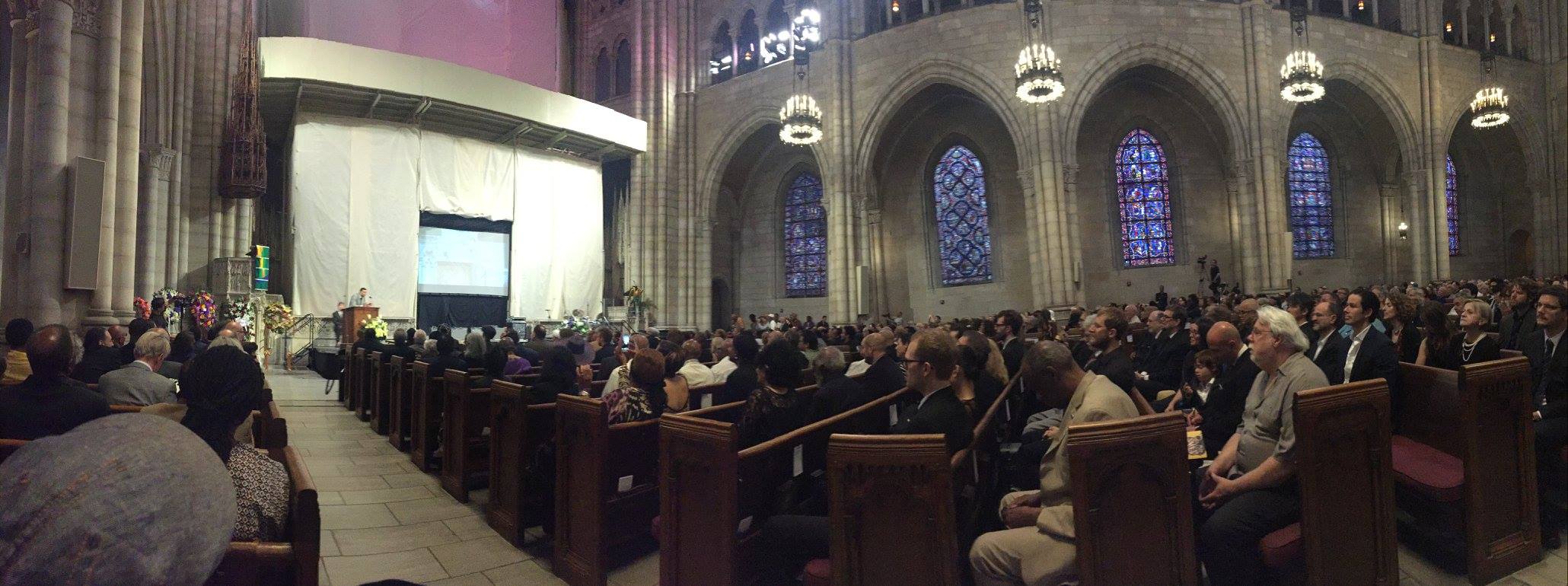
So sad to hear this — one of the most important figures in jazz. [Update: June 27, 2015] Denardo Coleman speaking at the extraordinary memorial service at Riverside Church today for the late, great Ornette Coleman. A moving celebration featuring many familiar faces and colleagues, from David Murray to Jack DeJohnette to Henry Threadgill, plus poets, artists, and other family members and friends.…
So sad to hear this — one of the most important figures in jazz.
[Update: June 27, 2015] Denardo Coleman speaking at the extraordinary memorial service at Riverside Church today for the late, great Ornette Coleman. A moving celebration featuring many familiar faces and colleagues, from David Murray to Jack DeJohnette to Henry Threadgill, plus poets, artists, and other family members and friends. I felt honored to be in the audience.
Really delighted to be spending a few days at Virginia Tech near my former teacher Don Pullen's home town of Roanoke, Virginia, and to be taking part in a fascinating Don Pullen project. Jason Crafton, a professor here and the director of their Jazz Ensembles, has actually commissioned several people to do big band arrangements of several of Don's pieces, including "Big Alice", "Saturday Night in…
Really delighted to be spending a few days at Virginia Tech near my former teacher Don Pullen's home town of Roanoke, Virginia, and to be taking part in a fascinating Don Pullen project. Jason Crafton, a professor here and the director of their Jazz Ensembles, has actually commissioned several people to do big band arrangements of several of Don's pieces, including "Big Alice", "Saturday Night in the Cosmos", "Resting on the Road", "1529 Gunn Street", and a solo piano version I'll be doing of his beautiful composition "Ode to Life". Not only will we be performing the material live tonight (with myself sitting in on piano) at the Moss Arts Center in Blacksburg, but I also participated in an actual CD recording of this and other Don Pullen material he's putting together with his students - truly a labor of love, but also something that I think will ultimately cause Don's incredible compositional abilities to come to the attention of more and more people, which is always a good thing :)...
I also got a chance to look at a portion of the documentary "Jazz Dancing" (some of which they'll be playing tonight), which covers that whole tumultuous period when Don was working on his last, great project - Earth Eagle First Circle (a collaboration between his African Brazilian Connection, the Chief Cliff Singers, and the Garth Fagan Dance Company). It was like looking into a time capsule, seeing so many familiar faces on film from the 90's (since I was brought in towards the end to sub for him when he was too sick to perform)...
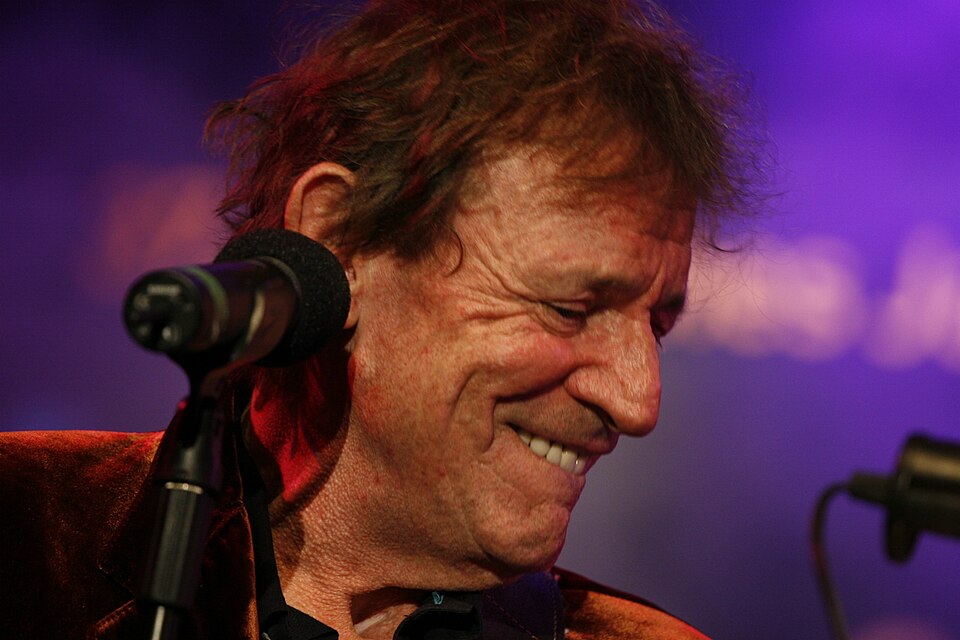
R.I.P. Jack Bruce of Cream. One of my most unlikely career connections was having the opportunity to tour 6 cities with him in the early 90’s in an “All Star” band Kip Hanrahan put together in which I was subbing for my then-teacher Don Pullen. Also in the group were such people as Little Jimmy Scott on what I recall being (remarkably) his first European tour, JT Lewis on drums, Anthony Cox on…
R.I.P. Jack Bruce of Cream. One of my most unlikely career connections was having the opportunity to tour 6 cities with him in the early 90’s in an “All Star” band Kip Hanrahan put together in which I was subbing for my then-teacher Don Pullen. Also in the group were such people as Little Jimmy Scott on what I recall being (remarkably) his first European tour, JT Lewis on drums, Anthony Cox on bass, David Murray on sax, and Billy Bang on violin, so definitely a fascinatingly eclectic mix of people, and a tour that led to lots of future collaborations (though that was my one and only opportunity to play with Jack).
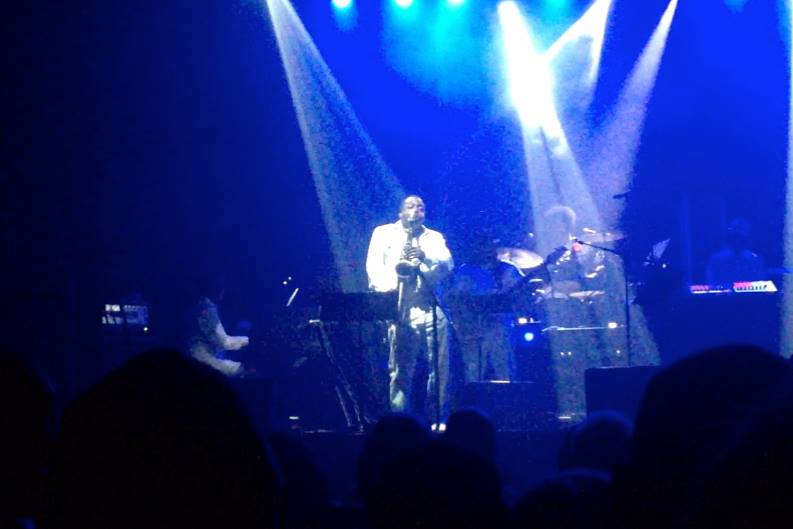
Just got back from Philly and a "concert for the ages" - a tribute to the late, brilliant Roots manager/producer Richard Nichols featuring Questlove, Black Thought, David Murray, Jeremy Ellis, Emily Wells, "Captain Kirk" Douglas, Rahzel, Bilal, Kenny Muhammad, Vernon Reid, Raymond Angry, Mark Kelley, Craig Harris, Reverence Vince, the Metropolis Ensemble directed by Andrew Cyr, plus myself on…
Just got back from Philly and a "concert for the ages" - a tribute to the late, brilliant Roots manager/producer Richard Nichols featuring Questlove, Black Thought, David Murray, Jeremy Ellis, Emily Wells, "Captain Kirk" Douglas, Rahzel, Bilal, Kenny Muhammad, Vernon Reid, Raymond Angry, Mark Kelley, Craig Harris, Reverence Vince, the Metropolis Ensemble directed by Andrew Cyr, plus myself on piano and as one of the arrangers (along with Anthony Tidd). Far from a traditional memorial service, it was a send-off in true Richard fashion, modeled after the several similarly-styled concerts we've put on at BAM, Philly's Kimmel Center, the Public Theater, and most recently at Radio City Music Hall, featuring often violently juxtaposing styles that reflected Richard's remarkably eclectic - yet somehow strangely logical and highly curated - tastes. Several people close to him - both family and friends - also spoke movingly about the Richard they new, giving me even more insight into this great man. The first half ended with my arrangement of Funkadelic's "Maggot Brain", and after Kirk KILLED on guitar and Questlove took things to the stratosphere at the end, I already felt a sense of catharsis and could have gone home satisfied. But there was still a 2nd half to come, and Questlove's choice for us to play Tony Williams' "There Comes a Time" at the Memorial's end (to which I added a string arrangement), featuring solos by David Murray, Vernon Reid, and a cacaphonic collective solo involving myself as well as Ray Angry on keys, and ending with the words "I love you more when it's over" and with the music abruptly stopping - was the perfect evening closer. Afterwards, I truly didn't want to leave the stage - afraid that Richard's spirit would somehow be left behind with it. But I now realize that this is impossible - his ability to challenge, to push me into areas that he saw me capable of doing with such quiet, casual confidence that it literally re-programmed my brain into being able to just DO it - this will stay with me forever.
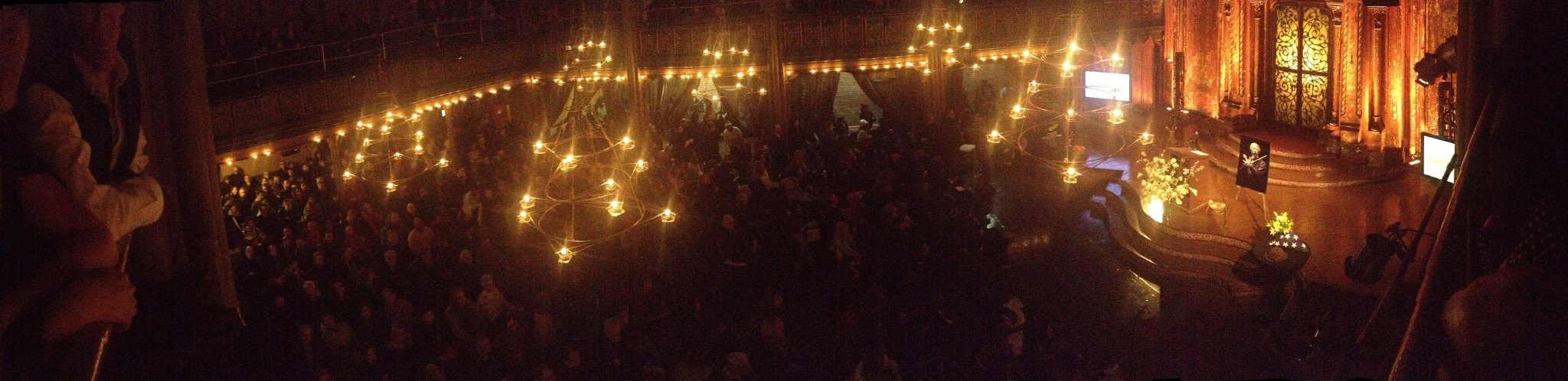
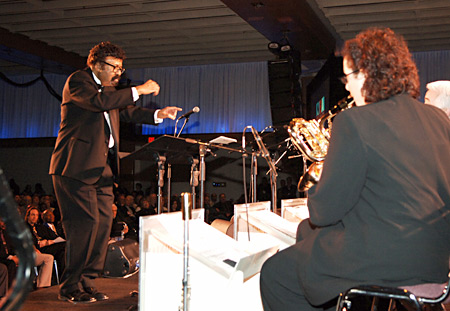
R.I.P., Butch Morris. Very sad news, and at only 65. I will always remember the many times I had the honor of being under his baton as a member of the David Murray Big Band — both larger scale concerts and the weekly stint at the Knitting Factory that he and David led for years in the 90’s. One of my favorite albums of his was “Dust to Dust.” Another true, irreplaceable jazz iconoclast who will…
R.I.P., Butch Morris. Very sad news, and at only 65.
I will always remember the many times I had the honor of being under his baton as a member of the David Murray Big Band — both larger scale concerts and the weekly stint at the Knitting Factory that he and David led for years in the 90’s. One of my favorite albums of his was “Dust to Dust.” Another true, irreplaceable jazz iconoclast who will be deeply missed.
[Update: Feb 7, 2013] Just got back from the Butch Morris Memorial. Very emotional time, with lots and lots of familiar faces, including David Murray, drummer J.T. Lewis, Henry Threadgill, Avery Brooks and many, many more...
In memory of today’s 9th anniversary of 9/11, here’s a piece I composed entitled “Final Invocation (Towers of Light)” from my 2003 Justin Time Records CD “Suite for New York”. The CD itself was both a celebration of the spirit of New York as well as a meditation on the events of 9/11. Throughout the album were interspersed various “Invocations”, which were personal meditations on that fateful day…
In memory of today’s 9th anniversary of 9/11, here’s a piece I composed entitled “Final Invocation (Towers of Light)” from my 2003 Justin Time Records CD “Suite for New York”. The CD itself was both a celebration of the spirit of New York as well as a meditation on the events of 9/11. Throughout the album were interspersed various “Invocations”, which were personal meditations on that fateful day played by my group’s individual members, and based upon a “rising/falling” melody I sketched for them. The “Final Invocation” presented here is the final track on the CD; a sort of collective improv for full ensemble, with the different sections conducted by myself in response to the emotions being created by the players at the moment.There are a couple of remarkable solos in the piece – the first by legendary “Night of the Cookers” alto saxophonist James Spaulding; the 2nd by Vancouver-based cellist Peggy Lee, with further “commentary” by myself, trumpeter Brad Turner, and violinist Christian Howes. At the end, there is a feeling of at least some sense of “closure”, evoking (to me) the same sense of spirits ascending to the heavens that the actual “Towers of Light” memorial inspired in me and which compelled me to write this piece in the first place.
Personnel: myself (pianist/composer/conductor); Brad Turner – trumpet; Peggy Lee – cello; David Mott – baritone sax; James Spaulding – alto sax; Christian Howes – violin; Dafnis Prieto – drums, and Ugonna Okegwo – acoustic bass.
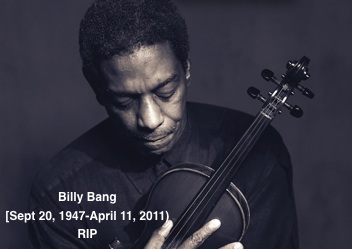
I recently found out that violinist Billy Bang has died, and it's heartbreaking - it was just this past December that I participated in one of his last American performances - a concert at Sista's Place in Brooklyn, as part of a new version of "The Group". My thoughts can't help but turn to the liner notes I wrote about Billy for my duo CD's, "Paired Down, Vol.'s I & II (on which he also…
I recently found out that violinist Billy Bang has died, and it's heartbreaking - it was just this past December that I participated in one of his last American performances - a concert at Sista's Place in Brooklyn, as part of a new version of "The Group". My thoughts can't help but turn to the liner notes I wrote about Billy for my duo CD's, "Paired Down, Vol.'s I & II (on which he also appeared), so I've included some of them here:
"In the early 90's, a "conservative New York-based jazz writer" prominent at the time walked into the club where I had just finished the final set with violinist Billy Bang’s Quartet, and the first words out of his mouth were: "Hey, Billy - still playing out of tune?" If he had arrived ten minutes earlier, he would have heard one of the most brilliant music makers on the planet at the top of his creative game. In an entirely ad-libbed, "free association" solo, Billy proceeded to call upon all manners of tradition, experience, and just plain "craziness". He evoked the blues. He emitted squeaks and cries and squawks from his instrument one would never have thought possible. And at one particularly inspired moment, he went about the room, using the various "room props" at his disposal - the bar stool, the picture frame, the table - as sound inspiration for his at-the-moment evocation.
So here it was, ten minutes later, and now all this critic could think to ask was a question regarding Billy’s tuning? The only response I could think of was "well, when Billy was tapping the picture frame he might have been a little flat". Clearly someone who had missed the point of Billy’s playing, which wasn’t about technical perfection (though he certainly achieved this, in his own way), or playing "correctly" or "swinging" (though he did those things, and then some, in his own way, as well) according to some stuffy textbook definition of what jazz is and isn’t supposed to be. Billy’s playing was about the spirit of giving your all; the ability to play consistently on the edge, ever-taking chances, dealing with the pain and joy of his own life experience in an often achingly beautiful, or achingly painful way. It was about true inspiration, forged with awareness of tradition and his own past. And in doing all of these things, it was about playing a music that goes beyond simple categorization, playing a music that can only best be described as "Bang Music"."
Now, of course, Billy and his "Bang Music" - that remarkable universe of musical expression that he created, is gone. May we keep the spirit of his music alive forever.
Lately, I've been finding myself doing more and more music for film, t.v. and other media. I think this is perhaps the natural culmination of a few factors: my life-long interest in computers and technology, my desire to be at home more with my 4 and 1-year old, and, of course, my love of writing music in different collaborative settings (which in the past has included opera, dance, musical…
Lately, I've been finding myself doing more and more music for film, t.v. and other media. I think this is perhaps the natural culmination of a few factors: my life-long interest in computers and technology, my desire to be at home more with my 4 and 1-year old, and, of course, my love of writing music in different collaborative settings (which in the past has included opera, dance, musical theatre, and large-scale orchestra). One of the t.v. shows I write for, in fact - "The Wonder Pets" (Nickelodeon) - just received its 3rd consecutive Emmy for "Outstanding Music Direction and Composition" and another ("The Ocean Room", for which I wrote the entire 26-episode underscore), was just today nominated for a Gemini (the "Canadian Emmy") for "Best Preschool Program or Series". To this end, I have two developments to announce: the launch of my "D.D. Jackson Composer" website at ddjacksoncomposer.com, and the arrival at the popular music licensing website Freeplay of my own "D.D. Jackson Collection" in conjunction with my membership in the Manhattan Producers Alliance featuring music that can be licensed for use on television and in other projects. While I plan to consider my jazz endeavors when the opportunity arises for sure (and, in fact, just finished a busy summer of such projects!), I'm also looking forward to the opportunity to be at home in my home studio, working "to deadline" for a variety of new media!
It's been a busy and hectic year thus far. In addition to my activities as jazz pianist/composer (including being a part-time faculty member at Hunter College, teaching courses in Popular Music and Jazz History), I have been enjoyably making a transition from constant live performance towards a more manageable schedule involving composing for film and t.v. My most recent projects have included…
It's been a busy and hectic year thus far. In addition to my activities as jazz pianist/composer (including being a part-time faculty member at Hunter College, teaching courses in Popular Music and Jazz History), I have been enjoyably making a transition from constant live performance towards a more manageable schedule involving composing for film and t.v. My most recent projects have included writing for the Nickelodeon show "The Wonder Pets" (which recently received it's second Emmy Award for Outstanding Music Direction and Composition), another charming children's show entitled "3rd & Bird" (which will make it's Disney Channel debut in 2011 and has been showing in over 15 markets around the world including Canada and the BBC), and writing and performing the complete underscore for the Sinking Ship Productions children's "reality show" "The Ocean Room" (currently showing in Canada). A composition of mine, "Lushly", was also recently licensed for a fascinating National Film Board of Canada documentary "Professor Norman Cornett", concerning an against-the-grain professor at McGill who was ultimately unceremoniously dismissed, and his unorthodox - but affecting - teaching methods. I am also currently in the process of revamping my website to better reflect my interest in writing for children's television and my other projects (so check back soon).
On the jazz front, I'm looking forward to the upcoming theatrical premiere of my jazz-influenced opera: "Trudeau: Long March/Shining Path" (written with librettist George Elliott Clarke), which will receive a week-long run in Halifax, Canada, this June (produced by Vocalypse Productions). And I recently was called by none other than Bill Cosby to be a member of his "Cos of Good Music" band at the upcoming Playboy Jazz Festival in Hollywood, California (he apparently heard me performing on the radio on James Carter's last CD for Universal and tracked me down).
Finally, I am as always enjoying settling down a bit more as father of 3-year old Jarrett and now 15 month old Aria :-)...
It was a busy day of schmoozing as part of the Manhattan Producers Alliance. Manhatpro is an organization of high-end engineers, composers and producers active in the film/t.v. worlds. I've been part of this world now for over a year and a half and have been having a blast. Almost immediately from joining, I got a gig writing music for the Little Airplane children's t.v. show "3rd & Bird!" (BBC…
It was a busy day of schmoozing as part of the Manhattan Producers Alliance. Manhatpro is an organization of high-end engineers, composers and producers active in the film/t.v. worlds. I've been part of this world now for over a year and a half and have been having a blast. Almost immediately from joining, I got a gig writing music for the Little Airplane children's t.v. show "3rd & Bird!" (BBC Worldwide), and, eventually, also wrote 4 episodes of their recently 2nd-Emmy-award-winning show "The Wonder Pets" (on Nickelodeon). Through a contact I made with the Wonder Pets, I landed a job writing the entire underscore for the 2nd season of a Canadian show called "The Ocean Room". All 3 shows are playing in various markets throughout the world, but I'm particularly excited that all 3 will be running this fall in my native country of Canada on television - if you're there, be on the lookout! At any rate, Manhatpro has set up a booth at the annual Audio Engineering Conference, and so I spent part of the day helping out at the booth, attending the Manhatpro seminar (designed, in part, to recruit new members), and going by their mixer at the Westin hotel, where I met lots of interesting people.
It's been a very enjoyable last few months. Recently got back from a performance of my jazz opera "Quebecite" (pronounced "kay-BEH-see-tay") featuring a fascinatingly diverse assemblage of singers and instrumentalists: vocalists Martin Sola, Meetu Chilana, Yoon Choi and Dean Bowman; cellist Dana Leong, trumpeter Shane Endsley, drummer Reggie Nicholson, bassist Thomas Morgan, and myself as…
It's been a very enjoyable last few months. Recently got back from a performance of my jazz opera "Quebecite" (pronounced "kay-BEH-see-tay") featuring a fascinatingly diverse assemblage of singers and instrumentalists: vocalists Martin Sola, Meetu Chilana, Yoon Choi and Dean Bowman; cellist Dana Leong, trumpeter Shane Endsley, drummer Reggie Nicholson, bassist Thomas Morgan, and myself as pianist/conductor. The work (written with librettist "Afro-Canadian" librettist George Elliott Clarke), traces the relationship between 2 interracial couples, one (modelled after my own parents), Black and Chinese; the other Indian and Haitian, and was originally premiered in a very ambitious, full-stage production at the 2003 Guelph Jazz Festival. In this instance, we did a much more manageable concert version, which allowed for focus on the music and words and the talents of those involved. I've been asked what a jazz opera really is. There's certainly no formal, defining answer, but I will say that I certainly attempted with the work to write with the specific voices in mind and to allow them to "do their thing", whether it was Yoon Choi's avant-garde vocalisms or Dean Bowman's passionate, soulful singing, or, in this new version's case, Dana Leong's remarkable cello soloing (occasionally - and surprisingly! - doubled with his own whistling!) I have to also add that I really learned something myself with this work after not having performed it in its entirety for a few years; namely, that it is, after all, surprisingly "transportable". In other words, despite originally being written with other voices in mind, I was very impressed with the quite different take on the material Martin Sola and Meetu Chilana brought to their respective roles of Ovide and Laxmi, and it really allowed me to hear - and perhaps appreciate - the work with fresh ears. We'll definitely have to find other avenues for it's performance down the line.Prior to this event, I did a series of workshops and a duo performance with the same Dean Bowman, sponsored by the Guelph Jazz Festival and it's Artistic Director, Ajay Heble. Perhaps the most unusual moment in the week occurred when Dean and I were given the opportunity of coaching students at a Mennonite school outside of Guelph. The Mennonites are a religious group whose past intersects those of the Amish and at least superficially share many of the same traits, from horse-drawn carriages to a general disavowing of modern technology. Of course, we arrived nervously hiding our cameras, only to see that since the actual day of workshops was to take place in a typical Ontario public school, there were not only cameras flashing by some of the students but videotaping as well. Still, it was somewhat surreal to discover that the boys are expected to leave school for good after Grade 10; the girls after Grade 8, so that they can go and work on the farm - quite a different world...In January (on my birthday, the 25th), I was in Paris to perform with baritone saxist Hamiet Bluiett and an all-star lineup of William Parker on bass, Hamid Drake on drums, Billy Bang on violin, and Ahmed Abdullah on trumpet as part of the Sons D'Hiver Festival. It was my first trip abroad since Obama's victory and I was anxious to see if "anything had changed" :-), but our stay was brief and focused enough that all I can say for certain was that the audiences were passionate and enthusiastic about our free-wheeling performance. Bluiett, in typical fashion at one point during the proceedings picked up his sax stand and positioned himself directly in front of a smiling, wheel-chaired audience member, so he could better enjoy the experience near-hands-on, and he later signalled the other "portable" players in the band to join him. All in all, a fun time....Of course, the most significant event of the past few months was the birth of our 2nd child, Aria Lilly Jackson, on Jan. 6th, 2009. Welcome to the world, Aria!
Recently performed another (now seemingly yearly!) concert at the Barrie Jazz Festival, trying out my "Canadian Inspirations". The concept was simple: particularly in light of the recent passing of Canadian giant Oscar Peterson, I wanted to present something that would reflect the inspiration he and many other great Canadians have brought to my playing. Consequently, I ended up playing a version…
Recently performed another (now seemingly yearly!) concert at the Barrie Jazz Festival, trying out my "Canadian Inspirations". The concept was simple: particularly in light of the recent passing of Canadian giant Oscar Peterson, I wanted to present something that would reflect the inspiration he and many other great Canadians have brought to my playing. Consequently, I ended up playing a version of his "Hymn to Freedom". I also, though, recently performed some Alanis Morissette tunes as part of a tribute to this more contemporary Canadian inspiration for the CBC and so the program ended up including pieces by her, as well as a solo piano rendition of Neil Young's "Ohio". I ended the program with a tribute to Glenn Gould, via my own take on his famous "Goldberg Variations" by Bach.
[Later] I had the pleasure of doing a series of annual solo piano concerts at the Barrie Jazz Festival over several years covering a wide range of musical subject matter. Here are some excerpts from one such concert, entitled "Canadian Inspirations" - my take on the music associated with or written by Canadian artists, plus a couple of originals from what was originally my "A Canadian in New York" suite, commissioned by Celebrate Brooklyn. Also included at the end are a couple of tracks I recorded for CBC radio in tribute to fellow Ottawa native Alanis Morrissette:
Last month I participated in a unique concert put together by renowned CBC radio producer Alan Neal in honour of Ottawa-born pop megastar Alanis Morissette, in celebration of her induction into the Canadian Music Industry Hall of Fame. The concept was simple: Alan brought together six different Canadian artists and had us each do our own, personal spin on Alanis tunes of our choice. For my…
Last month I participated in a unique concert put together by renowned CBC radio producer Alan Neal in honour of Ottawa-born pop megastar Alanis Morissette, in celebration of her induction into the Canadian Music Industry Hall of Fame. The concept was simple: Alan brought together six different Canadian artists and had us each do our own, personal spin on Alanis tunes of our choice. For my performance, I decided to do an intentionally propulsive version of "Hand in My Pocket" and a more whimsical version of "Head Over Feet". Most compelling for me was the presence of Alanis's very down-to-earth, humble, and entirely "normal" parents, whom I had the pleasure to acknowledge after our grand finale version of her very first hit "Too Hot."
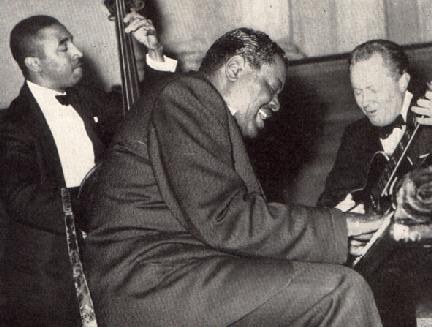
Oscar Peterson died Sunday. Peterson was really the reason I became a jazz pianist, and was the first jazz pianist I probably was ever exposed to, his recording of "Night Train" the first jazz album I ever owned, the first jazz pianist I ever heard live (back in Ottawa, in an event that also featured Claude Bolling and Michel Legrand in a memorable three piano, round-robin "duel" and for which I…
Oscar Peterson died Sunday. Peterson was really the reason I became a jazz pianist, and was the first jazz pianist I probably was ever exposed to, his recording of "Night Train" the first jazz album I ever owned, the first jazz pianist I ever heard live (back in Ottawa, in an event that also featured Claude Bolling and Michel Legrand in a memorable three piano, round-robin "duel" and for which I sat in the front row of the National Arts Centre opera house), and his "Hymn to Freedom" one of the first jazz pieces I ever played. His impeccable sense of swing and the blues tinge he brought to everything he did, combined with his flawless and elegant piano technique are probably among the key qualities that will forever come to mind when I think of his impact on me personally (as well as, I'm sure, many others) as pianist and musician. But he was also Canada's musical ambassador to the world, and the fact that such a figure was also African-Canadian was even more inspiring to me as a someone with African/Chinese background myself. I am thankful that I finally had the opportunity to briefly shake his hand a few years ago at a National Jazz Awards event in Toronto, but in the end how can you ever really thank such a great Canadian and artist such as this for everything he achieved and represented to us all? R.I.P., Oscar Peterson.
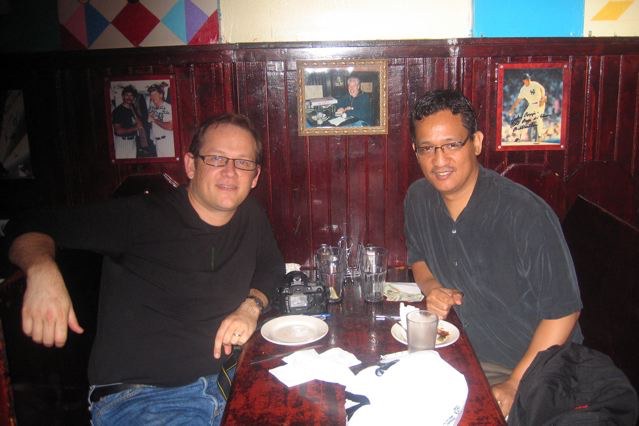
I was delighted to have had a chance recently to sit down and finally chat in person with New Music Strategies guru Andrew Dubber when he was in town attending the CMJ Music Marathon Conference. For those unaware, Andrew is arguably one of the foremost thinkers on what we all need to be doing to operate as musicians in this Web 2.0 age (you can download his free e-book on the subject here). Our…
I was delighted to have had a chance recently to sit down and finally chat in person with New Music Strategies guru Andrew Dubber when he was in town attending the CMJ Music Marathon Conference. For those unaware, Andrew is arguably one of the foremost thinkers on what we all need to be doing to operate as musicians in this Web 2.0 age (you can download his free e-book on the subject here). Our conversation covered such wide-ranging subject matter as Creative Commons and music copyright, the meaning of the seemingly new business models introduced by such artists as Radiohead and Prince, the controversy over Gerd Leonard's "Music Like Water" idea, my own Artistshare website and strategies for selling digital vs. physical content, plus building fan relationships and more. Listen to it now in my "Living Jazz Podcast #22".
Lots of recent activity. Recently played piano on an upcoming James Carter CD coming out in the spring on the Michael Cuscuna-produced Mosaic Records (a division of Universal), with Victor Lewis on drums, James Genus on bass, and guest Rodney Jones on guitar (an old Manhattan school combo coach in the early 90’s!)…The session was remarkably efficient – internalize a tune, record a tune;…
Lots of recent activity. Recently played piano on an upcoming James Carter CD coming out in the spring on the Michael Cuscuna-produced Mosaic Records (a division of Universal), with Victor Lewis on drums, James Genus on bass, and guest Rodney Jones on guitar (an old Manhattan school combo coach in the early 90’s!)…The session was remarkably efficient – internalize a tune, record a tune; internalize another, etc…., with some interesting twists and turns along the way…I’ve also started teaching (seemingly “of all things” :-)) a course on the Beatles at Concordia College near the Bronx as a last-minute sub for a musical colleague of mine, and have, incidentally, since discovered a lot of interesting connections between their music and the world of jazz (and of jazz writing, with at least one music-journalist colleague, Ashley Kahn, I’ve noticed, having contributed writings on the Beatles). I even in the course of my research stumbled upon the interesting fact that John Lennon once met with Canada’s former Prime Minister Pierre Elliott Trudeau (the subject of my current opera written with librettist George Elliott Clarke entitled “Trudeau: Long March/Shining Path”), and was so intrigued by this fact that I suggested that my librettist collaborator include a meeting between the two in our opera, something with which he will shortly be obliging me…So look for John Lennon (along with Mao, Castro, Mandela, and others) to make an appearance in our Trudeau opera in the near future :-)…I also recently participated in an interesting “Moonfest” concert in honour of the traditional Chinese Moonfest (an event which despite being half-Chinese I profess to never having previously known about!) It took place in Halifax, NS, and a review describing the proceedings appears here. A particularly notable occurence during the festivities (apart from the enjoyable servings of “Chinese tea and mooncakes” at intermission!) was the translation of my librettist colleague George Elliott Clarke’s poetry from English to Chinese, which made for fascinating comparisons in presentation and inflection….
Well, it’s definitely the “mutual admiration society”, as New Music Strategies author Andrew Dubber recently posted a link to and about me on his website in response to a question I posed to him about his fantastic and “essential reading” free Ebook, ”The 20 Things You Must Know About Music Online”. The book is really the summation of many things I’ve been more and more deeply exploring of late…
Well, it’s definitely the “mutual admiration society”, as New Music Strategies author Andrew Dubber recently posted a link to and about me on his website in response to a question I posed to him about his fantastic and “essential reading” free Ebook, ”The 20 Things You Must Know About Music Online”. The book is really the summation of many things I’ve been more and more deeply exploring of late as I dive head-first into this whole Web 2.0 world. It’s amazing how quickly things change, but he’s managed to sum up the state of things nicely and I highly recommend his site.
Other news: Just did a successful performance at the Museum of Modern Art’s “Summergarden” series, featuring a piece I premiered in honor of my 10 month old son, Jarrett Jackson. The concert was originally scheduled to take place outdoors in a very scenic and stately courtyard, but the incessant rain that day turned out to be a blessing in disguise in that we were able to leave the intense humidity in favor of a much more pleasant, indoor, air conditioned setting in the museum proper (and how often does one get the chance to perform in front of an actual Rodin sculpture, the statute peering mischievously over my left shoulder throughout the performance, as I played?)
In this day and age, being able to bring in a dedicated assemblage of 300 people (a sold-out show, with people actually turned away at the door) on a consistent basis is a tremendous achievement, and so I tip my hat to the event's organizer, Melanie Monios, and also to Cat Henry of Jazz at Lincoln Center for her involvement as well.
The group I brought in consisted of myself, Dwayne Burno on bass, Reggie Nicholson on drums, and Sam Newsome on soprano sax, who joined us for a few tunes. I felt a strange manic energy at first, perhaps due to the personal nature of the concert: my father had come down all the way from Ottawa, Canada to attend, and my father-and mother-in law as well as other extended family were all there. Most fascinatingly for me, was the presence, throughout, of Jarrett Jackson, my 10-month old ( held - and handled! - by my wife Elizabeth for the entire concert) who truly seemed old enough to start to grasp that his daddy is a performer, and was definitely watching me with curiosity from the audience for a large part of the concert, occasionally peppering the air with baby squeals (occasionally at amusingly inopportune moments :-))...He particularly seemed to engage himself during "his tune" - a piece I wrote for the occasion entitled "Frantic Explorations" (I'll post excerpts in an upcoming Podcast), in which I tried to musically describe his propensity towards (as Jerry Seinfeld once put it) treating his head like a helmet as he crawled recklessly and adventurously about our apartment.
I also had the unusual but distinct pleasure of having my performances inspire New York-based visual artist Mark Wiener, who apparently was sketching throughout the concert and plans to send me one and show the remaining drawings at a Solo exhibition in October. Much thanks to all who attended!
A few little “mini-successes” today. Finished my article on Bosendorfer’s Ceuss piano for the Sept./07 Downbeat coming out mid-August (more on this in my latest Living Jazz Podcast #21), and just got back from a particularly successful night of Chicago City Limits. For those not aware, CCL is New York’s longest running comedy revue, but it goes well beyond that into the very daring world of…
A few little “mini-successes” today. Finished my article on Bosendorfer’s Ceuss piano for the Sept./07 Downbeat coming out mid-August (more on this in my latest Living Jazz Podcast #21), and just got back from a particularly successful night of Chicago City Limits. For those not aware, CCL is New York’s longest running comedy revue, but it goes well beyond that into the very daring world of theatrical improv. I’ve written about this before in my Downbeat magazine Living Jazz columns, but suffice to say that what has always appealed to me about this world are the remarkable parallels between what they do on the stage as improvising actors and what I try to do as a pianist. I remember back as a student at Indiana University watching an ad-hoc improv group playing a game called “Freeze”, where they would unfurl endless scenes made up on the spot; someone would yell “freeze”, enter the scene and take over from a now-frozen peer, and then the scene would continue, often in outlandishly different directions, a thorough exploration of the mind and of imagination. I remember being fascinated, and wishing that I could participate – who would have thought I could be involved in a profession, ultimately, that actually helps make people laugh? (on purpose, that is :-)…)
I first began doing CCL when my BMI Lehman Engel Musical Theatre Workshop writing partner Carl Kissin. (a longtime CCL veteran, now “retired” from active duty there but still going strong in the world of improv, having recently won the Monologue Slam this week here in NY) recommended me. At first I was a shy sub, but I eventually assumed the mantle of “Music Director” for the mainstage company here in town and now perform quite regularly (Thurs-Sat. at 8 pm, a 2nd show Sat. at 10 pm) when I’m not on the road.
The main stage cast has gone through changes these past few months but now consists of Annie Figenshu, Rob Schiffman, Stefan Schick, and Joe DeGise II. One of CCL founders, Paul Zuckerman, once said that the beauty of the show to an audience can often be that by everyone in the company bringing their own, individual talents to the table, the illusion is created for the audience that we know a little bit about every conceivable subject the audience might yell out over the course of a show, and this idea, I think, was no more evident that today’s show, as we went through our various improv forms that form the backbone of a CCL performance (a storytelling form called Byrone, improvised Jeapardy, a fully improvised musical based around the events of someone in the audience’s day, etc., etc.)…
In the end, it’s really hard to explain what makes a great show. Certainly, it was in front a smallest, but highly enthused, uninhibited and warm audience, and this fact can help, as the show is very much about feeding off of the wavelengths shooting back at us from the crowd. I think, ultimately, it’s something about chemistry – something about the fact that the cast truly likes and respects each other, and each really DOES have something to contribute, from Annie’s penchant towards musical hooks and characters always so grounded in reality, to Rob’s incredible musical chops mixed with a brilliant and quick mind, to Stefan’s ability to play “manic” with such controlled, gradually unfurling chaos, to Joe’s seasoned mastery of his characters (today assuming, in one scene, a particularly exaggeratedly-accented Scot), and often assuming the “straight man” to the mania that surrounds him. I don’t know what, exactly it is, but somehow today everything just clicked, and one leaves feeling that what we are doing really is enjoyable – and special.
My final “mini-success story” of the day was a copy of a recital program my brother Shaw just sent me of a former student of his named Vincent. In the program’s bio, it describes how hearing me play for Shaw’s class back when he was 7 years old inspired him to become a pianist, and he’s since gone on to win all sorts of awards and enter many competitions (some quite familiar to me as I also did such “rounds” when I was his age). It’s an amazing feeling to know that you can inspire someone so much.
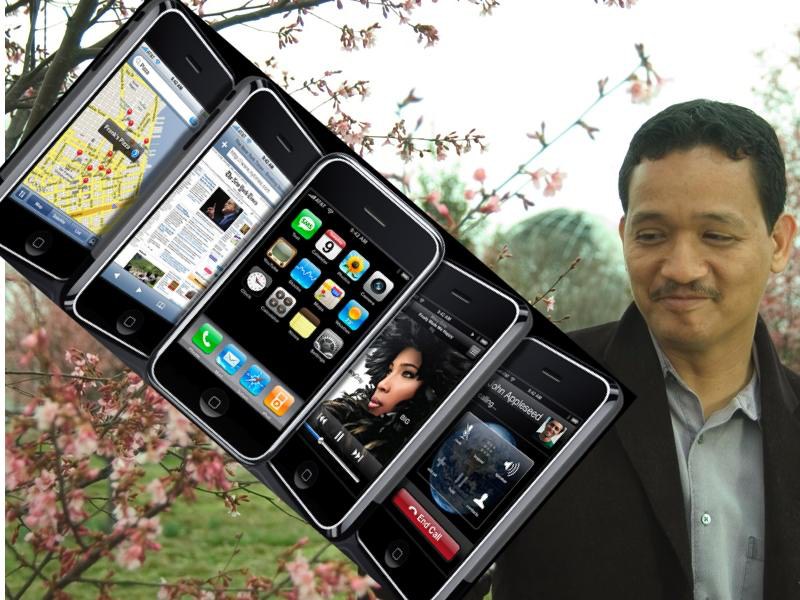
I couldn’t resist – after my first night’s gig with Ahmed Abdullah Friday June 29th, still on a high from the performances, I took the subway up to Apple’s self-described “flagship store” on 58th street and 5th avenue, to witness first hand the whole Iphone phenomenon. As a self-professed tech-addict (not only for music-related applications but beyond), I must say that when I first watched Steve…
I couldn’t resist – after my first night’s gig with Ahmed Abdullah Friday June 29th, still on a high from the performances, I took the subway up to Apple’s self-described “flagship store” on 58th street and 5th avenue, to witness first hand the whole Iphone phenomenon. As a self-professed tech-addict (not only for music-related applications but beyond), I must say that when I first watched Steve Jobs presentation of this device last January, I was immediately hooked, though lamented it’s understandably high price for a first generation product. As my birthday was nearing, however, my family stepped in and offered to buy me one 6 months later when the product finally arrived. In between, there was the usual critiques by macheads about what the machine lacked, but what nobody could 100% report in the end was just how fantastic the machine actually worked, and how it felt, in one’s hands. I had to see for myself.
Despite the incredible anticipation, I was amazed that a few days earlier, on Tues. of this past week, people had already started lining up outside the 5th Avenue Apple Store here in New York. At things turned out, when I finally arrived at 2 am Friday on the so-called “iDay”, the initial, frantic exuberant lines surrounding the 6 pm opening had long since thinned out, and the only lines I now encountered inside the store weren’t for buying the device but for simply trying it out, with crowds several bodies deep clamoring around display tables to get a glimpse of what until then had only existed through other’s words and on t.v. and the internet.
Finally, my turn “up” arrived and I had one. Again, I was still trying to convince myself that I was merely there to “witness” the cultural occasion rather than to actually “purchase” – surely I would be inclined to wait for the iPhone version 2.0 with it’s (no doubt) soon-to-come built in GPS, 3G, and on and on…But when I actually held the damn thing in my hands and tried a simply scrolling motion with my fingers, I was instantly, almost primitively “hooked” in a way I had never experienced before with any previous consumer product. It was the most intuitively designed piece of machinery I have ever encountered, so simple and poetic as to truly be a work of art. And I had to buy one.
When I got it home, I (again) was already completely enthralled just with the finger navigation functionality, so much so that I literally forgot for a moment then it was also a fantastic web browser. Once I’d finished exploring this feature, it dawned on me that – I forgot! - it was also a widescreen video Ipod. And most amusingly, it was over an hour later and I was about to finally turn it off that I suddenly remembered that – oh ya – it’s a PHONE as well J…
It’s a genre-changing product and yes, it lacks certain things which I’m sure will be added later (most notably, a plan allowing for cheaper calls when traveling in Canada!), and will only get cheaper and more feature-laden..But considering this is iPhone 1.0, Apple is off to a breathtaking start…
Just completed my first evening at Sweet Rhythm here in NYC. It was quite surreal being back in my old stomping grounds. I used to live right down the street, on Leroy and 7th Avenue near Bleecker, when I was a freshly minted graduate of the Manhattan School of Music. At the time, all I could afford was the smallest possible apartment, in which the shower was literally made out of a converted…
Just completed my first evening at Sweet Rhythm here in NYC. It was quite surreal being back in my old stomping grounds. I used to live right down the street, on Leroy and 7th Avenue near Bleecker, when I was a freshly minted graduate of the Manhattan School of Music. At the time, all I could afford was the smallest possible apartment, in which the shower was literally made out of a converted closet, and the bathroom (which the landlord disingenuously referred to as a "commode") was in the hall, under seperate lock and key (I actually had to carefully peer out and look both ways before using the john each morning, in my pjs!)
The advantage, however, for a "kid" like me, at the time, fresh out of school, was that I was instantly thrust right into the center of the musical action, and could walk down the street (literally 50 yards), to catch the greatest jazz talent in the world at the then Sweet Basil club (as well as the legendary Village Vanguard, only a few further steps away); not to mention the (sadly now defunct) Village Gate, Bradley's...the list certainly goes on...
So here I was today performing back at what is now called Sweet Rhythm, yet experiencing a strange deja vu, despite the place having been completely remodelled. Greeting me at the door, for example, was an ageless James Browne, who booked Ahmed for the gig presumably (and did all the booking "way back when", also, when I first lived here, in the 90's). At the bar was (Chi? - I'm embarrassed to have forgotten his name!) - a pony-tailed Asian bartender who always struck me as warm and friendly, and a true fan of the music; he lamented to me the declining audiences and the fact that not enough people knew of what was going on at the club, and he reminisced with me briefly about days gone by seeing such great performers as my mentor, Don Pullen.
The piano, too, looked the same - and I couldn't help but recall my stool flying into the audience way back when (probably circa 1993) when I appeared there as (I believe it was) an overly exuberant member of Jane Bunnett's group, and of feeling overwhelmed by the sheer ferocity of Billy Hart's uninhibited drumming style, also in the same band.
Tonight, we had a modest crowd of the true "die-hards", but this had seemingly no effect on the music, and we proceeded to do a set of truly magical music-making - a true "Music of the Spirit", as our trumpet-leader Ahmed Abdullah always so aptly put it (also in the band is bari player Alex Harding, Radu on bass, Selim Washington on sax/flute, Louis Rivera doing poetry along with Ahmed's wife Monique, and Brandon Lewis on drums.) A happening affair - and for those of you who can catch it, be sure to join us for our final night tomorrow (Sat, Jun 30th) where I'm sure the music will be swinging' (to facetiously paraphrase Wynton Marsalis :-))...
My new Living Jazz podcast is up on virtual instruments - just click on the link....It's in a way an extension of a similar column I wrote for Downbeat magazine which as I write this is hitting newstands right about now...In the Podcast I discuss the debate between the use of Virtual Instruments in live performance to replace actual live performers (something I attempted recently to do for the…
My new Living Jazz podcast is up on virtual instruments - just click on the link....It's in a way an extension of a similar column I wrote for Downbeat magazine which as I write this is hitting newstands right about now...In the Podcast I discuss the debate between the use of Virtual Instruments in live performance to replace actual live performers (something I attempted recently to do for the premiere of my Trudeau opera in Toronto, with an unexpected result!) I also touch upon Garritan's exquisite Gofriller Cello and Strad Violin virtual instruments, and on my participation in the recent launching in NYC of Bosendorfer piano's new Ceuess "player-piano" technology (though this designation really doesn't do the technology justice!) I round it out with an excerpt from the Trudeau opera premiere - hope you enjoy it!
Just finished a low-key but strangely energizing gig with vocalist Dean Bowman at a small club in Brooklyn called "Puppet's". It's a club that's been around for over a year and which was started by Jaime Aff, himself an accomplished drummer in his own right (and who, in fact, sat in with us that day). The bass player was the inimitable Rael Wesley Grant, a virtuoso on the six-string bass. The…
Just finished a low-key but strangely energizing gig with vocalist Dean Bowman at a small club in Brooklyn called "Puppet's". It's a club that's been around for over a year and which was started by Jaime Aff, himself an accomplished drummer in his own right (and who, in fact, sat in with us that day). The bass player was the inimitable Rael Wesley Grant, a virtuoso on the six-string bass. The "strange" part of the occasion occured during our first night there a week earlier, in which the audience consisted of a few stragglers off of the street and, in particular, an unusually and robustly drunk-out-of-his-gourd patron who at a particularly amusing point proceeded to provide us with an interpretive dance of our musical proceedings as we played, before ultimately having a "freak out" episode at his table during the break.
Most recently, the "energizing" part of the occasion occurred at some magical point during the second set. Gigs like this often feel like "dues-payers", but the real impetus for doing them at all certainly isn't financial, but for moments like these, when things just start musically clicking, and you're reminded of the company you're keeping and the high level of musicianship that is on display. Dean is a truly historic vocalist - currently he's touring with John Scofield's Tribute to Ray Charles project and with another project of Don Byron's, and actually also embodied the role of my father in my previous opera, "Quebecite". But, as is typical in New York, he could be found at this out-of-the-way place practicing his craft, incubating his conception for that time in the near-future when we can hit the road and play at other venues around the country and the world.
At a particular moment during this set, that strange synergy emerged, in which you feel as if you've taken a relaxing step backwards and are listening, with the audience, to the proceedings rather than playing; and in which a strange conversation occurs, energy-wise, between you and the audience. Dean rides this sort of energy as well as anyone, and I went along, playing my trusty Roland VK-7 organ and the Casio keyboard that the club provided upon my arrival.Afterwards I called my wife to express my near-surprise with this re-discovery - a true summary of why I became a musician in the first place.
Dean has a tour planned in April, so if all goes well we'll bring his music to Paris and then across the U.S. at that time. Until then, there'll likely be a few more smaller gigs around town as we continue to hone our craft and seek those surprising musical moments.
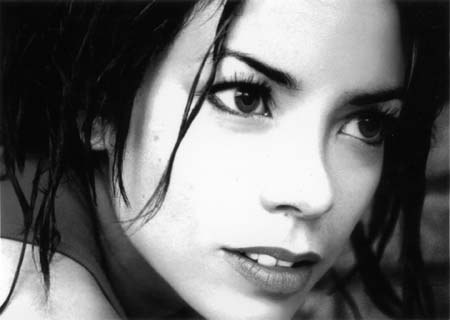
Just had a fun experience, performing in my hometown of Ottawa on CBC Radio's "Fuse" program, hosted by Alan Neal, with Emm Gryner. The idea of the show is to pair two conceptually diverse artists together for the first time and see how things click. They've done everything from mixing a classical piano/cello duo with pop musicians and well beyond, and for my appearance, Alan was very keen on…
Just had a fun experience, performing in my hometown of Ottawa on CBC Radio's "Fuse" program, hosted by Alan Neal, with Emm Gryner. The idea of the show is to pair two conceptually diverse artists together for the first time and see how things click. They've done everything from mixing a classical piano/cello duo with pop musicians and well beyond, and for my appearance, Alan was very keen on having me appear with this renowned Canadian pop vocalist. Admittedly, she was someone that prior to my preparation for our meeting I hadn't heard of, but I was delighted to have the opportunity to dive into her musical world for a few days, with it's mix of indie, folk, pop/rock colors and her original songwriting and intimate singing. After a flurry of back and forth emails in the few days preceeding the event in which we "pitched" ideas to each other about which of our own tunes we thought might work, we met for the first time on the eve of the event in Studio 40 at Ottawa's CBC studios. She's a petite woman, and quite exotic, sharing with me some Asian heritage, and seemed very keen to just "go for it" and try things out. We eventually settled on a few of my tunes: "Lushly" from my opera Quebecite in which she bravely sang the lush and poetic words of librettist George Elliott Clarke over my melody; Summer, gamely playing electric bass; "Final Invocation" from my Suite for NY doing wordless vocals seemingly for the first time live alternating with my more exploratory musical journeys in between, and we jammed out on two pianos with Neal Young's "Ohio". We also did an all two-piano version of her hit song "Girls are Murder", and I accompanied her on her beautiful tune "Blackwinged Bird". What was surprising compared to the edited copies of the show they had provided me with to aid in my preparation was just how detailed and lengthy the questioning of us by the host turned out to be come performance day, so much so that it really ended up being interviews with performance rather than the other way around. And I must say that having done many, may interviews over the years, I was particularly struck by the originality of Alan's questions. All in all, quite an enjoyable show.
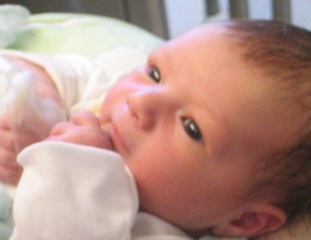
Who is that mysterious creature you might ask? On Sept. 16th, 2006 my wife Liz and I joined the notorious ranks of those who simply can't resist posting baby photos, as our son Jarrett Jackson (named, of course, after pianist Keith Jarrett) was finally born. Hear my reflections on this momentous event in our lives on Podcast #19, along with my thoughts on the four elements one needs to "make it"…
Who is that mysterious creature you might ask? On Sept. 16th, 2006 my wife Liz and I joined the notorious ranks of those who simply can't resist posting baby photos, as our son Jarrett Jackson (named, of course, after pianist Keith Jarrett) was finally born. Hear my reflections on this momentous event in our lives on Podcast #19, along with my thoughts on the four elements one needs to "make it" in the music business, plus a "bonus track" featuring John Scofield's current vocalist Dean Bowman performing an original composition of mine. Just click on "D.D. Jackson's Living Jazz Podcast #19" (right)...
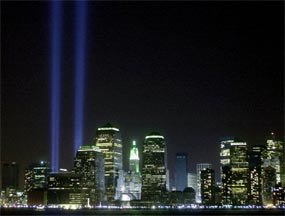
I thought it fitting given the 9/11 anniversary to include in my latest D.D. Jackson's Living Jazz Podcast #18 a piece I wrote in memory of the victims, written for my Justin Time CD “Suite for New York” and entitled "Final Invocation (Towers of Light)". In the Podcast, I also discuss my experiences with Myspace and reflect on the state of jazz in this new, instant-access age. I hope you enjoy it.
News travels fast. My Trudeau opera collaborator, librettist George Elliott Clarke, just did an interview for the CBC on our upcoming new opera. It was posted to the CBC website (I've put up a copy of it in the Press section of my website) and within hours was being quoted in newspapers from as far away as India and even North Korea (!) Also look out for an interview I just did by phone with…
News travels fast. My Trudeau opera collaborator, librettist George Elliott Clarke, just did an interview for the CBC on our upcoming new opera. It was posted to the CBC website (I've put up a copy of it in the Press section of my website) and within hours was being quoted in newspapers from as far away as India and even North Korea (!) Also look out for an interview I just did by phone with Canada's National Post, which should be appearing soon. In the meantime, I've put up a demo of the opening number from the opera in the downloads sections of my website. Enjoy!
Just got back from an intense, 3-day worskhop in Wolfville, Nova Scotia (Canada), outside of Halifax, where I was trying out for the first time the music I've been intensely writing for the new opera on Canada's notorious late Prime Minister, Pierre Elliott Trudeau, with librettist and Trudeau Fellow/Governor General Literary Award recipient George Elliott Clarke. The work will be scored for 5…
Just got back from an intense, 3-day worskhop in Wolfville, Nova Scotia (Canada), outside of Halifax, where I was trying out for the first time the music I've been intensely writing for the new opera on Canada's notorious late Prime Minister, Pierre Elliott Trudeau, with librettist and Trudeau Fellow/Governor General Literary Award recipient George Elliott Clarke. The work will be scored for 5 vocalists and (ultimately!) orchestra, but for this workshop we focused on trying out the actual compositions with 3 wonderful singers - Janice Jackson and John Lindsay-Botten (both from Halifax), and Douglas Tranquada from Toronto. I'm still editing the demo, but will put some of it up here shortly for you to check out. In the meantime, check out my latest Podcast (#17) for an excerpt, plus a sample of a piece I wrote in memory of the late, great John Hicks, and a walking audio tour of my new "Serenity CD". And look for the Trudeau opera premiere at the Harbourfront Centre in Toronto in May/07 (and beyond!)
Lots of recent news of late. On June 4th I attended what always ends up being a bittersweet affair - the memorial service at the Jazz church at St. Peters' for recently departed master pianist John Hicks. John was one of the many "indirect" mentors I've had in my life; someone who although I didn't directly study WITH him, was constantly studying his approach to his craft, particularly in the…
Lots of recent news of late. On June 4th I attended what always ends up being a bittersweet affair - the memorial service at the Jazz church at St. Peters' for recently departed master pianist John Hicks. John was one of the many "indirect" mentors I've had in my life; someone who although I didn't directly study WITH him, was constantly studying his approach to his craft, particularly in the context of the work he did for many years as pianist in David Murray's quartets. It was John, in fact, for whom I was subbing when I got my first major career break, appearing at the 1994 Montreal Jazzfest in the David Murray Quartet, at which I was essentially "discovered" by Justin Time Records; I also went on to perform and record with David for many years. The memorial was an intense celebration of his life, featuring an utterly all-star lineup of jazzers from the World Saxophone Quartet, to Cassandra Wilson; even pianist Cecil Taylor showed up and did "his thing" for an extended improvised solo piano set. John truly has touched people the world over with his remarkable gift and will be sorely missed. I actually recorded a solo piano piece dedicated to him entitled "Waltz for Mr. Hicks"; listen to my latest Living Jazz Podcast #17 for an excerpt. RIP John.
Ah to perform again. Just finished a performance of excerpts from my jazz opera "Quebecite" at the Frye International Literary Festival in Moncton, New Brunswick (Canada - for the uninitiated!) We were here at the behest not only of the organizers, but of poet (and my collaborator) George Elliott Clarke, who utilized his considerable weight to ensure that there would be music - not just words -…
Ah to perform again. Just finished a performance of excerpts from my jazz opera "Quebecite" at the Frye International Literary Festival in Moncton, New Brunswick (Canada - for the uninitiated!) We were here at the behest not only of the organizers, but of poet (and my collaborator) George Elliott Clarke, who utilized his considerable weight to ensure that there would be music - not just words - from the work at the Fest. Brought along for the ride was former Screaming Headless Torso veteran Dean Bowman (who had recently returned form a world tour with guitar legend John Scofield), and Yoon Choi, a great (though under-known) jazz vocalist. Together, the two of them essentially played an extrapolated version of my parents in the work, and their characters interact in various ways with two additional characters - one Indian (Laxmi), the other Haitian Creole, the lot of it dreamt up by the fertile imagination of George Elliott Clarke (though based in part on the life story of my own parents). After the concert I managed to squeeze in an interview with Yoon Choi at the airport, which is the "main event" of my latest Living Jazz Podcast #16, available on this site for free. Enjoy!
I wanted to share with everyone the title cut, SERENITY SONG, from my upcoming new Justin Time "Serenity Song" CD and so it's now available for free download HERE! I'd also like to announce that the release date has been moved forward from July 15/06 to JUNE 20th/06. Pre-order now by clicking on "Artistshare" to start immediately receiving behind-the-scenes content on the making of the new…
I wanted to share with everyone the title cut, SERENITY SONG, from my upcoming new Justin Time "Serenity Song" CD and so it's now available for free download HERE! I'd also like to announce that the release date has been moved forward from July 15/06 to JUNE 20th/06. Pre-order now by clicking on "Artistshare" to start immediately receiving behind-the-scenes content on the making of the new recording!
Just attended a fantastic seminar given by Bret Primack on “Web Publicity Essentials” sponsored by Chamber Music America here in New York City. Bret gained notoriety (albeit initially anonymously) as “The Pariah”, an outspoken critic of the conservative state of jazz and it’s dominance by the major labels, back in the heyday of the Young Lion movement headed by Wynton Marsalis. Since then, he’s…
Just attended a fantastic seminar given by Bret Primack on “Web Publicity Essentials” sponsored by Chamber Music America here in New York City. Bret gained notoriety (albeit initially anonymously) as “The Pariah”, an outspoken critic of the conservative state of jazz and it’s dominance by the major labels, back in the heyday of the Young Lion movement headed by Wynton Marsalis. Since then, he’s gone on to produce a book ("How to Make It Big In the New Music Biz") I actually wrote about in a recent Down Beat Living Jazz column ("Internet Promotion, An Update"). The book has since gone out of print, but was fascinating in that he advocated the novel idea of using “viral marketing” techniques to spread the word about one’s music (including the notion of placing one's music deliberately on "illegal" peer-to-peer networks.)
This seminar was helpful not necessarily because the information I learned was revelatory, but because I couldn’t help but marvel at his ability to cover such broad and important territory – how to optimize your website, what other websites to check out for help – in one fiercely and efficiently concentrated 2 hour session. It also confirmed that a lot of the things he recommends be done I am thankfully already attempting with this new Artistshare-powered site: providing compelling content on one's site that is also easily navigatable and updated regularly, using Electronic Press Kits, providing sound samples straight away on one’s homepage, etc.
The most interesting notion discussed was the one that previously and still intrigues me: the use of the internet for “viral marketing” – namely giving people compelling things they can take away with them and hopefully trade with others (such as mp3 files), in order to expontentially spread the word about you from 2, to 4, to 8, to 16 and beyond.
He also cited Podcasts as a way to further such promotional growth, and I was surprised to discover that I had the only actual Podcast in the entire room with my "Livng Jazz Podcasts". But he made also what should have been an obvious point yet which I have until now somehow missed in terms of using my Podcasts to drive traffic to my website: he pointed out that the obvious use of my Podcast should be to let people in on my musical identity, not just my ideas – it should be more like a D.D. Jackson (music) radio show, with excerpts of my OWN music, in addition to whatever other content I provide. He has a point, and so look out for less modesty about my own musical work and more actual music samples in future Podcasts, in addition to my other regular content...
Just had a typically extended and detailed talk with violinist Christian Howes about his fascinating life as promoter, violinist, composer, bandleader, and also as someone who has had a rather unorthodox path to success, surviving even a stint in prison to become the compelling artist he is today. Chris is also heavily featured on my new Justin Time CD "Serenity", available for pre-order (for…
Just had a typically extended and detailed talk with violinist Christian Howes about his fascinating life as promoter, violinist, composer, bandleader, and also as someone who has had a rather unorthodox path to success, surviving even a stint in prison to become the compelling artist he is today. Chris is also heavily featured on my new Justin Time CD "Serenity", available for pre-order (for those who haven't already done so) by signing up for one of the 2006 "Serenity" Recording Participant Offers.
As is often the case when Chris and I get together, we went on for quite a long time, and so I'll be posting some of the content as part of my regular and freely available Living Jazz Podcasts (#14 - watch for it here soon), and the rest (particularly the things pertaining more specifically to my new Serenity CD) to all of those of you who have signed up for any of my (currently four!) Participant Offers (with more Offers on the way). Coming soon - A Complete Musician Participant Offer covering: the compositional process, thoughts and lessons on solo piano technique, improvisation and more.
So lots coming up and lots already there - I encourage you to check back often and explore my Participant Offers by going here.
I’m writing this from a hotel room in Cambodia’s capital city, across the street from the newly-built U.S. Embassy I am here to help inaugurate in a gala performance scheduled for 2 days from now. While I am thrilled to be here, I must admit that I am somewhat disappointed that my itinerary caused me to cut short my exposure to this year’s International Association of Jazz Educator’s Conference.…
I’m writing this from a hotel room in Cambodia’s capital city, across the street from the newly-built U.S. Embassy I am here to help inaugurate in a gala performance scheduled for 2 days from now. While I am thrilled to be here, I must admit that I am somewhat disappointed that my itinerary caused me to cut short my exposure to this year’s International Association of Jazz Educator’s Conference. I was scheduled to appear on a panel moderated by Jazz Journalists Association panelist Howard Mandel on Journalism and the New Media. One of the fringe benefits of being asked to serve on such a panel is free access to all of the goings-on at the conference proper, but the combination of my schedule (I had to leave immediately afterwards for the airport) with the state of my new home (boxes awaiting unpacking everywhere as a result of our recent move to our new home) meant that I ended up limiting my total time at the conference to a couple of hours. Still, it was, as always, a feeling of a sort of mini-family reunion. Many come to the IAJE for the networking/business opportunities they perceive it affords. For me, this particular conference is a way at its simplest to reconnect with my peers, to put a face to the many names floating out there in cyberspace, or to the promoters, musicians or educators I’ve dealt with on and off over the years. There is something very powerful about this yearly ritual, because it reminds me of how connected – and enormous – the jazz community is, especially when one realizes how niche a market it is perceived to be in the greater world culture. And certainly there is nothing more heartening than having perfect strangers come up to you to thank you for your music (or in a couple of instances my Down Beat column) – it really reminds you that the work you do might really make a small difference to someone else out there. People think such small reinforcement (ego boosts?) doesn’t matter, but it really does make a difference to know you’re reaching people. The panel itself featured Howard moderating plus representatives from newmusicbox.org, allaboutjazz, and other such organizations. The ostensible subject was whether journalists needed to adjust in this new age, to find new ways to get their work read and to be compensated for their efforts. I was relieved that my musical colleague Christian Howes was in the audience asking questions and making pointed observations, because in my post-flu, groggy headed state my answers all ended up sounding transparently (and perhaps unhelpfully) like vague promotions for Artistshare and the Artistshare concept. What I failed to do (and tried to make up for with the post-panel one-on-one conversations that ultimately ensued) was connect the dots – to draw clearer parallels between the Artistshare paradigm and approaches that journalists out there should perhaps also consider taking. There are, after all, many parallels between the two worlds. Musical artists have complained for several years now about their music being freely given away in peer-to-peer networks; similarly, much of the discussion was about blogs and the notion that journalists shouldn’t write for free. It is interesting, however, that Brian Camelio (Artistshare’s president) has a much more open-minded attitude about such file-trading – he regards it as free promotion, even going so far as to encourage it by offering with certain artists not only a mail order conventional CD but one with mp3 tracks ready for sharing burned on it as well. His notion, of course, is that it’s not about the individual files, it’s about building relationships, over time, and a sense of connectedness and trust with the fanbase. So perhaps this is an approach that jazz journalists could similarly learn from.
Times Select (a new “service”by the New York Times in which they obligate people to pay extra to read the daily columns of notable NYTimes personalities such as Maureen Dowd) has proven, admittedly, that people are willing pay for GOOD writing. Perhaps a journalist building a conspicuous online presence through blogging and other promotional tools can ultimately get fans to commit to paying for…
Times Select (a new “service”by the New York Times in which they obligate people to pay extra to read the daily columns of notable NYTimes personalities such as Maureen Dowd) has proven, admittedly, that people are willing pay for GOOD writing. Perhaps a journalist building a conspicuous online presence through blogging and other promotional tools can ultimately get fans to commit to paying for content, particularly if paired with a broader-based goal such as a book. Certainly, this would be the Artistshare model at work and I believe there’s already at least one journalist on Artistshare trying it.
Certainly, it IS a new age and journalists will have to adjust like everyone else. But I think it’s also a liberating age, one in which the responsibility for sifting through and extracting the “good”information out there is falling more and more upon the hands of the consumers, versus relying upon broader corporate structures to make such decisions for us. While some in the panel’s audience bemoaned this fact, I think it’s a healthy development, and that consumers are a lot more discerning than we give them credit for; as Dewey Redman used to tell me, “the cream will always rise to the top”, and consumers will find a way to find it.
My first artistshare blog – welcome! It’s a hectic time of year for me right now. I finished recording my latest CD for Justin Time (distributed additionally through this very Artistshare site and scheduled for a July 15/05 release) a couple of weeks ago, culminating a several-month period of reevaluations and new approaches to my craft and “business-of-one”. As people who have followed my career…
My first artistshare blog – welcome! It’s a hectic time of year for me right now. I finished recording my latest CD for Justin Time (distributed additionally through this very Artistshare site and scheduled for a July 15/05 release) a couple of weeks ago, culminating a several-month period of reevaluations and new approaches to my craft and “business-of-one”. As people who have followed my career or know me personally are aware, I have certainly always tried to be as proactive as possible about my career, a fact which I suppose in part culminated in my being asked by Down Beat to write a series of columns I titled “Living Jazz” these past several years, in which I talk about what it really means to be “living the life” of a a jazz musician, with all of the attendant ups and downs.
But I must admit that there was a period over the past year where even I with my typical optimism had to question whether the manner in which I was going about my career made sense any more. Clearly, with the upsurge in popularity of the “illegal” peer to peer networks and then ultimately the current ascendancy of ITunes, a paradigm shift was in the air, one in which record labels, at least those labels operating in exactly the same manner as they have as in the past, had become increasingly irrelevant. At the same time, I wasn’t ready to entirely abandon the label (Justin Time) that had nurtured my career, and that had been quite supportive of me over the past 10 years. So I decided on a middle ground. Justin Time would fund the new recording, but it would be distributed in conjunction with Artistshare. This would allow me in a sense the best of both worlds – some label backing and presence in retails stores, but also an opportunity to take advantage of the new technologies that Artistshare excels at and, in the presence, interact more directly with fans. This website, then, is the culmination, in a way, of many years of thought about the way I should attempt to promote and present myself and my music and ideas to the public – I truly hope you’ll like the results!
As I was saying, I finished my latest CD a couple of weeks ago, and was delighted that my brother Shaw flew down for the occasion and was able to record the entire session, essentially, on videotape – watch out for excerpts of the actual performances from the upcoming CD which I’ll be putting up as part of my Artistshare Project Experience and various Participant Offers. Concurrent with this recording was my wife’s and my move, from one section of Queens, NY to another, something which admittedly is going on even as I type, with my wife at home frantically packing boxes as I type this a little too comfortably in a Starbucks, on break from a gig I’m doing here in midtown Manhattan.
So lots of activity over the next few days, much of which I look forward to documenting as part of my Artistshare experience, including the mixing and mastering of the CD, the presentation of different behind the scenes documentation of the process of making it thus far, and several more Participant Offers I plan to launch including one for the composer/pianist/musician’s out there involving video lessons. I’m very excited to be part of the Artistshare experience, and really hope you’ll enjoy – and continue to come along for - the ride as well.
Just found out that Canada's unofficial poet laureate George Elliott Clarke (winner of the recent Trudeau Foundation Fellowship, sort of Canada's MacArthur "Genius Grant") and myself were just commissioned by Harbourfront Centre in Toronto to write a new jazz-influenced opera on the life of Pierre Elliott Trudeau, Canada's former Prime Minister. We're both very excited, as it will give us an…
Just found out that Canada's unofficial poet laureate George Elliott Clarke (winner of the recent Trudeau Foundation Fellowship, sort of Canada's MacArthur "Genius Grant") and myself were just commissioned by Harbourfront Centre in Toronto to write a new jazz-influenced opera on the life of Pierre Elliott Trudeau, Canada's former Prime Minister. We're both very excited, as it will give us an opportunity to particularly focus on the Trudeau who was instrumental in bringing to the country Canada's Charter of Rights and Freedoms, one by-product of which was the country's current brisk multi-culturalism.
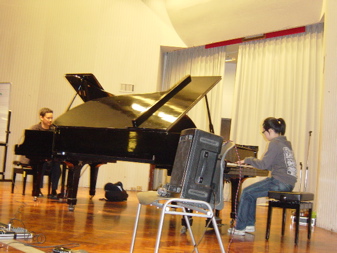
Just got back from an exciting few days on my first visit to Taiwan. My ties with Taiwan are fairly strong historically: my mother’s father was a diplomat originally from Mainland China (he served as China's first Ambassador to Canada in 1942), but after the Communists took over in 1949 ended up representing Nationalist China in the United Nations Trusteeship Council and later also served as…
Just got back from an exciting few days on my first visit to Taiwan. My ties with Taiwan are fairly strong historically: my mother’s father was a diplomat originally from Mainland China (he served as China's first Ambassador to Canada in 1942), but after the Communists took over in 1949 ended up representing Nationalist China in the United Nations Trusteeship Council and later also served as Ambassador to Mexico. But this was actually my first trip to this beautiful and welcoming country (though I’ve been of late inching ever-closer to the place of my mother’s birth, mainland China, with recent performances in South Korea, my 6th trip to Japan, and earlier performance in Hong Kong, so the general region is definitely becoming increasingly familiar)… The entire affair was organized by a presenter named Hung Chia-Hung and his girlfriend Josephine, and they did an admirable job of promoting this premiere event of their company Rigel Arts. One of the first things I did once getting there, in fact, was to attend a press conference they had put together, at which I also played a couple of pieces for the invited press. Sure enough, by first thing the next morning, the day of the concert, there were pictures of me in all three main daily newspapers, and by that evening the 900 seat auditorium at which the concert was to take place was almost completely sold out (also conspicuous were large posters of me put up all over town - a bit strange to see my image everywhere bu it definitely got the word out :-)) I had also been approached quite a while ago about performing and/or recording with a great native Taiwanese violinist Chi-pin Hsieh (who plays regularly in a fantastic violin/piano duo with his wife, pianist Kaiya Chang), and so I was pleased to finally meet him and perform with him as my special guest as part of the concert.
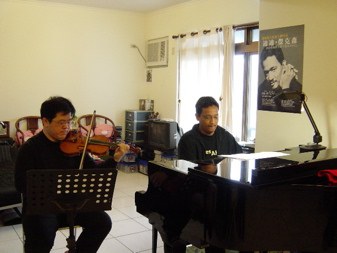
At the beginning of the 2nd set, Chi-pin, with whom I had first rehearsed only earlier that afternoon, joined me on stage for our own personal (and often manic!) takes on Monk’s “Well You Needn’t”, as well as “Just Friends” and a fast blues composition of Chipin’s entitled “Green Tunnel”. From our first notes we truly spoke the same language and ultimately had a wonderful time interacting…
At the beginning of the 2nd set, Chi-pin, with whom I had first rehearsed only earlier that afternoon, joined me on stage for our own personal (and often manic!) takes on Monk’s “Well You Needn’t”, as well as “Just Friends” and a fast blues composition of Chipin’s entitled “Green Tunnel”. From our first notes we truly spoke the same language and ultimately had a wonderful time interacting at-the-moment with each other and really pushing the proceedings musically. It was truly a memorable experience (and one that may perhaps make it onto CD in the future), and I was humbled by the enthusiasm of the audience. Afterwards they even lined up for CD signings in droves (against a backdrop of those omnipresent posters again!) and I was treated to a reception right at the concert hall location sponsored by the Canadian Trade office, complete with a welcoming Canadian flag hung up for good measure. The next day, I presented a master class at the university at which Chipin and Kaiya teach, with much help from them not only on their respective instruments (at one point, all three of us jammed together on two pianos/violin, plus a keen and talented saxophonist student from the audience..)…The entire event was translated as we went along into Chinese (which gave me the unusual opportunity of having actual time to ponder and ultimately consider adding to or amending what I just said as Chipin or Kaiya busily translated!) The audience was keen, and the initial 2 hours planned for the workshop eventually stretched into 3 and a half hours, once we started taking their eager questions towards the end.
Chipin and Kaiya really are at the forefront of Taiwanese jazz and jazz education currently, and during the course of my stay they told me of their plans to open a Taiwanese Jazz Institute during the summers, in conjunction with American Voices (a fascinating organization, founded by pianist/artistic director John Ferguson, which brings American jazz and other musics to the vast reaches of the world, with a particular focus on the former Soviet east bloc nations).It’s always exciting to ponder the music that will result when one combines exposure to the vast jazz tradition with local cultural influences. Organizations like this Taiwanese Jazz Institute as well as American Voices are I’m sure helping to plant some very fascinating seeds that will no doubt bear fruit as the next great phase of jazz's evolution worldwide...
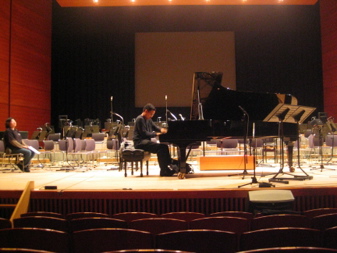
Just got back from my 6th and probably most memorable visit to Japan. When I was originally contacted about performing Gershwin's Rhapsody in Blue with a large orchestra based in Kobe (site of the infamous earthquake of 10 years ago) on New Year's Eve, I was excited but also not looking forward to being apart from my wife of just two months. When they then suggested that I would need to leave for…
Just got back from my 6th and probably most memorable visit to Japan. When I was originally contacted about performing Gershwin's Rhapsody in Blue with a large orchestra based in Kobe (site of the infamous earthquake of 10 years ago) on New Year's Eve, I was excited but also not looking forward to being apart from my wife of just two months. When they then suggested that I would need to leave for the rehearsal from NY the day before Christmas, and would return on New Year's Day, I was doubly hesitant. Ultimately, though, I arranged to have my wife come with me, and it became quite an adventure watching her as she visited this magnificent country for the first time, experiencing all of the wonders I had enjoyed on my own for the last few years, from the high-tech to the ancient temples of Kyoto.
We left Christmas Eve and spent Christmas Day essentially on the long flight. The next day I rehearsed with the orchestra in Osaka. Osaka is easily the 2nd most technologically dazzling city next to Tokyo and I was therefore delighted that my wife would get a glimpse of high-tech Japan, especially since Tokyo wasn't on the itinerary this time around.
From the moment of my first arrival for that rehearsal, I was surprised that there were camera crews on hand filming my first meeting with Maestro Sado in which we first reviewed the score, to the rehearsal and post-rehearsal, culminating in the filming of the actual concert a few days later. The conductor himself cut a fascinating figure. A former student of Bernstein apparently for several years, his conducting style still possessed severall Bernsteinian conducting traits, from the way he used (or didn't conventionally use) his arms and hands, to his facial expressions. He had a natural synergy with the orchestra and radiated a certain kind of magnetism that made him a natural leader.
My wife Liz and I spent the next couple of days sightseeing in Osaka and nearby Kyoto, even braving the train systems on our own in order to visit some of the more ancient temples. We then traveled to Wakayama City where I performed at a beautiful little club called Jalan Jalan, one of the typical intimate affairs with an extremely passionate and attentive audience. Finally, we would our way to Kobe for the big performance of the Rhapsody in Blue on New Year's Eve.
Rehearsing Rhapsody in Blue before the orchestra arrives (Kobe, Dec. 31/04)It was part of a 3 hour-long concert featuring an eclectic mix of programming, from orchestral marches and waltzes by Strauss, to an excerpt from Bernstein's Candide, to a jazzy rendition of a Japanese folk song I participated in, to the Rhapsody itself. The performance went well and was very well received, though as usual I found it much more difficult, really, to prepare for something in which I "in theory" needed to hit all of the right notes, vs. improvising as usual. I had done so much practicing in the few days leading up to the event, in fact, that after the concert every one of my fingers were covered in bandages to protect enumerable broken nails and painful finger-tips.
Also on the program immediately following the Rhapsody was a duo version of my own composition "Hopes and Dreams" from Suite for New York with a great trumpeter from Japan named Tomonao Hara. It was dedicated to the memory of the victims of the 1995 Kobe earthquake, and to the survivors and their rebuilding effort; the 10th anniversary of this devastating event, in fact, in many ways dominated the proceedings that night.
When it got near to midnight, we inexplicably played "Auld Lang Syne" not AFTER but before midnight (perhaps something lost in cultural translation?) - Tomonao and I did a gospel version which seemed to rouse the crowd, followed by the inevitable countdown, complete with giant TV screen behind us. After cheering and on-stage celebration, the orchestra followed, again somewhat inexplicably, with a rendition of that Commencement staple, "Pomp and Circumstances", to which we walked off the stage in marching rhythm...
On the whole, it was a memorable few days and a truly unique way to usher in the new year...
Just got back from an exhilarating and exhaustive 10 day visit to St. John’s College at the University of British Columbia in Vancouver where I was serving as a designated “Musician-in-Residence” (from what I understand, their very first). St. John’s College has it’s origins in Shanghai, China where it was founded in 1879 by the Episcopal Church of America and existed there until 1952. It’s…
Just got back from an exhilarating and exhaustive 10 day visit to St. John’s College at the University of British Columbia in Vancouver where I was serving as a designated “Musician-in-Residence” (from what I understand, their very first). St. John’s College has it’s origins in Shanghai, China where it was founded in 1879 by the Episcopal Church of America and existed there until 1952. It’s various chapters since then always dreamed of keeping it’s vision alive and so they helped found St. John’s at UBC in the late 1990’s. It’s new Principal, Tim Brook, actually emailed me up out of the blue (underscoring as always the benefit of maintaining an accessible and up-to-date website!) and asked me if I’d liked to do it, describing himself as an admirer of my music, etc. I was thrilled at the opportunity – this was precisely the sort of creative outlet and opportunity to share my ideas that I have been increasingly seeking of late, and so I enthusiastically said “yes” almost immediately (possibly to his slight surprise? :-))…
My stay was organized such that there was some sort of event in which I was to take part pretty much every evening, but Tim thoughtfully left the days for me to do as I wished. After a long flight and slightly disorienting arrival on Feb. 5th, I awoke Feb. 6th in the living quarters I had been assigned. St. John’s is essentially a graduate student residence hall on the edge of UBC’s campus, just steps from the Pacific Ocean (though the actual view of the water is shielded by some dense forest vegetation obscuring a long hill drop to the water below, accessible by various paths). The Principal, his wife and son as well as all the students live all at the hall and also routinely eat together in the dining room – all residents are, in fact, required to participate in the meal program as the administration rightly concluded that this was the ideal way for residents to get to know one another. My room, I soon realized, was generously-sized, with bed, desk, bath, comfortable chairs, tables, etc. But most striking were the two walls worth of windows with office blinds, which, when opened revealed the outdoors, and created an inviting atmosphere in which to work:
My first day’s activity was a duo/trio concert with trumpeter Brad Turner and cellist Peggy Lee, two of my musical colleagues who were involved both in my Suite for NY recording and my jazz opera Quebecite (which received it’s Vancouver premiere in Oct./03 at the Vancouver East Cultural Centre)…Their background (most notably Peggy’s) was coming out of the characteristic freer jazz scene that I’ve come to associate with Vancouver’s more experimental sound, and my goal was to try as hard as possible to make this concert a meeting of the minds, vs. merely dictating my own approach as might be the case with a more typical leader-sideman relationship. Each of them contributed original musical material upon my request, and I tried hard not to step on their conceptual toes during the performance. Sure enough, the performance ended up being essentially a combination of their freer, more open approach with my often more manic approach (!), with the two combining perhaps most effectively with an old composition of mine called “For Monk-Sake” (written, I revealed to the audience, 10 years ago, meaning I was officially now “old” :-))… It was well attended and the crowd was thankfully quite enthusiastic….
The next day I was invited to dinner at the residence of Principal Tim Brook and his delightful wife Fay and their son; he had also invited some other interested St. John residence music students for the occasion and it was an enjoyable way to take the pulse of the community there. The atmosphere was relaxed and informal and I met a host of quirky and fascinating personalities, including majors in cello, piano, choral singing and composition, as well as a broadcaster involved in a local multi-cultural t.v. channel…
Afterwards, St. John’s had arranged for me to do a master class with UBC music students. UBC doesn’t have a jazz degree program per se, but their jazz head, Fred Stride, is enthusiastic and obviously doing a terrific job with the resources available to him. Some of the students who attended actually were not music majors at all, but the level of competency was quite high. I spent the first part of the class talking about my own history and my own conceptual ideas, and then I brought up two separate groups of students to play and coach, focusing on some of the tricks of the trade from the NY scene, particularly with its emphasis on rhythmic precision between the piano/bass/drums section, interaction and supporting of soloists. We also experimented with some Don Pullen-esque freeing techniques. It was thankfully very well received and a promising start to the upcoming week.
On Tues. was my big solo piano concert at the Music Building’s Recital Hall, and I was pleased that there was a large Bosendorfer piano for me to play for the occasion. The concert gave me the chance to practice what I preached, in a sense, and served perhaps as a useful introduction to where I really was coming from musically. Although the attendance was relatively spotty, the audience was again quite enthusiastic; it certainly seemed like much of St. John’s artistic community was in attendance and it fueled many further mealtime discussions in the ensuing days…
On Wed. I was invited by the Principal of the seemingly “rival” college nearby, Green College, to do a brief lecture/demonstration. Green had a kind of formal, “old English” air, with beautiful building architecture and a smaller student body. They, too, remarkably had a Bosendorfer piano at hand, though in this case it was unfortunately an older instrument, and I managed after piece #3 to actually break off it’s sustain pedal, thus putting a prompt end to the performing portion of my presentation. (I later found out that the pedal mechanism had actually been put together literally with fishing wire and chewing gum, so I suppose I can’t add this instrument to my list of past “abuses” at least officially :-)…) I told them that it was interesting that the latest column I recently submitted for Down Beat is called “When Things Go Wrong”, and covers just these sorts of predicaments that have arisen in my career over the years…Despite the sudden cut-off, I took many interesting questions and had a very pleasant discussion with some keen graduate students, most notably a classical piano major whose curiosity I suspect I particularly peeked…
On Thurs. it was time for me to do a similar, informal lecture-demonstration for St. John’s students. I had earlier over breakfast asked in passing a Tibetan student and musician to sit in with me for an informal jam session after the lecture that evening. When night rolled around I was feeling a bit fatigued and it took a while to warm up into my presentation and performance; I also had frankly forgot about my offer of playing with him, but was happy when he insisted after my talk. We all ended up lingering until late in the evening, hours after my one-hour presentation had ended, playing music together, and just talking. It was quite evocative of those rare days back in music school when time seemed irrelevant and the focus was entirely on expanding one’s mind through interaction with others…
Friday I had “off”, and was delighted to be able to shut out the outside world and focus on my preparation for my lecture the next night organized by the Vancouver Institute.. My days in general were a delight – despite being lent a cell phone, I had taken to keeping it off, and had the freedom of being able to explore the “inner self” through reading and study, no doubt well beyond what might even have been needed for the actual lecture. It was very meaningful to me just to have this license, and it made me reflect on how little one makes the time for such things when the “real world” returns. Tim was so respectful of my privacy that he on two occasions secretly dropped off bags of groceries with “supplies” that greeted me upon my return to my room after a walk; again, a wonderful license just to study and explore…
The lecture at the Vancouver Institute (a prestigious organization that has featured a number of highly varied speakers for over 45 years) took place Saturday, and it was really the event that I was most looking forward to. I had decided to talk about the issue of “Can Jazz Be Classical?”, using Gershwin’s Rhapsody in Blue (which I had recorded and also recently performed with orchestra in Japan) as a jumping off point for discussion. Another “things go wrong” episode occurred initially when my wireless mike refused to go on (some of my musician friends later told me that they could hear the student sound technician cussing quite loudly as he tried to get it to work, I’m sure quite embarrassed!) but I tried to take it in stride, and this predicament, in fact, gave me the opportunity to play the entire Rhapsody in Blue (minus the orchestral sections) upfront, rather than after breaking the piece down into its component parts; this turned out, in fact, to likely have been the better approach to begin with anyway. Afterwards I discussed it’s characteristic use of blue notes (and performed “St. Louis Blues” as well as Gershwin’s Second Prelude to further illustrate my points); I examined certain characteristic rhythms emerging out of stride piano by way of ragtime that made an appearance in the work (performing a bastardized version of “Carolina Shout”); and then talked about how the piece’s supposed “formlessness” was actually more of an “open form” conception common to jazz which was really one of the reasons I think the piece actually worked so successfully. I then took questions and in my answers managed to discuss Wynton Marsalis and the whole Lincoln Center debate centered around neo-classicism, my own groups and my approaches to them, the prospects for combining jazz with classical, and so on, concluding with the performance of some pieces of my own. The whole affair thankfully seemed a resounding success and it was really exhilarating for me to try and share my ideas in this different environment, and also to attempt to speak in terms accessible to the general audience attending the event.
Sunday was winding-down time; in fact, Tim had announced after my lecture the previous night that it was my last presentation at St. John’s, and consequentially everyone presumed I would be leaving first thing Sunday. In reality, I had one more off campus event to attend to on Monday, but I was able to spend part of Sunday attending the Chinese New Year’s Day parade celebration taking place in Vancouver’s large Chinatown, watching various dragon dances and every conceivable Chinese organization in Vancouver proudly march, and had a pleasant dinner with other faculty connected to Tim’s field of Chinese studies later that day…
Monday was my lecture/demonstration as part of the Kiwanis Festival, for visiting high school students from the area. It was a bit of a challenge to try and connect with the audience with limited time and no possibility of interaction; by the end I tried admittedly to “wow” them over with my “flashy” version of Monk's "I Mean You", and realized after-the-fact that speaking in more black and white vs. subtle terms might have overall served the occasion better. Still, I was immediately approached by a very confident trumpet student who complimented me on the lecture and immediately asked if he could jam with me for a few minutes. We found a side practice room and did an impromptu “I Remember Clifford”…
Another student had been observing my various presentations throughout the week at St. John and had similarly asked for a private lesson, which I granted him Monday evening, and in many ways it was for me the highlight of the week, and underscored just what I find so fascinating about teaching (apart from the obvious opportunity to get others excited about music in general and encourage them). He was a first-year guitar major, and he really wanted to get a sense of where I was coming from conceptually; how I thought about composition, transcribing solos, and on and on. By the end of the lesson, through the process of answering his many probing questions, I had almost learned as much about myself as he perhaps had; teaching certainly forces you to reflect on your own approach since you’re obligated to understand it enough to be able to describe it in words to others. It was all in all a pleasant end to a truly enjoyable stay.
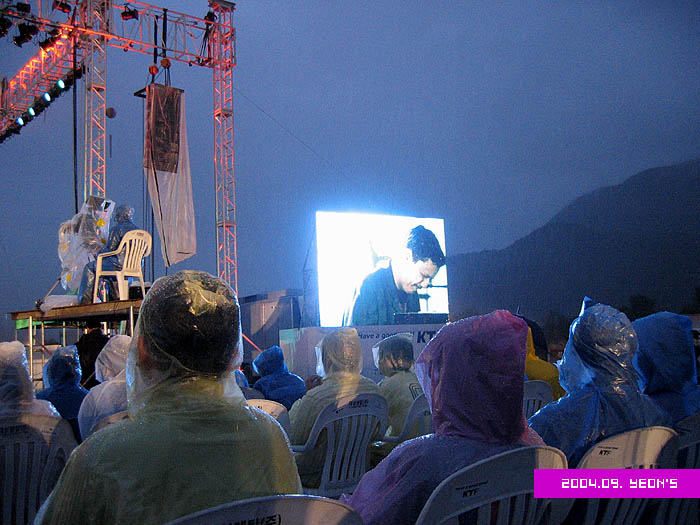
Just returned from a whirlwind few days in Seoul, South Korea, and the nearby Jara Island on Gapyeong, where I was a participant in the inaugural JaraSum Jazz Festival, at which I was scheduled to perform solo piano, followed by a workshop for students on Day 2. As it turned out, many of the festival's initial plans had to be re-arranged at the last minute due to a relentless rain that begin…
Just returned from a whirlwind few days in Seoul, South Korea, and the nearby Jara Island on Gapyeong, where I was a participant in the inaugural JaraSum Jazz Festival, at which I was scheduled to perform solo piano, followed by a workshop for students on Day 2. As it turned out, many of the festival's initial plans had to be re-arranged at the last minute due to a relentless rain that begin early on Saturday Sept. 11th and didn't let up until Monday morning the 13th. Saturday's events, after much delay, were ultimately postponed for some and cancelled for many, a disappointment for particularly such compatriots as guitarist Mike Stern and a fascinating-sounding world-music/jazz inspired group I was hanging out with called "Asia Spirit", as they were eventually all forced to leave without doing a performance, after much initial waiting around. Still, it was refreshing to hang with them all in the hotel lobby in the JaraSum region we were initially brought to while the organizers decided what to do. It's always amazing how kindred spirits musicians can be with one another - there's certainly something about being in the business of harnessing the moment that makes for an openness and sense of embracing the now that is always very inspiring to be around, especially after devoting so much of my time of late to the other half of the equation: sitting in front of my computer, composing, doing business, practicing, and on and on...On Saturday later in the day I finally met the organizer whom we called "J.J.", who sadly announced the day's cancellation but asked, since I was scheduled to stayover one more day anyway, if I would perform Sunday instead. I happily agreed. On Sunday, the concert almost didn't happen again - the grounds were still utterly muddy, the rain continued it's drizzle, and they had already decided to consolidate several stages into one large stage, featuring artists originally scheduled for that day along with artists such as myself heldover from the day before.
What was ultimately remarkable was that despite the rain, which by the time I performed had reached a literal torrent, a crowd certainly at least in the hundreds still dutifully and passionately sat, some with umbrellas, most with blue raincoats thankfully handed out by festival organizers, for the entire day's festivities. Between each act, the organizers hurriedly swept the stage of vast puddles of water, and on occasion the blue canopy they had erected that day to cover the area where the musicians were performing would swell with water, resulting in random floods around the perimeter of my playing area. As I began my set, there was a particular upsurge of rain, and it got so bad that as I routinely tapped my feet as I played, large splashes of water bounced up all around me. Frankly, I was a little afraid of being electrocuted (!), but they had everything under control, and the crowd was amazingly receptive and dedicated.
This was the first JaraSum Jazz Festival, and if the passionate devotion of the fans and organizers despite the many Nature-based obstacles was a clue, it will not be the last.
Just got back from a whirlwind four day mini-tour of the West Coast with my collective group Bluiett/Jackson/El’Zabar. The group had until recently been on an unofficial hiatus. As Bluiett has often said to me, he didn’t want the group to be one in which we were actively soliciting gigs; he felt (perhaps rightly) that he was at a stage where if the interest was somehow “in the air”, then he’d be…
Just got back from a whirlwind four day mini-tour of the West Coast with my collective group Bluiett/Jackson/El’Zabar. The group had until recently been on an unofficial hiatus. As Bluiett has often said to me, he didn’t want the group to be one in which we were actively soliciting gigs; he felt (perhaps rightly) that he was at a stage where if the interest was somehow “in the air”, then he’d be there, ready to play, but otherwise he didn’t want to force it. This was, incidentally, also the attitude he and the World Saxophone Quartet have always had - they’ve always just seemed to keep going, to continue to find work, with the word continuing to spread and success building upon success for now some 25 years. If word of mouth is any indication, we thankfully were off to a nice, renewed start. We played Hot House in Chicago last week and were pleased to receive a rave review; this recent leg involved the Eddie Moore fest in Oakland, followed by the Jazz Bakery in L.A., and finally the Kuumba Jazz Center in Santa Cruz. The Eddie Moore fest had recently been forced to move their quarters from Yoshi’s to the much less tried and true Oakland Asian Cultural Center and they found themselves having to consequentially rebuild their audience base. A free-wheeling concert the night before ours featuring the legendary Sonny Simmons along with Michael Marcus was, in fact, rather poorly attended, and so we didn’t necessarily have high hopes for our performance. But thankfully we had a decent crowd, and the program was even picked up for live radio broadcast on KPFA (both my girlfriend Elizabeth back in NY and my father up in Ottawa, Canada were surreally able to hear it live, in fact.) It was a rousing success, and really made us look forward to the subsequent nights, which, in turn, kept surprising us with the level of enthusiasm of the audience. Perhaps Bluiett is on to something with his “letting things take care of themselves” philosophy about the group. There certainly is something very unforced, spontaneous, and joyous about the music we’re enjoying making with each other; it’s really quite a fun and exciting conception and we’re all gratified that people are so sincerely moved. Hopefully we can get another album in the can soon and “keep rollin'”, as Bluiett might also say…
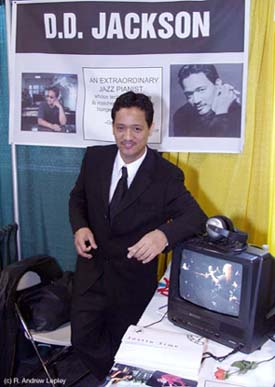
A lot has happened these past couple of months – I’ll try to recap: Jan./02 was spent pre-occupied with the Arts Presenter’s Conference, where I had decided to have my own “D.D. Jackson Booth”, with my agent, Jenny Barriol of Alloverseas, llc. manning it most of the time on my behalf. It required a tremendous amount of preparation, as we displayed a professionally produced video culled from…
A lot has happened these past couple of months – I’ll try to recap:
Jan./02 was spent pre-occupied with the Arts Presenter’s Conference, where I had decided to have my own “D.D. Jackson Booth”, with my agent, Jenny Barriol of Alloverseas, llc. manning it most of the time on my behalf. It required a tremendous amount of preparation, as we displayed a professionally produced video culled from various previously-broadcast performances of myself from the past several years, which we then played over and over again at the booth; we updated press materials; had made a professional 5 feet long sign; and, perhaps most importantly, networked and organized several showcases, including Joe’s Pub with Dafnis Prieto and Ugonna Okegwo (from my CD), and also several in conjunction with poet/storyteller David Gonzalez, at the New Victory Theatre Performing Arts Space.
It was an utterly exhausting experience, but we now realize quite a worthwhile one, as actually the majority of the people who heard us have since approached us seriously about potential future bookings.
After APAP I put together an opera demo for the Canada Council in preparation for the opera project I’m pursuing with librettist George Elliot Clarke for the Sept./03 Guelph Jazzfest. The work deals with the interactions between two interracial couples - one featuring a Chinese girl and African-Canadian man (modelled very loosely on my parents!); the other an Indian woman and Creole man. I hired a great bunch of players at the last-minute, with violinist Chris Howes, vocalist Dean Bowman, Eric Rockwin on bass (from a great group called “Gutbucket”), and a drummer with whom I had previously never worked named Kirk Driscoll. It was actually quite exhilarating working under such a ridiculous time constraint (the whole two song demo, from writing, to arranging, rehearsing, recording and mixing was put together in 3 days) and I was very pleased with the results. Upcoming over the next many months will be lots of phone-conference back-and-forths between me and George, followed by at least 2 critical workshops, culminating (knock on wood), in the final performance in Sept./03....Also recorded music for a very interesting debut film of a filmmaker friend of mine from my hometown of Kanata named Alex Baack. The film is called “Untitled: A Love Story” and documents a relationship between the main character, played by Alex himself, and an invisible girl. Alex's goal is to submit it for consideration at the upcoming first annual Tribeca Film Festival for firsttime filmmakers, and I wish him well - he certainly has put his heart and soul into the film. For the work I wrote and recorded a solo piano score, mostly plaintive music, with different themes representing different characters and their interactions. A good experience, and I can certainly use my work on this film to try and do more music for film in the future, something which has always been one of my long-term goals...A few other interesting developments: I was nominated for the 4th time for a Juno Award (in the category of "Best Contemporary Jazz Album") for my most recent CD “Sigame”. The awards will take place this April in St. John's, Newfoundland. And I just got back from the Jazz Report Awards in Toronto (now newly re-christened the “National Jazz Awards”), where I received the Socan Award for Jazz Composer/Songwriter of the Year - a very nice honour. As part of the event I also performed with John Geggie and Mark McLean, a slightly truncated version of my tune “Summer”, from Sigame. All in all a very tight, professional evening, broadcast live on CBC radio across Canada.
The highlight for me was at least making eye contact with the great Oscar Peterson, who was there to be inducted in the Canadian Jazz and Blues Hall of Fame. He looked sadly feeble in his wheelchair and could barely stand to receive the award; he after receiving it played the piano and again sounded weak and tired. But he was all elegance and class as always. I made a point of trying to meet him after he was wheeled off the stage, and basically quickly introduced myself and managed to get off the words: "thanks for the inspiration!" before he was whisked away...
The most important event of the past several months was of course the tragedy of Sept. 11th, which I’ve struggled to write about because the emotions I was feeling about the event were (and still are, to a large extent), so raw. It also felt like everything that could be said about it was said, information tumbled one pile on top of the other, in the literally hours immediately following this…
The most important event of the past several months was of course the tragedy of Sept. 11th, which I’ve struggled to write about because the emotions I was feeling about the event were (and still are, to a large extent), so raw. It also felt like everything that could be said about it was said, information tumbled one pile on top of the other, in the literally hours immediately following this cataclysmic jolt to the NY and the world’s psyche. I do remember early on being so outraged by how many times Fox News and MSNBC were indiscriminately re-airing shots from various angles of the planes crashing into the towers and the towers subsequent fall that I mailed some very angry emails, asking them to please be sensitive and less sensationalistic. I also remember being in essentially a daze for probably at least 2 months following the event; like a war refugee (which in some ways we all were, at least psychologically, whether we directly lost someone or not). I remember attending various spontaneous gatherings, in particular at Union Square on 14th street, to which I was drawn on an almost daily basis following the disaster, the grounds there covered at first with ad libbed emotional outbursts, poems, and prayers for humanity, scribbled on brown-colored drafting paper. I remember the endless pictures of “have you seen this person?”; wanting to do whatever I could to help the wounded by offering to donate blood, but realizing quickly that there was little to do because people essentially either got out relatively intact or perished; and I remember the need to be with friends and loved ones almost constantly; being alone was unthinkable; staying in the city, at first, quite questionable.I remember going up to Ottawa shortly after, and, like millions of others, being nervous about getting back on an airplane, and I remember doing my first post-disaster gig with John Geggie, a duo concert which took on the air of a reflective memorial, before transitioning to joyous interaction. And I remember, for a time, seriously re-considering whether I wanted to be in the city any more at all.Now it’s several months later, and while the spectre of being a nation forever at war has receded somewhat, being now replaced with more immediate, day-to-day concerns of running my “business of one”, the memory will never completely disappear. Just recently there was an article in I believe Vanity Fair (which I bought initially because of it’s cover devoted to characters from the upcoming Star Wars: Attack of the Clones!), and there was a surprise article about an upcoming film to be broadcast on tv and possibly released in theatres documenting the WTC disaster literally from the inside. Just reading about what the film crew, who just happened to be in the buildings when the disaster first struck, went through made me shudder inside; my stomach cringed and I couldn’t even continue reading. So the memory fades but will never be forgotten…
Just got back from a weekend in Minneapolis where I participated in the new music “Festival Dancing in Your Head”. When I was first approached by my old classical music friend Phil Ford from Indiana U. (now a budding professor and musicologist at the U. of Minnesota) about doing the commission, I regarded it as a special challenge, to try and write something in the more specifically notated,…
Just got back from a weekend in Minneapolis where I participated in the new music “Festival Dancing in Your Head”. When I was first approached by my old classical music friend Phil Ford from Indiana U. (now a budding professor and musicologist at the U. of Minnesota) about doing the commission, I regarded it as a special challenge, to try and write something in the more specifically notated, classical idiom; we spoke of trying to add a jazzy/notated/classical piece to the new music canon, something which people even without jazz background could conceivably play. After I expressed interest, Anthony Gatto, the president of Headwater’s Music and the organizer of this year’s festival Phil co-founded with him, formally commissioned me to write a 15 minute work by late this past winter, and in my typical “I don’t need time! I need a deadline!” Duke Ellington-esque way, I put off thinking about the piece until a host of other more immediately pressing projects were out of the way. As it turned out, my latest CD, “Sigame” was completed by the end of July (it’s due out Oct. 9th), and so by the beginning of August I finally got around to really zeroing in on the piece.I decided almost impulsively to focus on the variation form – namely to do 10 variations on a simple, Satie-inspired melody that I had had lingering in my head for some time. What I didn’t anticipate was how much of a mental block I would experience. Some of the stigmas against jazz composers – namely, the notion that they historically have lacked an ability to deal with coherent, larger scale form - started haunting me as I contemplated writing a piece which, by it’s very theme and variations structure, didn’t lend itself at all to over-arching form or large-scale development. In short, I was experiencing some serious Indiana University (where I received my B.Music in Classical Piano Performance in a suffocatingly close-minded atmosphere about jazz) flashbacks as I pondered what sort of piece I could legitimately present at not a jazz but a New Music Festival.My way out of this dispair occurred quite quickly after I called the commissioner, Anthony Gatto, and found a much more open-minded attitude towards musical style than I had anticipated. Much had changed, it seems, since Indiana, and apparently today a New Music festival literally seemed to mean any new music which could on some level qualify as having legitimate artistic value, and to Anthony this seemed to mean stylistically almost anything under the sun. This meant that at the festival (on the same day as my 15 minute piece which was to be part of a huge music marathon running non-stop for 10 hours) the audience would be treated to artists as diverse as Tibetan Monks to various wacky pseudo-musical performance artists, to Steve Reich to “Hmong mouth organs” to the Bang on a Can All-Stars to electric trombone. There was even an actual jazz trio, a local band named “Happy Apple” that I very much enjoyed, that were being commissioned also.Freed from my self-imposed constraints, I proceded to write a piece which instead of being merely 10 variations in the classical piece, I renamed 10 “Inspirations”, since they were, after, not only strictly notated, but in some cases also very much improvised depending upon my inspiration of the moment. The result, though rough around the edges, was well received (to hear the full MP3 of the performance, go here and click on “10 Inspirations on a Simple Theme”.)
Most importantly for me, I got an update about how at least some people are handling the concept of “new music” today. The festival as a whole was ultimately extremely successful and well-received. At times it unfolded much like a good jazz concert, with flights of seeming brilliance (and, to be fair, the occasional moments of dullness). But on the whole it was truly re-invigorating to see a group of people so hard at work presenting music not joined by specific, narrowly defined genres, but by simply being new and fresh. And this open-minded, category-defying view of music-making has shot my mind into all sorts of new creative directions. So, flawed piece and all, I am happy to have had the opportunity of participating in my first true “New Music” event….
Just returned from my 3rd sojourn to Japan, this time the first as leader of my group. I brought a slightly scaled down version of the D.D. Jackson Group - myself playing piano and Roland VK-7 (a very sophisticated Hammond B3 organ emulator keyboard, which I brought over from NY); Chris Howes on el. violin; Andy Woodson on a brand new fretless bass he bought with a wonderful wooden, full tone;…
Just returned from my 3rd sojourn to Japan, this time the first as leader of my group. I brought a slightly scaled down version of the D.D. Jackson Group - myself playing piano and Roland VK-7 (a very sophisticated Hammond B3 organ emulator keyboard, which I brought over from NY); Chris Howes on el. violin; Andy Woodson on a brand new fretless bass he bought with a wonderful wooden, full tone; and James Gaiters playing drums. We did what I often jokingly refer to as the "elitist" circuit - extremely small venues (some holding only 20 people), but with quite large cover charges. The irony is that despite the typically small size of the rooms, I really think we ended up playing some of our best music. People have often said that the music of the D.D. Jackson Group was better suited to outdoor jazz festivals, since there is a powerful, rock-like and electric element to the writing and playing. Yet we paradoxically found that the smaller the room, the more we broke down textures, and truly listened and interacted with each other.
I think this perspective reached it's zenith during our 2nd last gig, at the Body and Soul club in Tokyo. Again - tiny, but very complete room; wonderful sympathetic owners; small but exceedingly enthusiastic audience (people who actually applauded in recognition, for example, when I announced I was playing my piece "Peace Song", which I had previously performed with David Murray in Japan on a number of occasions). Perhaps it was just the looseness that inherently occurs after travelling for a couple of weeks, but we literally laughed our way through the final set that night. The audience picked up on it, and so the overriding atmosphere was one of the giddiness of the moment, as we pulled and pushed the material with which we had become so familiar in new ways, and shared our discoveries with the receptive crowd. [click here for some live MP3 files from this Body and Soul gig]
Similarly, I had also performed a solo piano concert as part of the tour, in Nagano a few days earlier. Again - tiny, tiny crowd, but perhaps the best solo concert thus far of my career (from my very biased subjective perspective), and a truly great time. Afterwards we all sat down for the traditional post-concert meal. A woman who had heard me perform there with David 2 years ago in broken English explained that she, too, was a pianist, and proceeded to sit down and play a broken version of Bach's "Jesus, Joy of Man's Desiring", inviting me to continue. Still meditative from the concert earlier, I volunteered to do my "jazz spin" on the piece, and I'll never forget leaving the club that night to the delighted standing ovation of the owner and the few remaining guests in appreciation of the last minute improv....
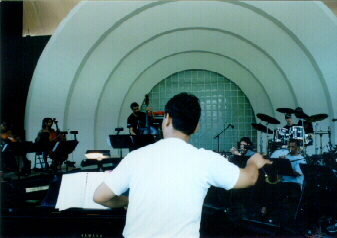
On July 1rst (Canada Day!) I premiered my large scale work "A Canadian in New York: Suite for Large Classical/Jazz Ensemble" at the Prospect Park Bandshell as part of Celebrate Brooklyn. The title was obviously a slightly tongue-in-cheek homage to Gershwin's American in Paris, but the work was similar in other ways as well: I was really trying to create as sincere and seamless a hybrid as…
On July 1rst (Canada Day!) I premiered my large scale work "A Canadian in New York: Suite for Large Classical/Jazz Ensemble" at the Prospect Park Bandshell as part of Celebrate Brooklyn. The title was obviously a slightly tongue-in-cheek homage to Gershwin's American in Paris, but the work was similar in other ways as well: I was really trying to create as sincere and seamless a hybrid as possible between the worlds of jazz and classical music. The performance was actually the culmination of a year of exciting musical investigations for me. I tend to be a "completist" in my research; I want to know as much about a subject as possible before I feel "qualified" to confidently depart from it, to contribute my own two cents to the picture. Consequentially, I studied a great deal of particularly 20th century orchestral works, attended NY Phil. rehearsals (the work was originally intended to be scored for full orchestra), studied chamber music scores, and also gave myself a crash course on the history of jazz-classical hybrid works, both from the classical angle (Rhapsody in Blue, Milhaud's La Creation du Monde, etc.) to the jazz (Third Stream, John Zorn, Frank Zappa, Hannibal's "African Portraits", Mingus' Epitaph, Butch Morris's conductions, etc., etc.) Of course, as always seems usual, once internalizing this stuff I realized that I had a firmer, intuitive grasp of what I wanted to do than I at first suspected, and so there was the inevitable "letting go" point where I just trusted my instincts and "went for it".
The resulting work was scored for "classical" string quartet (though in this case I used some very diverse players quite comfortable in the jazz world so I could be certain they'd grasp the feel of the piece - Nioka Workman on cello; Marlene Rice and Carlos Baptiste on violin and Linda Blanche on viola) plus Chris Howes on electric violin; Jack Walrath on trumpet; the great James Spaulding on alto sax and flute; Vincent Chancey (of Lester Bowie's Brass Fantasy) on French horn; J.D. Parran on baritone sax, plus a rhythm section of myself on piano; the incredible Ralph Peterson on drums; Ugonna Okego on acoustic bass; plus special guest Bobby Sanabria on percussion and David Gonzalez doing poetry.
It was quite an extended evening, as the premiere was preceded by a full hour of fellow Canadian Andy Milne's "Cosmic Dapp Theory", followed by Carribean-Canadian Austin Clarke reading from his book. By the time my piece began, in fact, we were way over schedule time-wise - I think I went on around 10:10 pm, long after the sun had set, and people were already trying to decide how they'd get back home - and the work ended up being about 85 minutes in length - over 3 times as long as the amount of music I was originally commissioned to write (!)
The work was in four movements, dealing with different aspects of my experiences as a Canadian living in New York these past 11 years. The first, "The City", attempted to conjure up in more literal terms the sounds of the city, from the sounds of traffic hustle and bustle, to bebop and funk riffs, to gentle walks in the park. It was the most extended and perhaps ambitious movement and lasted some 30 minutes. The form was roughly sonata form with a contrasting slow movement and lots of development, including an opening Bartokian string quartet texture built on the perfect 4th motives to follow introduced by David's poetry ("Listen to the sounds of...the City...") and some free, swinging sections featuring Spaulding. And I was thrilled to have my first chance to truly conduct a large group - I sat at the piano with my back directly to the audience, and with the musicians surrounding me in a semi-circle so I could conduct at the moment "conductions" (borrowing a chapter from the techniques of Butch Morris and David Murray in which background figures, tempos, even solo forms are indicated, on the fly, by the conductor's direction). Movement II was based on "Suite New York" from my solo piano album "....so far", and was more romantic in scope and mood, ultimately building on an ostinato-like chord progression as the basis for the solos. Mov. III was an homage to El Barrio, featuring the great Bobby Sanabria, as well as poetry from David, and was built around a 7/4 latin-oriented groove, with some pizzicato, fugue-like strings serving as intro and interlude. And the work ended on a more relaxed note, with "Brooklyn Lullaby" - my homage to the laid-back, family-oriented, tree-lined streets of my new home.
All in all, it was perhaps the greatest musical moment of my career (whether or not the audience agreed!- though the people who stayed til the end seemed very receptive to the work)- there is nothing, for example, to compare to the feeling of asking 14 musicians to play louder - LOUDER and actually hearing the enormity and intensity of the resulting sound (!) I truly hope that I can continue to develop in this direction by touring with this work hopefully in Canada, and by expanding this piece for full symphony orchestra, and by also creating new, hybrid works which explore new classical/jazz/"beyond" works down the line...
Just got back from an unbelievable experience in Whitehorse, Yukon. I was appearing as half of a duo with storyteller/poet David Gonzalez in a presentation of our "Mytholojazz" (which basically retells the Orpheus myth in a manner designed to appeal to older children-to-adults, through David's words, singing, gestures, movement, and my jazz-oriented original music). Until now, my image of the…
Just got back from an unbelievable experience in Whitehorse, Yukon. I was appearing as half of a duo with storyteller/poet David Gonzalez in a presentation of our "Mytholojazz" (which basically retells the Orpheus myth in a manner designed to appeal to older children-to-adults, through David's words, singing, gestures, movement, and my jazz-oriented original music). Until now, my image of the Yukon had been colored by the same sort of stereotypes much the world probably has of New York (crime-ridden, gritty, rude). In my case, I had in mind a barren place, cold and remote; a place so cut off from the world as to presumably have little appeal; virtually uninhabitable. But almost from the moment of my arrival, I was drawn in by the sheer beauty of the place and its people. Whitehorse is remote, and in many ways is one of the last possible outposts; the literal edge of civilization. But I think this fact is what also gives it such an intoxicating allure to such a wide cross-section of people the world over. There's something very cleansing about being in such a pure, unfiltered environment; at one with nature, mountains, sky (and even the occasional grizzly!) I found myself marvelling at how quickly one is forced inward in such an environment; how rapidly the fast pace of NY (where one is often tempted to be "on", 24 hours a day, one's mind in a perpetual state of "distraction) gives way to a coming-to-terms with oneself. One of our hosts, Chris Dray, the director of the Yukon Arts Centre and a fascinating man in his own right, made the point clear by stating that it was a common occurrence that those who cared to stay in Whitehorse more than 6 days often found themselves staying for years; it takes that small amount of time to be drawn in by the north's charms, and I don't doubt it.
The people were a diverse lot - some came from Toronto, or Vancouver; one woman was even a dancer originally from New York who got "hooked" and never left. But what joined them all, I think, was the sense of inner peace they had discovered up north; the thrill of living in harmony with nature instead of fighting it. They all described to me long, hard winters, with literally 5 hours of daylight (and a ritualistic celebration each year on the Winter Solstice called "Longest Night" in which the community joins together for an endless evening of stories and music); followed eventually by the warmer season, in which it is not atypical for sunset to occur at 12 midnight (while we were there, it was getting dark around 10:30 pm, which was already in and of itself bizarre). They described the appeal of the small town with it's evocation of times gone by in the outside world, and where everyone knows everyone elses' name. And several of them expressed their determination to leave, seemingly wondering how they got there in the first place, but also secretly knowing that if they left, they would never find any other place quite like this again (which is why so many people leave for a time, only to later return)....And what a genuinely appreciative crowd! What a pleasure to bring our own creation to such a far away place and have it be received to warmly....I will not soon forget my few days up North, and I will try very hard to take a piece of that experience with me, even as I return to the hectic pace of my everyday life here in the "big city"...
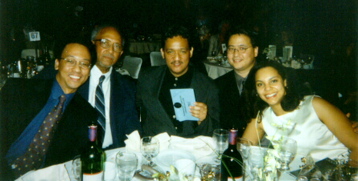
Just got back from Toronto where I attended the Juno Awards (the "Canadian Grammies", for those outside of Canada!) -my debut disc for RCA/Victor "...so far" had been nominated in the category "Best Contemporary Jazz Album - Instrumental". It was the third time I was attending the awards (my first Justin Time CD, "Peace-Song" had previously been nominated Best Mainstream Jazz Album and also for…
Just got back from Toronto where I attended the Juno Awards (the "Canadian Grammies", for those outside of Canada!) -my debut disc for RCA/Victor "...so far" had been nominated in the category "Best Contemporary Jazz Album - Instrumental". It was the third time I was attending the awards (my first Justin Time CD, "Peace-Song" had previously been nominated Best Mainstream Jazz Album and also for Best Engineer in 1995; and my duo CD "Paired Down, Vol. I" had been nominated "Best Contemporary Jazz Album" in 1997) but I had yet to win.There is a very strange pyschology at work at such events. I remember very clearly, naively and optimistically attending the 1995 Junos, over-confident with the feeling that my CD had a good chance - only to lose and feel absolutely embarrassed by my presumptuousness. By the time the "Paired Down" nomination rolled around, I had assumed the mentality of a "losing veteran" - such things are subjective, an honor to be nominated, etc., etc. So on Saturday night, when they got to my category and announced the nominees, I think I can sincerely say that I had absolutely no expectation. And the funny thing is - I won (!)
Quite a surreal experience, going up and giving my acceptance speech (I thanked, among other people, my family and especially my father, whose birthday, I mentioned, had been the day before - I had yet to get him a present, and so I explained to the audience that "here it is", holding up the Juno); being whisked backstage to the press conference; having my photo taken, etc. And it was especially meaningful to be recognized by, and in my home country of Canada....
Prior to Tel Aviv, I was in Columbus, Ohio. I was initially there to play as part of the great African American poet Amiri Baraka's group Blue Ark, but I used the opportunity (ie. the plane ticket!) to allow myself to hang out an extra week. I 've been trying to assemble a working band (ie., "The D.D. Jackson Group"), to support the music of my new album on RCA, "Anthem", which comes out Mar.…
Prior to Tel Aviv, I was in Columbus, Ohio. I was initially there to play as part of the great African American poet Amiri Baraka's group Blue Ark, but I used the opportunity (ie. the plane ticket!) to allow myself to hang out an extra week. I 've been trying to assemble a working band (ie., "The D.D. Jackson Group"), to support the music of my new album on RCA, "Anthem", which comes out Mar. 7th/00. I had been seriously considering a drummer from Columbus named James Gaiters for the last several weeks, and Chris Howes, the Columbus violinist, was already "in", having already appeared on the new recording. Initially my plan was to round out the group temporarily with some other musicians from Columbus, and to do a local gig at a small but active club there called "Dick's Den", in order to see how particularly James worked "live".But what I discovered was that not only James and Chris, but the bass player, Andy Woodson, and even the percussionist, Jim Ed Cobbs, were all - how shall I put this? - kick ass players, who also played the hell out of my music, and, frankly, I couldn't really think of anybody in NY outdoing them. Plus, they were all enthusiastic about playing, something that couldn't always be said about some of the players I had dealt with in the past in NY, who understandably have other "real world" concerns (like paying exhorbitant rents, and spreading themselves thin with the numerous gigs needed to make a living). So I believe I've found my new band - and who would have thought it, but they're all from Columbus, Ohio.So why Columbus - why are the musicians there so damn good, one might reasonably ask? Here's my theory, at any rate: Firstly, among the cities resources are several strong universities with decent music programs, and even a very impressive High School for the Performing Arts. Additionally, there's an active club scene, with all manner of music playing, often with mixes of university musicians and "locals". Finally and perhaps most importantly, there's a sort of midwestern sensibility, which is hard to define, but which seems to result in musicians not as locked into the musical "cliques" and conventions of New York. In short, these are people that really play music for a living, in all manner of styles - they know how to swing (a fact which I suppose would please the Wynton-ites :-)), but they also know rock, and latin, and how to play the "down 'n dirty" blues, with audiences that appreciate this diversity.One more Columbus connection I should add: my parents first met in Columbus back in the early 60's where they were both graduate students at Ohio State University (now how's that for a cosmic coincidence? :-). And even my older brother Chris went there for a time before his death in 1986. I, too, have also found myself playing there with increasing regularity in the last few years, including an appearance with Bluiett/Jackson/Thiam a year ago, my participation in "David Murray Week" before that (which is when I first met Chris Howes), and on and on.So, in short: the Columbus connections run deep, and I guess now will only run deeper...
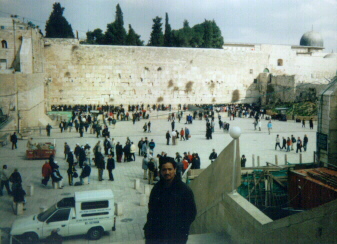
An interesting past month. Among my activities was my first gig ever in Tel Aviv, Israel, as part of the Jazz, Blues and Videotape Festival organized over there. The first evening was a duo concert with saxophonist Chris Potter, followed by a second evening of just myself doing a solo piano concert.I actually remember Chris from the Manhattan School of Music where we were both students in the…
An interesting past month. Among my activities was my first gig ever in Tel Aviv, Israel, as part of the Jazz, Blues and Videotape Festival organized over there. The first evening was a duo concert with saxophonist Chris Potter, followed by a second evening of just myself doing a solo piano concert.I actually remember Chris from the Manhattan School of Music where we were both students in the early 90's, and I suppose we had been following each other's career's since then, but always from afar, since we were never really part of the same musical circles. I hadn't really been exposed to a lot of his work since (though I was impressed that he had recently been awarded the prestigious JazzPar prize), but when they threw us together I was eager to explore his conceptual approach and to see how it might gel (or not gel!) with mine. Chris is an almost cerebral, technical player - someone was executes breathtakingly knowledgable lines on his instrument with such effortlessness that one is led to believe that he isn't even trying - he rarely seems to break a sweat. Yes he is far from another "young lion" in his approach - through his work with Dave Douglas and through the relative breadth of his compositions stylistically, I could see that he had quite the adventurous, open mind.Chris and I met the day of the gig and rehearsed for an hour or so, half his tunes, half mine, and it was interesting that because our respective compositions were so diverse in nature (mine tended to be deceptively "simpler" and more melodic; his more chromatic, with lots of interesting twists and turns), we soon realized that we were in for a very varied musical conversation between two people with quite different approaches. The concert was sold out (and was actually videotaped for possible worldwide release in the future), and I think it went fine. Especially when I listened back to the tape made of the event, I think I realized that our almost "opposite" musical angles resulted simply in more variety for the listener, which ended up arguably not being a bad thing at all, and Chris seemed to enjoy himself also.
Also that day I got my first taste of Jerusalem - Chris and I took a cab over there and literally did the "one hour tour", which was all we had time for before our rehearsal. Thankfully, our cab driver was very knowledgable, and he plunged us right into old Jerusalem, and we managed to get out and walk around, examining the church where Christ was purportedly brought after his cruxificion (the cab driver, who was Jewish, chose to remain outside for this); and then ultimately to the Wailing Wall. where we donned temporary paper prayer caps and just observed, amidst very orthodox-looking Jews praying devotionally, their heads bowing repeatedly in focused worship. I felt very much the outside observer about this, I must say - the atmosphere was probably as foreign to me as visiting China for the first time would likely be; my sense of detached observation was heightened by my personal lack of adherence to any specific organized religion myself (not that I'm not a spiritual person, I always add defensively :-)). But I certainly respected the sacredness with which these surroundings are obviously regarded.My 2nd night in Tel Aviv I performed solo piano, and though the crowd by this time had thinned a bit (there was another concert I think featuring some local players in part going on in an adjacent room at the same time), the audience was attentive and very responsive, and, as always, it was a pleasure to be able to present my own musical conception to others. I also had time after this final gig to hang with the festival organizers, who were all young and enthusiastic and basically "unjaded"; we went to a nearby bar where I ordered my typically "unhip" glass o' orange juice, and we all just talked until very early in the morning.All in all, a very memorable, in fact unforgettable trip....
Just got back from, of all things, a press conference announcing Lincoln Center's 2000-2001 season, of which I am unexpectedly a part. They've started a series of "Jazz on the Hudson" pairing so-called "mainstream" and "avant-garde" pairs of duos together in a single evening; I, in a pairing with Hamiet Bluiett, will, apparently, be the "avant-garde" half, in Mar. of 2001.The whole press affair,…
Just got back from, of all things, a press conference announcing Lincoln Center's 2000-2001 season, of which I am unexpectedly a part. They've started a series of "Jazz on the Hudson" pairing so-called "mainstream" and "avant-garde" pairs of duos together in a single evening; I, in a pairing with Hamiet Bluiett, will, apparently, be the "avant-garde" half, in Mar. of 2001.The whole press affair, which included hors d'oeuvres, plus speeches by Wynton Marsalis and others and a performance by his Lincoln Center Jazz Orchestra and others, really revived in me the urge to express some of my own views on the whole neo-classical movement. Much as I am pleased that they are trying, with this Hudson series, to expand slightly their definition of what does and does not constitute "legitimate" jazz, I found myself being disturbingly intoxicated by the sheer force of "legitimacy" created by the occasion, as Wynton described his very single-mindedly Louis Armstrong and overall traditional approach to programming JALC will present next year. There is something strangely comforting about a vision of jazz which offers a "respectable" reference point - the equating of Jazz with classical music; which offers a very systematized approach to what should be taught, and to what, in fact, should be regarded as jazz or non-jazz in the first place. In their speeches, the JALC people described today a program which has outreach to thousands upon thousands of high school students, all of them learning about Duke Ellington and Louis Armstrong and "swing" and "blues", plus world tours, bringing the music of the Lincoln Center Jazz Orchestra to people all over the world.So what's wrong with this picture? Not to sound like a broken record (not only my own broken record, but many others' as well), but jazz ISN'T the same as classical music, and it doesn't need this parallel to be considered "great" - it is a music with entirely different aesthetic values, some of which (mostly by coincidence), may coincide with the classical world, but overall most of which should be taken on their own terms. There is nothing wrong with learning the tradition, and in many ways, I credit Wynton for teaching people about the rich legacy of the history of jazz. But jazz isn't only about history. Everything that needs to be said in jazz hasn't been said. It isn't enough to play Louis Armstrong's repertoire, and to joke about how "we're trying to bring our own thing to the music - but this is Louis so all we can do is try" (the implication, at least as I took it, being that Louis is so unapproachable, etc. that it's enough to try and play his music respectably like he did it, without building on it or adding further innovation).Jazz, in fact, has always been as much - if not more - about the future than the past. At one point, Wynton made an astonishing generalization about "other" forms of expression that to him presumably fall outside the sphere of legitimate jazz, stating that there was basically no need for the more "abstract" forms of jazz (and by this I presume he means all of the various musics that emerged after 1969 - the loft jazz scene, the AACM, all the way up to the downtown "Knitting Factory" scene, etc., etc., etc.) He supported this notion by arguing that these abstract forms were, after all, less popular than what JALC does; that with the more presumably "avant-garde" stuff, the music needed to be propped up by government grants, etc., while JALC was actually genuinely popular and accessible.
But if one reviews the history of jazz and what has made it great, we are, ironically, almost always consistently struck by the fact that with the exception of the swing music of the 20's and 30's, most of jazz's crazy, individualistic "innovations" were the bane of many critics and the general public when they were first created; and that it took a long time for many of these developments to resonate with the public at all; in short, to be "popular", if ever (Thelonious Monk, whom many people still regard as "avant-garde" compared to the more "traditional" bebop fare of his day, is but one example). So the argument that the fact that a music is well-received by the public makes it more "legitimate" is certainly challengable (and I won't even site such "popular" artists as Kenny G :-)).And much as JALC is an unquestionable success story, is this really, as Wynton purports, in itself an argument for the legitimacy of their musical values? Or is it, in fact, as I believe, a self-fulfilling prophecy? What if someone with a broader outlook were in charge of JALC, someone who treated the entire history of the music, with all of its crazy offshoots, it's forays into pop, funk, acid-jazz, avant-garde expression, and various conceptual approaches (not just bebop/swing) with equal weight; who welcomed innovation and commissioned some of the most individual compositional voices - Henry Threadgill, David Murray, Ornette Coleman, Anthony Davis, and on and on, to produce yearly large scale works. What if this person were as appealing as Wynton as spokesperson, and who expressed these open-minded views with the same fervor that Wynton does his more conservative ones. Can't one imagine in this instance that this more open-minded jazz philosophy would become the predominant view of what is legit in jazz? Isn't what is and isn't considered legitimate in jazz more, after all, about politics and posturing that some "objective" universals? Can't there, in short, be room for more branches of the "jazz tree"?
In my opinion, in order for jazz to be vibrant and to continue to grow, it is actually crucial that people reflect in their expression innovation; personal expression; that people not be afraid to try something new. Jazz is about innovation. Yes, it's about tradition, too, but as some have said, "the only tradition in jazz is innovation" - ie. you must build upon the past, or the music perishes. And yes, if one is honest in one's expression; if one reflects one's own life experiences to create a personal music, then some will find it "avant-garde", or, conversely, perhaps "commercial", or many of the other generalized dismissives often hurled at any form of jazz-related expression not related to the more narrow definition of jazz with a capital "J". But is this any different than what Monk went through, when he first emerged, with his music? Or Ornette Coleman? Or Miles? Or Coltrane?It's safe to "legitimize" jazz by equating it with classical music - who, after all, can argue with a music proven by the ages to be great. But jazz ISN'T classical music. It's a living, breathing, art form. And people are needed out there that are courageous enough to forge new pathways, to push for the new; and to see how this relates to what has come before without, however, losing the "now".Jazz on the Hudson is a small step, and I'm happy to be a small part of it.
An eventful summer. Recorded my first two albums for my new label of RCA Victor (BMG). The first, a solo recording, was completed this past May in Montreal. It was really intended as a "summing up" of the things which have influenced me stylistically in my life thus far, particularly from the realm of jazz and classical music. The music was coincidentally recorded at an old RCA Victor studio in…
An eventful summer. Recorded my first two albums for my new label of RCA Victor (BMG). The first, a solo recording, was completed this past May in Montreal. It was really intended as a "summing up" of the things which have influenced me stylistically in my life thus far, particularly from the realm of jazz and classical music. The music was coincidentally recorded at an old RCA Victor studio in Montreal; a nice, oversized, warm-sounding room with a huge Bosendorfer Imperial Grand, and I'm quite pleased with the result. The idea, I think, is to pair this album with my 2nd recording for the label, which will be released a little later on, and which I just finished recording, with a veritable "all-star" band; pretty much everyone on their respective instruments I consider to be my favorites, particularly with the musical conception I was going for with this recording. The group included: Jack Dejohnette on drums, Cameroon electric bassist Richard Bona (who also sings on a track), James Carter on saxes on 4 tracks, Mino Cinelu on percussion, and Christian Howes on violin. I think people who know my past work will be very surprised when they hear it: it focuses on the more melodic and groove-oriented aspects of my writing and arranging. So I think when the two releases are ultimately considered together, they will paint a fairly accurate portrait of my desire to be as far-reaching and open-minded in my influences as possible.Just received my first copies of ...So Far (the solo album); it was gratifying to have "physical evidence" of the whole process that's been going on for the past year of preparing for these releases, getting a new setup established behind me, etc.....
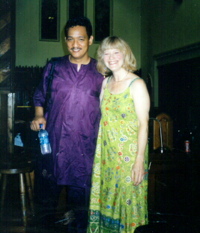
Also did my first "pseudo-classical" concert in really over 11 years. I've been sort of battling "classical demons" for some time now, ever since I left Indiana University with my B.mus in Classical Piano. As I've recounted before, my teacher was definitely uncompromisingly "old school"; he had little tolerance for someone who was interested in the dreaded "j" word - jazz. My experience was so…
Also did my first "pseudo-classical" concert in really over 11 years. I've been sort of battling "classical demons" for some time now, ever since I left Indiana University with my B.mus in Classical Piano. As I've recounted before, my teacher was definitely uncompromisingly "old school"; he had little tolerance for someone who was interested in the dreaded "j" word - jazz. My experience was so unpleasant, in fact, that he in a sense sort of "chased me" into jazz (or at least away from classical music); and I'd stayed away since then, ie. for the past 11 years, until this concert this past July. To make the situation more "symbolic", the concert was with my actual first piano teacher, Dina Namer, with whom I studied from the age of 6 (when I could barely sit still for the hour lesson and, in fact, often had to leave the lesson 3 times to go to the bathroom!) til 18, when I went away to college to study at Indiana. And to top it off, this first classical performance in years was in my hometown of Ottawa, AND was being recorded by CBC radio, for eventual national broadcast.
I think I regarded this concert, then, as a way of exorcising demons; of re-addressing classical music, but this time on my own terms; with myself being the one this time who decided my feelings on the genre. We focused on 20th century duo piano repertoire: Milhaud's often-played Scaramouche; Stravinsky's very neo-classic Sonata for 2 pianos; Gershwin's Rhapsody in Blue; a piece by Hovhaness which we (both!) improvised on, and a new work I wrote with this occasion in mind entitled "Round and Round Variations" (a version of this piece, called "Round and Round", also appears on my new solo album).
The first thing which was interesting to me was the sheer amount of rehearsal required; I had forgotten about that particular type of discipline involved (the jazz world certainly requires preparation, but it's not so much about mastering my instrument technically anymore as it is about inputting as many different influences aurally as possible, and about psychologically always working to harness "the moment" when I play). It was nice because my former teacher Dina and I, who have kept in touch these past several years, both really got to come to terms, in a way, with the past, and to deal with each other's genres in some way, so that we could in a sense find some "common musical ground". Along these lines, I deliberately wrote in my original piece a section for her to improvise on, sort of an "ad lib" cadenza; I was very surprised when she dived right in like she had been improvising for years. I also wrote the bulk of the piece in a driving 7/4 time a la the last mvt. of Prokofiev's Piano Sonata no. 7 by which it is inspired, except that the piece was really a sort of "disguised blues", with essentially "written out extemporizations" for Dina to "blow" on. I later heard that she was quite nervous about such sections, about getting the rhythm just right, and that she worked very hard to make sure she nailed things, which she certainly did, at the concert.
My experience re-addressing classical was similarly nerve-wracking. At first, it was painful just dusting off some of the old repertoire (and memories) in preparation. But as I continued to practice, what I actually discovered was that somehow miraculously my technique felt better now than it did when I gave classical music up. I guess there was something so psychologically freeing about playing jazz these past years that my approach to the piano had just become more organic. Still, I think til literally just before performance time, I harbored the rather presumptuous notion that I would just sort of go up there, let the adrenaline kick in, and essentially approach the concert as I would any jazz recital.
What I had forgotten, however, was just what it felt like to be a classical performer. It had rained that evening, and the church was exceptionally hot and humid; the keys were literally dripping with moisture. The performance took place in a church in front of some 800 people, a packed house, as is always the case, it seems, at these Ottawa Chamber Music Festival concerts. And from the first note, I was surprised that my overriding emotion was one of actual nervousness (vs. the adrenaline I was hoping for, or the excitement/the sense of adventure I often get when doing more improvised performances). Sitting there at the keyboard playing the first movement of the Milhaud, the obvious notion suddenly occured to me that I had to play exactly what was written, whether I liked it or not, regardless of what I was feeling at the time. I felt immediately constricted, and self-conscious, and began playing all manner of mind games as I went along (hmmm, I wonder if I'll now make a mistake right here - whoops, there we go...). I was so distressed, in fact, that I couldn't get myself to listen to the recording made of the evening's concert until just today, 2 months later.
But now that I've had time to reflect, I realize that while the concert was far from perfect (though the audience, I should add, was very warm and responsive, particularly to the Gershwin, my original piece, and the "encore" of our "improvised" Hovhaness), it was probably an achievement just to do it, just to get through it, just to re-explore, if only preliminarily, the whole classical world. What it's done, I think, is in a way to give me new-found respect for the sheer dedication of hours and practice involved to really internalize a work, so that one can then comfortably "depart" from it, or really enjoy the process of performing live. Would I want to repeat the experience? I think the perfectionist in me is dying for another crack at that concert; I tend to be a fast learner, and now that I can anticipate the atmosphere, and have a better understanding of the type of preparation involved, I think it would go vastly better the next time, and I could actually truly enjoy myself as I played, which in a sense is always the goal, in part, for me. But I have to ask myself: do I really want to devote the time required to learn repertoire, in a sense, "by rote", to internalize someone else's music enough so that I can then have the confidence to add my own musical "spin" to it, my interpretation, as it were?
I think for me it's probably better to attack the classical world from a different angle - namely as composer, and I think this concert in a way newly-motivated me in this regard, ie. to write larger-scale works. I have great respect for the classical composers (and still have spent the majority of my life studying and playing their music). I guess I'm just realizing that it's time to start focusing on as direct a form of expression at this point in my life as possible. And this means original composition, though certainly some of which will be for orchestra, and will include my extensive classical background in influence.
Whether I've put the shadows of my classical past behind me remains to be seen. It was in a way so disconcerting to actually be "nervous" at a concert that it sort of "threw" me for a while in subsequent jazz performances; there's still something about the classical world which brings out a certain self-consciousness in one's technical approach to the instrument; something about the requirement to have perhaps a too-conscious hold on exactly how one handle's one's instrument on a technical level. But hopefully what the concert will ultimately succeed in doing is to make me less afraid of my classical past; less afraid to integrate in a more conscious way the lessons I learned playing classical repertoire, as I continue with my own writing and playing in my own musical world (and hopefully create new "hybrid" worlds of my own).
It has been a particularly painful last couple of months in jazz - the world lost two great musical spirits; I lost a musical colleague/friend and my first jazz mentor.Bassist Fred Hopkins was a true original and like the truly original instrumentalists in jazz he was blessed with a readily identifiable style and sound. But more than just the music, Fred was a warm, incredibly gregarious, open…
It has been a particularly painful last couple of months in jazz - the world lost two great musical spirits; I lost a musical colleague/friend and my first jazz mentor.Bassist Fred Hopkins was a true original and like the truly original instrumentalists in jazz he was blessed with a readily identifiable style and sound. But more than just the music, Fred was a warm, incredibly gregarious, open person, almost childlike in his gentleness and also mischieviousness. With Fred this vital nature of his was inseparable from his music - Fred the person and Fred the musician were one and the same.So many memory fragments of the time I spent with Fred as his musical colleague come to mind: - how, when flying for a gig usually with one of David Murray's bands on a plane headed for Europe, Fred could someone get to know everybody on the plane by the time the 6 hour trip was over; - how Fred used to always manage to arrive a fraction of a second "late" to the bandstand, particularly at our more dramatic big band hits, so that he could make a sort of "fumbling", grander, more amusing entrance. Or how, when taking one of his patented free-wheeling, out of time, often bowed bass solos, Fred would "accidentally" brush up, with his bow, against drummer Andrew Cyrille's cymbals, and would then continue to use this as the basis for his improvisations.And what improvisations! Often Fred, when given a chance to do an a cappella solo, could segue to a point where he'd have the bass literally lying on the ground, and he would pull it's strings almost recklessly; like Billy Bang and many other open-minded conceptualists, he could take things so "out" that almost anything conceivable became ripe tools for creative input. But also like Bang, Fred when in the right frame of mind and when called upon could play with time within a swing context in a truly original way - his sense of swing had a fullness of tone, a sense of forward momentum combined with an almost effortless carefree quality that I have never encountered in any other bass player. Part of what came of Fred being Fred was a particular unpredictability as to what he might do with an actual chart you gave him, and there are stories of him erroneously playing notated charts upside down, or playing one chart for half the piece until the leader noticed the problem while the rest of the band played another chart. Even these things you just accepted because Fred was always so fully Fred: without a doubt one of the greatest bass players in jazz, but also one of the most unforgettable characters I will likely ever meet, someone you couldn't help but love.
Jaki Byard was my first jazz teacher, and I studied with him when I did my Masters Degree in Jazz at the Manhattan School of Music, from 1989 thru May of 91. I was originally assigned to another teacher there, but before my first day when I found out Jaki had recently been added to the faculty and after doing a little research, I knew I had to work with him. Jaki's lessons were always casual, almost irreverent; sometimes we'd just sit there for the hour with the Manhattan School studio's two grand pianos and play the blues in all 12 keys the entire hour; sometimes he would reminisce about what Monk "really" was like or how Sun Ra was doing the whole "cosmic" thing quite knowingly as an "act" or how he studied with Earl Hines. But somehow the net effect was that what he really taught me was how to be truly open at the piano - in fact, what better introduction to jazz piano than from the true walking jazz piano historian himself, Jaki Byard!
And what an open mind. In his playing and teaching, he touched equally upon authentic stride (which I think in reality actually rhythmically colored almost everything he did no matter how "progressive" the context), the bebop tradition, all the way up to Cecil Taylor and perhaps beyond. And he respected other forms of music, as well: one of the first memories I have in Manhattan, when I was...
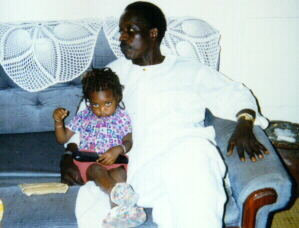
It was a trip which came up so much at the last minute that I barely had time during the preceding couple of weeks to get the requisite shots for Yellow fever, Hep. A, etc. in preparation, and had to leave for Africa literally 4 hours after returning from Europe with David Murray (meaning another "travel first" for me: the first time I crossed the Atlantic Ocean twice in one day!) I had been…
It was a trip which came up so much at the last minute that I barely had time during the preceding couple of weeks to get the requisite shots for Yellow fever, Hep. A, etc. in preparation, and had to leave for Africa literally 4 hours after returning from Europe with David Murray (meaning another "travel first" for me: the first time I crossed the Atlantic Ocean twice in one day!) I had been talking to Sengalese master djembe player Mor Thiam about wanting to see his country for a long time and so when he was asked by Jim West of Justin Time Records to travel to his home and record with some of the greatest musicians in Senegal, he asked me to be a part of the project and I immediately agreed.
When I first arrived at Mor's home in downtown Dakar, I was struck by how richly he lived, and how highly regarded he is here. Mor owns three homes in Senegal, one of which he rents out, one on an island I have yet to see and which I’ve heard he rarely visits (though he's hired a a sentry to look after it), and his home here, where during the week I’ve been here, there has been a constant influx of people – friends, family, neighbors, I suppose as well, all coming by to welcome him - a return home by Mor is apparently a big event. When we arrived at his home, Mor officially told me "welcome home, D.D.", and I was treated to some traditional Senegalese food – fish with a strong, oily sauce, rice, vegetables, a delicious fruit drink called bissap, etc. And this is where the trouble started.
Although I had little time to prepare for my visit, one thing that had constantly re-stated itself in the little source material I did read was the necessity of never drinking the local water; bottled water was the only way to go. When I got to Mor’s, I was relieved to see that right at the dinner table was a bottle of mineral water; I am typically so paranoid about such things that I asked Mor if he’d mind if I "hoarded it" for a while, until I could get my own, and he didn’t mind at all. I think it was the next day that I noticed Mor’s sentry, Babanou, using a similar bottle, ostensibly filled with mineral water, to water the indoor plants Mor has. I asked Mor about it, and he explained absent-mindedly that he actually wasn’t sure if all the water in those bottles was mineral water at all, since they usually re-used the containers, filling them with tap water and then placing them in the freezer after their first use. Still, I wasn’t alarmed, because apart from some curious allergic symptoms I was feeling basically fine. That is, until 3 days later, when I discovered that I was suffering from a bad case of what is commonly known as TD, or "Traveler’s Diarrhea".
This was, also, I think, precipitated by a meal that I’d almost just as soon forget. When I first arrived, I was pleasantly surprised at how "Western" everything seemed – the shower, though fairly "earthy" and "raggedy", was a functioning shower, with reasonably warm water (a fact Mor explained to me was actually quite rare and considered a luxury); and my worries were further allayed when I finally peered into the separate room where I hoped the toilet would be located and discovered a more or less Western device (that is, as opposed to the dreaded "hole in the ground", crouching affair also common here). So in a similar fashion, the meals were all served at a very Western looking dinner table, complete with table cloth, silverware, dishes, and even some beautiful woman helpers (in this case, Mor’s sister-in-law – who was intrusted with staying at Mor’s home and looking after his 2 year old daughter while his wife is in Atlanta; a teen-age looking niece, and another woman whose formal relation I still haven
It started that night with a fever. Though rushed, I had managed to bring a few essentials, but unfortunately Tylenol, which is normally a staple of my traveler’s bag, wasn’t one of them, and I suffered for it that night with a series of strange hallucinations probably induced by my temperature. What followed, more or less, was 4 straight days in bed, on my back, at times literally completely unable to move. I finally "gave in" at one point and called my dad in Canada; he reassuringly defined what I had for the first time as "Traveler’s Diarrhea", which, he read from a book he dashed out to get, was almost always non-fatal; he recommended an international-styled doctor from the same book (man, I love that book :-)), etc., and this provided me with such a psychological lift that I suddenly felt quite ready to attend one of the rehearsals for Mor’s recording session that I had previously been forced to miss due to my illness. I arrived in good spirits, shook everyone’s hand and told them how good I felt, etc., etc., played a few notes… and was overcome by a profound stomach cramp that almost sent me reeling. I made one feeble attempt to use the outhouse they provided – the dreaded hole-in-the-ground version – but gave up and instead became morbidly fascinated and vaguely repulsed by the large cockroach I saw swimming for its life on its back in the waters leading towards the hole into which I was supposed to relieve myself. Instead, I lay down for a while in a stuffy room, and was later taken home, though I could hardly walk to get to the cab which was to take me there, and when I arrived, I literally passed out on a mattress on Mor’ floor, the reality of three days of an exclusive yogurt and ginger ale diet finally catching up to me.
Another interesting feature of Mor’s home is the central area, which features what resembles a "sky window", but which in fact, is no window at all, but an actual opening to the night sky, and also to the bright sunlight during the day. This means that when it rains (though this seems a rarity and has yet to occur), the water will presumably pour into Mor’s home (though there are drains installed to wash it all away). This also means exposure to all that the outdoors have to offer, particularly all manners of insects, and especially mosquitoes. As with the water, I had heard the warnings, and had been careful to pack plenty of insect repellent, but that night when I collapsed under the stars in Mor’s center room and didn’t have any more energy to move, the mosquitoes must have had a field day, because the next day I counted something like 75 bites on my two forearms alone (!) So I suppose it was adding insult to injury :-).
Yesterday I saw the doctor my father recommended, and miraculously, after taking the medications he prescribed, I almost immediately began to feel better, to the point where I feel like I’m finally (knock on wood) adapting. Today, in fact, I woke up and almost feel like I have my strength back, and for the first time I can actually visualize the thought of perhaps staying the full 2 weeks without feeling a sense of panic :-)...
Nov. 21/98"Success" at last. Woke up both yesterday and today feeling almost entirely like myself again; like I had paid my dues and was now seeing this new and foreign environment with the benefit of some new "protective shield" (I guess I’d already developed one for New York, over the years :-)). Went to the recording studio with great energy, but ended up spending most of yesterday and today mostly sitting around, as Check went about the business of laying down the basic rhythm tracks. At the end of the session yesterday, the famous percussionist Dou Dou D’Ayerose appeared, looking regal in an elegant, light-blue dashiki, and accompanied by another drummer whom I would suspect was probably one of his numerous children, who are all, it seems, part of his drumming groups. He proceeded to record a couple of purely percussion piece
11/28/1998 - Nov. 23/98After 11 days of being here (including 6 days sick and on my back), I think I'm finally sort of settling into a groove here in Dakar (although albeit a not exactly "African" one). Pretty much every day I seem to have established a routine of getting up around 9 am, going to the local store down the street, and purchasing two yogurts (to calm my stomach), an International Herald Tribune, an orange crush, two litres of bottled water, and a can of ravioli and green beans, "in the event of fish" (a food I seem to generally have difficulty with, but which Mor’s family serves quite frequently). Besides, the whole ravioli thing gives me reason ("pathetically enough", I admit) to avoid the whole "collective eating" ritual without appearing rude. Got "caught" yesterday, however, the last day the whole band came to the studio, during lunch. I usually ask for a seperate plate, but unfortunately, when lunch rolled around there was no separate plate in sight, and when the other band mates, who had already gathered around the big bowl, saw me, they were sort of like "here’s a spoon! What’s the problem? Let’s eat!" and so I joined them, eating sparingly and trying to look as inconspicuous as possible. The woman who brought the food, however, who are aware of my "social acclimation" problems, saw what I was doing, and couldn’t stop laughing amongst themselves and at me from across the room, and I teased them, pretending that when I left the circle of eaters early, it was actually because I was so stuffed that I just couldn’t possible continue…..
Nov. 24th/98Tues. morning – I’ve now been here 12 full days, and it looks like it’s likely that there’s just today and tomorrow to go, before I head back. The drummer of the group, whose name fails me (I’m really terrible, in that I haven’t really successfully learned the names of anyone in the band, with the exception of the leader, Chiek), when he noticed how much Mor and I admired the dashiki he was wearing, offered to go out and have one made for me over the following 24 hours, and yesterday he brought it to the studio and presented it for me – a bright, baby-blue and black/white-patterned, loose-fitting robe and pants with an elastic serving as belt, which I immediately put on. I suppose now I’m an "honorary African", but whatever the case, the clothes seem to serve a practical purpose as well – they’re really the best suited for this very hot climate – they’re loose, decorative, cool and light, plus they cover most of the body to protect against mosquitoes. Mor’s brother is a tailor, as well, so one of the first things I did last week when I felt better was to go to the market with him and with Eric (a young, white guy who is here from Missoula, Montana, perhaps to stay, and who knows the Wolof language very well, having lived here for a couple of years before) to hunt for appropriate materials. It seems that here the whole "ready to wear", off the shelf concept doesn’t exist – you basically chose your materials, hire a tailor, and have your clothes custom made. I had been admiring Mor’s clothes for some time, and since his brother does all of his tailoring, when he asked me what style I wanted, I basically pointed to Mor’s wardrobe. I also found some beautiful, rich blue material which I asked that he make into a dress for my [NB. now ex-]girlfriend Lesley. At any rate, I will see the results of all of this probably either today or tomorrow – he’s just arrived with a package of finished clothes today, in fact, though I’m not sure whether they’re for Mor or for me…..
Nov. 26th/98On Tues. night, I was presented with my tailor-made clothes made by Mor’s brother. It was actually very exciting to get some new clothes in this manner, wrapped in paper, as seems the custom here, and completely made-to-order. The problem was that the pants, for some reason, had been cut so that they were about six inches too long in the legs. As with everything here, I wasn’t sure what...
The rest of our trip to Goree was dominated by a high degree of commercialism – people constantly approaching us to try and sell us their wares. Mor had warned us about this, and had advised us not to buy anything on Goree since it was a tourist trap. Immediately prior to Goree, Thomasears, who was acting as my guide and I believe is a young relative of Mor’s, had brought me to the central area of the city where I’d "stocked up" on African paintings, a large wall-hanging for my living room, an African bag, and a couple of vests (one of which, I’ve discovered, doesn’t fit!) It was amusing to watch him bargain – it really seems like both an art and a necessity here, and Thomasears told me to be sure to report back to Mor what a good job of negotiations he had done, which I later did.
When we got back to Mor’s that evening, it was already dark – and I mean, literally, pitch black – the power had gone out again – something which seems like literally a once-a-day occurrence. It’s hard to see how business is conducted here at all with the electricity being so unreliable, but I guess that’s just how things are. As has been the case on the numerous other times since I’ve been here where the power has gone out, Mor and his female helpers brought out the candles, and we were forced to sit around in pseudo-meditative silence.
Chiek, the producer and guitarist/keyboardist of Mor’s album, has promised to take me into town sometime before I leave to purchase some Senegalese tapes – since he’s the producer on the majority of them he says he can get them for wholesale. I imagine he must be extremely respected, as he is responsible as the true "man-behind-the-curtain" for the success of such popular artists as Yossou N'Dour (whose state-of-the-art studio we were recording at), as well as several female singers (he said that before he began, female singers hadn’t really been accepted in the world of Senegalese pop music, but he patiently set their voices to music and really presented them to the world for the first time). Other than this, I’m sure things will come up, but I’m essentially "biding my time". Have to also figure out what to give people as presents – I’m not sure if they were joking, but the women were suggesting to Eric, the guy living here originally from Montana, that "money would be better", when I suggested that I would give them tapes of my jazz music. Seems like money here is the international language that everyone understands, since it is in such short supply – anyone with some of it is instantly respected...
Today, after much "waiting around", Chiek brought me briefly downtown to hunt out tapes. Because he is so widely known and respected, he managed to get them for I guess what is considered the "wholesale" price – around 80 Senegalese Francs, or less than 2 dollars American (the regular price is a whopping $2 US). He chose an assortment of current African pop stars, presumably many of whom he helped get where they are by being the arranger on their albums. Interestingly, when I asked to buy some blank cassettes so that I could later make some copies of things for people, I was told that they cost the equivalent of $3 US per Maxell XLII tape, meaning that it’s cheaper to buy the original cassette here rather than bothering to illegally make a copy – perhaps this is what discourages piracy, though I’m not sure how people make a profit if they’re only bringing in $2 per cassette. Strange how the economy works here; I mean, someone told me that the average income of a typical Senegalese is something like $3/day. How does one survive on this? Similarly, after being shown Goree Island by the tour guide yesterday, after much intense negotation, Tommasear paid him the equivalent of about 4 dollars for all his hard work; I felt so guilty that I gave him another $2, which seemed to please him greatly…
11/27/1998 - Nov. 27th/98:Countdown is beginning – 4 hours til we head to the airport. Made some very good friends; really enjoyed working with these musicians and getting to know Mor’s "extended family" (both relatives and otherwise) better. It’s funny how after a while you start to feel like you "belong" some place, or are actually living there. But I have another life waiting for me back home….
I even feel more comfortable, I would say, in my dashiki-inspired clothes here than in my Western clothes, although I didn’t really make a serious attempt to fully grasp the language, I’m embarrassed to admit. Something to save for next time, perhaps…All in all, a trip that I will remember for the rest of my life, and which will no doubt impact me in ways not yet even discovered (knock on wood) :-)....
The debut, in New York at the Knitting Factory, of my new group Effusion (a dangerous title, I know, because of the ill-association with the word "fusion" from the seventies, but in this day of so much exposure to so many great world musics, I think the word has taken on a broader and more acceptable connotation. Besides, I liked the implication of the group being "effusive" as well, which…
The debut, in New York at the Knitting Factory, of my new group Effusion (a dangerous title, I know, because of the ill-association with the word "fusion" from the seventies, but in this day of so much exposure to so many great world musics, I think the word has taken on a broader and more acceptable connotation. Besides, I liked the implication of the group being "effusive" as well, which certainly describes the vibe) [NB. this group was the first "trial run" of what eventually became "The D.D. Jackson Group", with some of the material eventually making its way to my RCA Victor disc Anthem]. At any rate, the gig was definitely not a serious money-making proposition for me, but I took it as the only opportunity to try and get some new music together in preparation for a new recording which will hopefully take place within the next few months. Because it was also Halloween, attendance was spotty – perhaps 80 people, several of them personal friends and supporters, but I succeeded in achieving the "stepping stone" goal of plodding through the new stuff, and seeing what worked, and what didn’t…..
Rather surreal performance on this day at Dominican Community College in Columbus, Ohio with my collective group Bluiett/Jackson/Thiam. We had a comfortable turnout of a few hundred people, and the first half went so well that we already received a standing ovation. Primed for an even stronger 2nd set, Bluiett announced to Mor and me "I’ve got it" and went out to open the set with one of his…
Rather surreal performance on this day at Dominican Community College in Columbus, Ohio with my collective group Bluiett/Jackson/Thiam. We had a comfortable turnout of a few hundred people, and the first half went so well that we already received a standing ovation. Primed for an even stronger 2nd set, Bluiett announced to Mor and me "I’ve got it" and went out to open the set with one of his characteristically crazy and adventurous, yet earthy solos. Unfortunately, he didn’t get beyond the first note before some mechanism on his baritone saxophone broke down – and amazingly, he was forced to play the remainder of the concert, an entire hour or so of music, without the use of his main axe. I’ve never had so much respect for Bluiett as I had that day, watching him blow the hell out of his ethnic flute, and his contra alto bass clarinet; at one point he even invited the audience to clap their hands; he talked to them; he rapped (anything but playing the baritone). So it was quite a memorable affair.
A week after getting back from Japan I did a couple of gigs with Blue Note vocalist Kurt Elling. I've been doing less and less sideman work of late but Kurt's stuff is so different from my "immediate world" that it never seems to interfere with my other projects, so I though "what the heck". It turned out that our first gig was at Macy's (!) - a "jazz fashion show" sponsored by Jazziz and Vogue,…
A week after getting back from Japan I did a couple of gigs with Blue Note vocalist Kurt Elling. I've been doing less and less sideman work of late but Kurt's stuff is so different from my "immediate world" that it never seems to interfere with my other projects, so I though "what the heck". It turned out that our first gig was at Macy's (!) - a "jazz fashion show" sponsored by Jazziz and Vogue, in which various major label jazz artists performed and alternated with models showing their "wares". One artist in particular attracted my attention (and who shall remain nameless :-). Perhaps normally the procedings would not have left any particular imprint on my mind, but as I was discussing with Kurt, I am currently weighing whether to sign with a major label myself, and so I was I guess feeling particularly sensitive about the whole major label "machine". This particular artist's appearance was actually preceded by the distribution of postcards advertising the impending release of her new CD, which featured, among other cuts, a rendition of a song from an extremely successful pop album and in which she was pictured posing provocatively in an almost "sex kitten" style. This song choice struck me as a rather cynical and obvious choice of material (of course I have to give her the benefit of the doubt and assume that she chose the tune because she sincerely likes the tune, period :-)).The artist first brought out what appeared to be a DAT tape machine to provide an accompaniment designed, I guess, to mirror as closely as possible how her music sounds on the "smooth jazz" radio stations it probably is mostly played on. She was also accompanied by an attractive female bass player (with whom I think I actually went to school), performing in a vaguely see-thru white blouse. When it came time for her to play, the DAT machine actually was I suppose set in the wrong place, so we were treated to little snippets of the wrong rhythm tracks for presumably other cuts from her album. Finally, she found what she was looking for and proceded to "play along", literally, with the recording. I know this sounds overly-purist of me (perhaps at age 31 I'm just getting "old" and stuck in my ways :-)) but it struck me as striking that she felt the need to play with the aid of a tape for such a small, intimate event.
I mention the above not to be overly critical (too late! :-) but because it underscored some of the fears I have about the "major label" experience - the focus on quick business/market decisions instead of musically truthful ones, the over-emphasis on image and style over content, etc., etc. I was almost ready to "throw in the towel" with respect to majors right there, after her performance. Thankfully, however, when Kurt and I performed, the audience seemed to sincerely like what we were doing, and I guess this reminded me that whatever one's approach, if one is honest and truthful, one hopefully can't help but connect. So I guess I concluded that as long as I could maintain that sensibility in whatever context my music is destined to appear in, I should be ok (knocking vigorously on wood :-)...)The next day Kurt and I performed for a "day time morning show" in Connecticut. I won't say much about this, except two things: 1) one of the other guests on the performance was a man whose name currently excapes me, but he's the Nobel-prize-winning guy who discovered the modern method of doing DNA analysis - just seemed interest to be even remotely in a context where I could run into and talk "shop" with a guy like this and 2) the comment the show's producer made to Kurt and I right before our 3 minute promo performance, after we told her we were jazz musicians, which was "Are you going to improvise? Most people are afraid to when they go on live tv." All we could say was something to the effect of "uh, well, that's what we do, but don't worry, we're trained professionals and everything should go all right", etc., etc...
At the end of August, I got back from my return trip to Japan as pianist with David Murray's quartet. It was as satisfying as always, but I must admit that I enjoyed even more the subsequent gig in Willisau, Switzerland, with the collective group I'm a part of called Bluiett/Jackson/Thiam, most likely because of the increasing pleasure I derive from performing my own music. What was perhaps even…
At the end of August, I got back from my return trip to Japan as pianist with David Murray's quartet. It was as satisfying as always, but I must admit that I enjoyed even more the subsequent gig in Willisau, Switzerland, with the collective group I'm a part of called Bluiett/Jackson/Thiam, most likely because of the increasing pleasure I derive from performing my own music. What was perhaps even more interesting than the actual tour (as often seems the case, for some reason with me?) was my "routing" to get where I needed to go: my first round-the-world itinerary, from NY-Portland-Tokyo-Zurich (Willisau)- NY, heading west, west, west. The Tokyo-Zurich portion was particularly perilous - in order to make the Willisau gig, I needed to cut short David's tour, and I, in fact, left, right in the middle of the 2nd set of the tour's 3rd last night. I basically played my tune "Peace-Song" with the group, and, after a particularly long solo, got up, waved, and headed straight for the bus station. Because we were actually in Osaka, I was originally scheduled to take an overnight train to get to Tokyo airport the next morning. But there was a huge typhoon right in the path of the train route I was supposed to take. Instead, I boarded an overnight Japanese bus (much more "high-tech" and organized than your average Greyhound), and arrived at the Tokyo bus station on schedule the next morning. After avoiding a typhoon, while trying to check in my bags (I eventually gave up since they were going to charge me literally $900 overweight!) I felt the entire terminal rumble ominously - it turns out that Tokyo had just been hit with a 5.4 Richter scale earthquake - not a major one, of course, but enough to unnerve me since it was my first such experience. At any rate, I subway'd to Tokyo airport, flew 12 hours to Zurich, was picked up and driven the 90 minutes to Willisau, and then performed with Bluiett/Jackson/Thiam a couple of hours later. So quite the adventure, but thankfully culminated with some enjoyable music-making which was well received...
Just finished performing this evening with my trio at the Knitting Factory fest in New York, in a performance which capped off a very hectic week of rushing around the globe. Just this morning I left Ismir, Turkey to make the 12 hour journey home with only a couple of hours to spare before the Knitting Factory hit. I played the festival in Ismir with David Murray's big band, which was preceded by…
Just finished performing this evening with my trio at the Knitting Factory fest in New York, in a performance which capped off a very hectic week of rushing around the globe. Just this morning I left Ismir, Turkey to make the 12 hour journey home with only a couple of hours to spare before the Knitting Factory hit. I played the festival in Ismir with David Murray's big band, which was preceded by a date in Moers, Germany the day before, and in Verona, Italy the day before that. And I began this hectic week with a performance with my group Rhythm-Dance at Birdland here in NY, on May 28th. The concert was recorded for RCA Victor, and two tracks will be used for a compilation disc to be titled "Live at Birdland" to be released in the fall.
This first gig of the week at Birdland I think might be particularly memorable not for the performances, although I was quite pleased with everyone's contribution (the group included Kenny Davis on bass, Billy Kilson on drums, Kahlil Kwame Bell on percussion, Hugh Ragin on trumpet and Christian Howes on violin) but for a severe cut to my thumb I seemed to have incurred during the first piece. Now I've cut my hand before while playing, and it's in fact always been a source of "battle scar pride" among the more "physical" players of the past, including one of my mentors, Don Pullen - the more "flying keys" and "broken strings", the better, etc., etc... :-). But never before had I managed to somehow open a gash which was so perfectly positioned as to make it seemingly impossible to stop the blood from freely flowing. My predicament was that I didn't want to destroy the flow of the music, and so I hesitated to stop, take a break, wipe the keys, fetch a bandaid, etc., etc. So unfortunately I chose to continue until the entire keyboard was covered with blood, and my hand still refused to stop bleeding, even after someone finally got me a bandaid and a towel. To make a long story short, I ended up cutting the set short, fixing myself (and the keyboard) up, and hitting hard in set #2, though ironically set #1 seemed to go ok, as well; something about the adrenaline of the moment, I suppose....Of course, now for those who were aware of what was going on, the gig may very well be remembered more for the mess I made than for the music :-)....
I was really deeply saddened to learn of saxophone/flutist/composer Thomas Chapin's death, even as I expected in recent months that it might come to this. I only knew Thomas personally for a brief time, but will always remember the concert I did with him in June/97 at the Knitting Factory fest with his group (also in the band was Santi Debriano on bass, Matt Wilson on drums, and Steve Nelson on…
I was really deeply saddened to learn of saxophone/flutist/composer Thomas Chapin's death, even as I expected in recent months that it might come to this. I only knew Thomas personally for a brief time, but will always remember the concert I did with him in June/97 at the Knitting Factory fest with his group (also in the band was Santi Debriano on bass, Matt Wilson on drums, and Steve Nelson on vibes). It was one of those rare concerts where everything seemed to click, and despite being burdened at the time with having recently completed a round of chemo, Thomas was in inspired form. I really appreciated Thomas' giving nature, both in his music which was so open-minded in it's approach, and as a person; from the little I knew him personally, I could sense a truly gentle, generous person who it seems would have been hard-pressed to ever offend anyone. You'll be missed, Thomas.
Just came back from Montreal where I performed duo at the Sal Gesu with multi-reedist sensation James Carter. A very surreal gig because we really didn't even know until the last minute whether the gig would be on. Montreal and my hometown of Ottawa had been engulfed in the worst freezing rain disaster in history; literally hundreds of thousands of people were without power, with thousands of…
Just came back from Montreal where I performed duo at the Sal Gesu with multi-reedist sensation James Carter. A very surreal gig because we really didn't even know until the last minute whether the gig would be on. Montreal and my hometown of Ottawa had been engulfed in the worst freezing rain disaster in history; literally hundreds of thousands of people were without power, with thousands of utility poles knocked out, literally millions of trees permanently demaged, the army called in to help, and even several deaths, including a woman who lived down from one of my first homes in Ottawa. My first piano teacher and my family had made it a habit to come up from Ottawa (only 2 hours away) for any gigs I did in Montreal, but even they had to re-consider as they pondered the difficulties. As it turned out, the concert went on as scheduled, and my father and brother even managed to show up, despite the conditions. The audience, perhaps happy for a break from all of the calamity, came out in large numbers, and so we played to a near-capacity, very enthusiastic crowd. I've "reported" about James before, and my feelings haven't changed - he really has a facility on all of the horns he plays (for this gig he "only" brought a flute, bass clarinet, tenor sax and soprano sax) which is chilling. And it's an enjoyable challenge I think for both of us to play in a pared down context in which interaction is at a maximum - I would say the vast majority of the concert was completely improvised, and a result of us musically fueling and playing off of each other, and I think we ended up playing 4 pieces in about 90 minutes of playing. And while James' solos tend towards the long side, I see this really as a positive; in an age where so many musicians his (and my) age rely on re-hashed cliches and rarely break a sweat, James is literally bursting with musical ideas, on not one but ALL the horns. So a very enjoyable experience which I'm already looking into repeating sometime soon....
Just came back from Paris where I performed as sideman in what I can't help but characterize as one of the greatest bands I could imagine - an incarnation of the David Murray big band which featured my favorite instrumentalists on numerous instruments. It was a concert at La Cite de la Musique dealing with the "Obscure Side of Duke Ellington and Billy Strayhorn", featuring new arrangements of…
Just came back from Paris where I performed as sideman in what I can't help but characterize as one of the greatest bands I could imagine - an incarnation of the David Murray big band which featured my favorite instrumentalists on numerous instruments. It was a concert at La Cite de la Musique dealing with the "Obscure Side of Duke Ellington and Billy Strayhorn", featuring new arrangements of their music by David and flutist James Newton, and the members of this stellar band included: drummer Andrew Cyrille, bassist Art Davis, a sax section consisting of the entire World Saxophone Quartet (David Murray, Oliver Lake, John Purcell and Hamiet Bluiett) plus Ricky Ford and Charles Owens, a trombone section consisting of all of the members of the group Slideride (Ray Anderson, Gary Valente, George Lewis and Craig Harris), my favorite trumpeter Hugh Ragin along with Bobby Bradford, Rasul Saddik and Ravi Best, plus vocalist Carmen Bradford and violinist Regina Carter, AND a 38 piece string section. Just walking into the rehearsal (actually the day of the gig; the others had been there the whole week but I showed up at the last minute so that I could make a showcase gig with my trio at the JazzTimes Convention the night before) was awe-inspiring - one great, individual player after another, approaching me to say "hi". And while I have worked with many of them before, I suppose it was just seeing that much creativity and originality under one roof which was breath-taking - truly my own "Great Day in Harlem" :-).
I couldn't also help feel a twinge of sadness as I considered how relatively underappreciated these artists have become in their own country; for the most part, they belong to a conceptual and generational group that was pushed aside in favor of the supposedly more marketable "young lions", and while some of the players there have danced with the major record companies from time to time, for the most part these players have maintained great musical integrity, putting out some of the greatest albums in jazz in the last 25 years largely on various independent labels, slowing building and maintaining a following, and playing disproportionately to more appreciative European and Japanese audiences. The thing is, if one really examines the sheer scope and output of this band, their really is no comparison in terms of open-mindedness, moving the music forward while building on tradition (which is what I thought jazz was supposed to be about), and even accessibility; in other words, while relatively overlooked, these guys are still the most innovative and greatest players out there, and it was an honor to be in their company...
Just performed a couple of surreal solo piano gigs up in Canada. The first was in London, Ontario, at a converted church/concert hall I've played at before called Aeolian Hall. Of course, little did I know that the Queen of England was visiting London that day; all of London must have been lining the streets to greet her arrival, and consequently the 10 people in London who weren't big fans of…
Just performed a couple of surreal solo piano gigs up in Canada. The first was in London, Ontario, at a converted church/concert hall I've played at before called Aeolian Hall. Of course, little did I know that the Queen of England was visiting London that day; all of London must have been lining the streets to greet her arrival, and consequently the 10 people in London who weren't big fans of Her Royal Highness made it to my gig. So a small, enthusiastic audience, but a little disappointing. Then the next day I appeared as the opening act for fusion guitarist John McLaughlin at a large outdoor venue as part of the DuMaurier Downtown Jazz Festival in Toronto, Ontario. Opening for an act which has really very little to do with what you're trying to do musically is fraught with perils; as expected, the audience, though largely positive and enthusiastic, really didn't come to hear solo piano, and so at one point some drunken guy yelled out something like "We want John McLaughlin!" Had never been "heckled" before, so I must say I found the experience very disabling. Thankfully, the other audience members chastised the guy severely, and, as I say, they were overall very warm and encouraging.
But it really raised some issues in terms of who I'm trying to reach with my music. I've always had a concern about the potential elitist nature of jazz, about the tendency for it to be embraced by a severely minute minority who consider it "hip" to be fans of the genre. Part of me firmly believes that what I'm trying to do has the potential to actually touch many people, and not only just those already "in the know". But I suppose at moments like at the McLauglin double bill, one is reminded of the difficulties in sometimes reaching out to new audiences. Still, I can't help but maintain the notion that if I am honest and sincere in my expression, people will respond, perhaps sometimes even people who originally came to hear someone else; this has certainly been my experience for the most part thus far....
Just got back from a two-week tour of Japan as pianist with the David Murray Quartet (in a group which also featured Mark Johnson on drums and Wilbur Morris on bass). And what an eye-opening experience it was. It was already inspiring enough to see the enthusiasm for our music among the audiences at the small, personal jazz clubs we performed. But I was perhaps equally impressed by other,…
Just got back from a two-week tour of Japan as pianist with the David Murray Quartet (in a group which also featured Mark Johnson on drums and Wilbur Morris on bass). And what an eye-opening experience it was. It was already inspiring enough to see the enthusiasm for our music among the audiences at the small, personal jazz clubs we performed. But I was perhaps equally impressed by other, non-musical matters: the sleek, modern, even futuristic cities and fascination with technology (an enthusiasm I certainly share); the politeness and general well-ordered nature of the society (which reminded me alot more of my upbringing in Canada) which was at the same time very frenetic and fast-paced (like my current home of New York City); and numerous random aspects of the culture including the Sumo wrestling which was on t.v. every day we were there and the food, which reminded me alot of the food I ate growing up. Finally, most unexpectedly striking to me was the moving experience of being surrounded constantly by a sea of Asian faces, faces so similar to my own...
Just returned from a two-day brief gig as sideman with the James Carter Quartet - I was a last minute sub for regular group pianist Craig Taborn, who was called away to work on a Roscoe Mitchell album. I've worked with James before, first at the summer, '96 Montreal International Jazz Festival where I opened for him and then later sat in with his band in a concert taped for Bravo television, and…
Just returned from a two-day brief gig as sideman with the James Carter Quartet - I was a last minute sub for regular group pianist Craig Taborn, who was called away to work on a Roscoe Mitchell album. I've worked with James before, first at the summer, '96 Montreal International Jazz Festival where I opened for him and then later sat in with his band in a concert taped for Bravo television, and secondly when I invited him to appear on Paired Down, Vol. I (he plays on two tracks). But this was the first extended time I had to "hang" with him and really see him "in action". I had until this time certainly been captivated by his sheer technical mastery of the many reeds which he plays; he has a breathtaking facility that has no parallel. But I was curious to see how this gelled into the "conceptual whole". What I saw was a deeply motivated man, wildly wide-open in his listening, with huge musical ears and an almost cosmic command of his instruments. There was a point towards the end of our second set in Buffalo where this all came together in my mind - I believe it was when he ended an already highly varied and, in fact, "rip-roaring" ballad solo with some ascending, three-note chords, with each chord stated clearly and precisely, using some multiphonic technique that probably didn't even exist until he played it. And he "brushed this off" with an effortless that was truly chilling. It was then that I began to see that far from being a simple "audience-engagement technique", these sax explorations and extended cadenzas and introductions seemed to come out of an honest desire to push boundaries; to certainly use more accessible, often swing-oriented tunes as the basis for his explorations, but to treat them with an almost Coltrane-like, "free jazz blowing" intensity. To "sum up": I definitely "dig" this James Carter, and look forward to working with him again soon....
I read the following at the Don Pullen Memorial which took place in New York City at St. Peter's Church on June 11, 1995. It was an incredible celebration, with many people associated with Don performing, dancing, singing, speaking, and reciting: I first met Don when he was conducting a master class in Oakland, in the summer of 1990. During the two-hour seminar, he basically proceeded to turn…
I read the following at the Don Pullen Memorial which took place in New York City at St. Peter's Church on June 11, 1995. It was an incredible celebration, with many people associated with Don performing, dancing, singing, speaking, and reciting:
I first met Don when he was conducting a master class in Oakland, in the summer of 1990. During the two-hour seminar, he basically proceeded to turn the entire audience, many of whom were distinguished jazz teachers and performers as well as students, completely on its head in terms of how they thought about music. Here was somebody, I found, who instead of, for example, focusing on which scale sounded good with which chord, and on the right way to approach a voicing, was dealing with *concept* on an almost cosmic level. He talked about the relationship between playing "outside" versus "in", and how you could combine the two, not just over time during a solo, but often at the same time, between the two hands. He told people to not be afraid to take chances; to always search for something new and to not be afraid of what you might end up with. And all in all he came across as a sincerely warm, caring, and totally dedicated and serious individual. After volunteering to play for him during that class, he accepted me as his student, and I began a two-year teacher-student relationship with him which was the most inspiring and important of my entire life.
Don became not only a teacher to me during that period but a mentor and role model as well. Almost as eye-opening as his comments on music conception were simply his comments on life; on the music business, its ups and downs, and how to deal with them psychologically and on a practical level. And when it came time for me to begin to play out in the "real world", Don was the first to recommend me to others; in fact, I first met both saxophonist David Murray and violinist Billy Bang, both of whom I now work with regularly, on a tour Don insisted I take when he was unable to do it himself.
In short, all I can say is that Don was one of those rare creative geniuses who could inspire others not only through his music, but through the example he set as a human being. He will be deeply missed."- Mar/95
My liner notes for the David Murray-led Tribute to Don Pullen album:This album was a special project for all of us because each of our lives was touched by Don in distinct and very important ways. I was a student of Don’s for the two most formative years of my musical development. When I first met him at a master class in the summer of 1990, I already knew the musical approach I was taking was "different" from those I heard around me. But since I was coming from a more rigid, formalized musical background, it was a revelation to meet someone whose approach to music was so radically open-minded. Don, essentially, courted and tamed chaos; at times teasing and cajoling it, at other times walking with it arm in arm, and on many occasions simultaneously pairing right-hand abandon with left-hand calm. But in whatever lessons Don taught, there were always a couple of recurring, fundamental themes: to not be afraid to take chances and, in fact, to seek out and embrace the unknown; and to always search for your own, sincere inner voice, expressed through both improvisation and original composition. These are important lessons, perhaps now more timely than ever in this "young lion" age. And while such pursuits are certainly lifelong affairs, hopefully we have done some justice to Don’s vision on this date by paying tribute not by directly imitating his style or approach to tunes but through an honest commenting on his life and music, with our own, personal voices. For this date I also brought in two of my own compositions, written back when I was a student of Don’s: "Easy Alice" (the title of which is a play on Don’s famous tune "Big Alice"); and "Out of a Storm". I hope you enjoy "The Long Goodbye".
Just got back from "David Murray Week" in Columbus, Ohio (as proclaimed by the Columbus City Council) - did a whole week of gigs with David in various formats, including a collaboration with the ProMusica Chamber Ensemble of Columbus, a duo concert with David, a performance as a member of David's quartet, and numerous "sittings-ins" thruout the city. Also had time to "hang" with David in…
Just got back from "David Murray Week" in Columbus, Ohio (as proclaimed by the Columbus City Council) - did a whole week of gigs with David in various formats, including a collaboration with the ProMusica Chamber Ensemble of Columbus, a duo concert with David, a performance as a member of David's quartet, and numerous "sittings-ins" thruout the city. Also had time to "hang" with David in concentrated fashion, and to discuss alot of things, including the state of jazz today. One of the things that appeared while we were there was a very pointed New York Times Magazine interview with Keith Jarrett, in which Jarrett directed some very critical remarks at Wynton Marsalis (see excerpt). The article really brought out into the open alot of things that were on David's mind, I think, and also made me think about my whole approach to the whole debate of neo-classicism vs. more cutting edge approaches to jazz.
I think David sees me, in fact, as a potential spokesperson for his perspective on things (see his comments on me recently in the Village Voice); certainly there has been a great change in the New York scene since the years of when David first arrived here on the scene - he quite legitimately laments how what used to be considered an asset, namely having one's own voice, one's own approach - nows seems to be almost a liability, as the focus seems to be increasingly on not rocking the boat, on adhering to some carbon-copy form of what jazz supposedly should be. And though my feelings on the matter are very similar to David's in many regards, I suppose I'm beginning to realize that I'm really trying to forge my own approach to the matter, ie.it's very hard for me to maintain a warlike, negative mentality (especially after having dealt with much of the same close-minded, classical attitudes while a classical piano major at Indiana University); I guess at this stage of my life I'd rather demonstrate my attitudes through the choices I make as a musician. I'll certainly answer criticisms if provoked, and speak out if necessary (both of which I've already started to do), but overridingly my goal will be to be as positive in outlook and approach as possible....
Just wrapped up a "marathon" 3-day session of duos with: Santi Debriano, Ray Anderson, Hamiett Bluiett, James Carter, Don Byron, Jane Bunnett, Hugh Ragin, Billy Bang and David Murray for my next album - well, actually, next TWO albums, since it'll be released probably as two volumes. Recorded some 22 tunes in 3 days, most of them my own, but also a couple by Hugh, the great trumpeter often heard…
Just wrapped up a "marathon" 3-day session of duos with: Santi Debriano, Ray Anderson, Hamiett Bluiett, James Carter, Don Byron, Jane Bunnett, Hugh Ragin, Billy Bang and David Murray for my next album - well, actually, next TWO albums, since it'll be released probably as two volumes. Recorded some 22 tunes in 3 days, most of them my own, but also a couple by Hugh, the great trumpeter often heard in David Murray's Octet, and a couple of free improvs "jointly composed" with Ray Anderson. On the whole quite pleased; now the "hard part" of sifting through the takes, deciding on an order, and handling various post-production chores. First volume should be out in the spring, on Justin Time Records. Excited because it gives me a chance to make a statement about artists I consider truly at the cutting edge, with powerful, original voices...
Just wrapped up a "marathon" 3-day session of duos with: Santi Debriano, Ray Anderson, Hamiett Bluiett, James Carter, Don Byron, Jane Bunnett, Hugh Ragin, Billy Bang and David Murray for my next album - well, actually, next TWO albums, since it'll be released probably as two volumes. Recorded some 22 tunes in 3 days, most of them my own, but also a couple by Hugh, the great trumpeter often heard…
Just wrapped up a "marathon" 3-day session of duos with: Santi Debriano, Ray Anderson, Hamiett Bluiett, James Carter, Don Byron, Jane Bunnett, Hugh Ragin, Billy Bang and David Murray for my next album - well, actually, next TWO albums, since it'll be released probably as two volumes. Recorded some 22 tunes in 3 days, most of them my own, but also a couple by Hugh, the great trumpeter often heard in David Murray's Octet, and a couple of free improvs "jointly composed" with Ray Anderson. On the whole quite pleased; now the "hard part" of sifting through the takes, deciding on an order, and handling various post-production chores. First volume should be out in the spring, on Justin Time Records. Excited because it gives me a chance to make a statement about artists I consider truly at the cutting edge, with powerful, original voices...
Just returned from Europe, where I performed in several German cities with a Turkish jazz vocalist named Ozay, and a German-based, Hungarian saxophonist named Tony Lakatos. Some interesting music, in general much more introspective than some of the things I've been doing lately. The only exception was a club in Halle, in the former East Germany. We were doing our set as usual, but noticed that…
Just returned from Europe, where I performed in several German cities with a Turkish jazz vocalist named Ozay, and a German-based, Hungarian saxophonist named Tony Lakatos. Some interesting music, in general much more introspective than some of the things I've been doing lately. The only exception was a club in Halle, in the former East Germany. We were doing our set as usual, but noticed that each time we got a little more "out" in our playing, the crowd became much more enthusiastic. At the break we realized what was happening: the whole "free jazz" type of expression is historically very popular in east - perhaps it was an expression of the freedom that the people did not experience politically. Of course, once we were told this, we took it as an invitation to play more "wildly", and the crazier we played, the more the crowd loved it - perhaps the only place I've played where this has so clearly been the case...
Just wrapped up the "Tribute to Don Pullen" album with David Murray as the leader, and also Santi Dibriano on bass and J.T. Lewis on drums. Was a very special project because everyone involved had their own special connection with Don Pullen. J.T. Lewis was a drummer more in the pop/rock field (he had played with such artists as Sting and Prince) when Don first heard him and announced "you can…
Just wrapped up the "Tribute to Don Pullen" album with David Murray as the leader, and also Santi Dibriano on bass and J.T. Lewis on drums. Was a very special project because everyone involved had their own special connection with Don Pullen. J.T. Lewis was a drummer more in the pop/rock field (he had played with such artists as Sting and Prince) when Don first heard him and announced "you can play", ie. he had the potential to do some serious jazz/improvised music, and he subsequently hired J.T. for his last great band, the African-Brazilian Connection. J.T. often talks fondly of his days on the road with Don, and of the many experiences they shared together. Santi, along with drummer Cindy Blackman (who, ironically, has now gone on to do more rock-oriented gigs as the drummer with Lenny Kravitz), was one of the members of one of Don's last touring trios. And I was Don's student, having been recommended to David Murray several years ago (also see "Thoughts on Don"). My main worry with this session was that we'd end up duplicating alot of his tunes, etc., but after a collective version of Don's tune "Gratitude", my worries were erased, and we started understanding the mood of the album, which was one of reflection and inwardness. I also felt pleased to be able to contribute a couple of my own compositions, one I wrote when I was heavily under the Don Pullen influence called "Easy Alice" (named after his tune "Big Alice"), another latin number I call "Out of a Storm". The album was rounded out with a very fiery version of Butch Morris' tune "The Long Goodbye" (sort of a commenting on the struggle to live against tough odds), a quartet version of Don's "Common Ground", a duo, "loose" version of "El Matador" with myself and David, and quartet versions of Don's tunes "Richard's Tune" and "Resting on the Road". At the end of the two-day session, we were all drained not only physically, but emotionally, as well. Of course, I spent the last couple of days (while on a gig in Portugal with David's Octet), listening to the tapes, but David was already moving on to his next recording project, which begins tomorrow (!).....
 D.D. Jackson